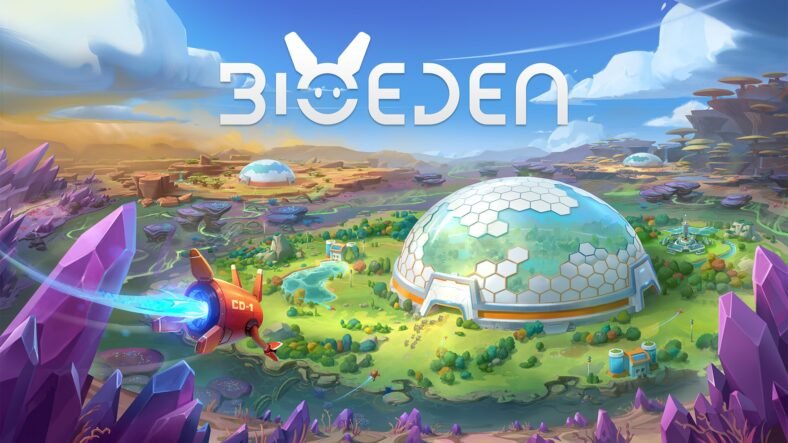
Developed by Broken Arm Games and published by Focus Entertainment, BioEden is a cozy planet management game that puts you in the role of a Keeper tasked with restoring polluted worlds and bringing extinct life back to them. Across a series of procedurally generated planets, you recycle harmful resources, expand your operations, create suitable biomes, and gradually transform lifeless environments into thriving ecosystems. It is an interesting and visually rewarding concept, although BioEden’s restrictive progression and limited player freedom prevent its management systems from reaching their full potential. This is our review of BioEden on PC via Steam, in which we try to restore some planets to their formal self and create little biomes for alien species.
The game offers six unique guilds, where each guild has its own perks and gameplay style. One of the guilds serves as in-game training, but you can continue playing it to the very end. The other five guilds have proper gameplay cycles, which are affected by their unique perks and approach to the planets. For example, the Nature Guild tends to favor the preservation of planets and their wildlife, and it receives more Natural Sanctuaries on those planets. Similarly, the Technology Guild prefers the use of technology for restoring the planet back to life, and to do so, they start with two additional Orbs that accelerate the process of collecting harmful resources.
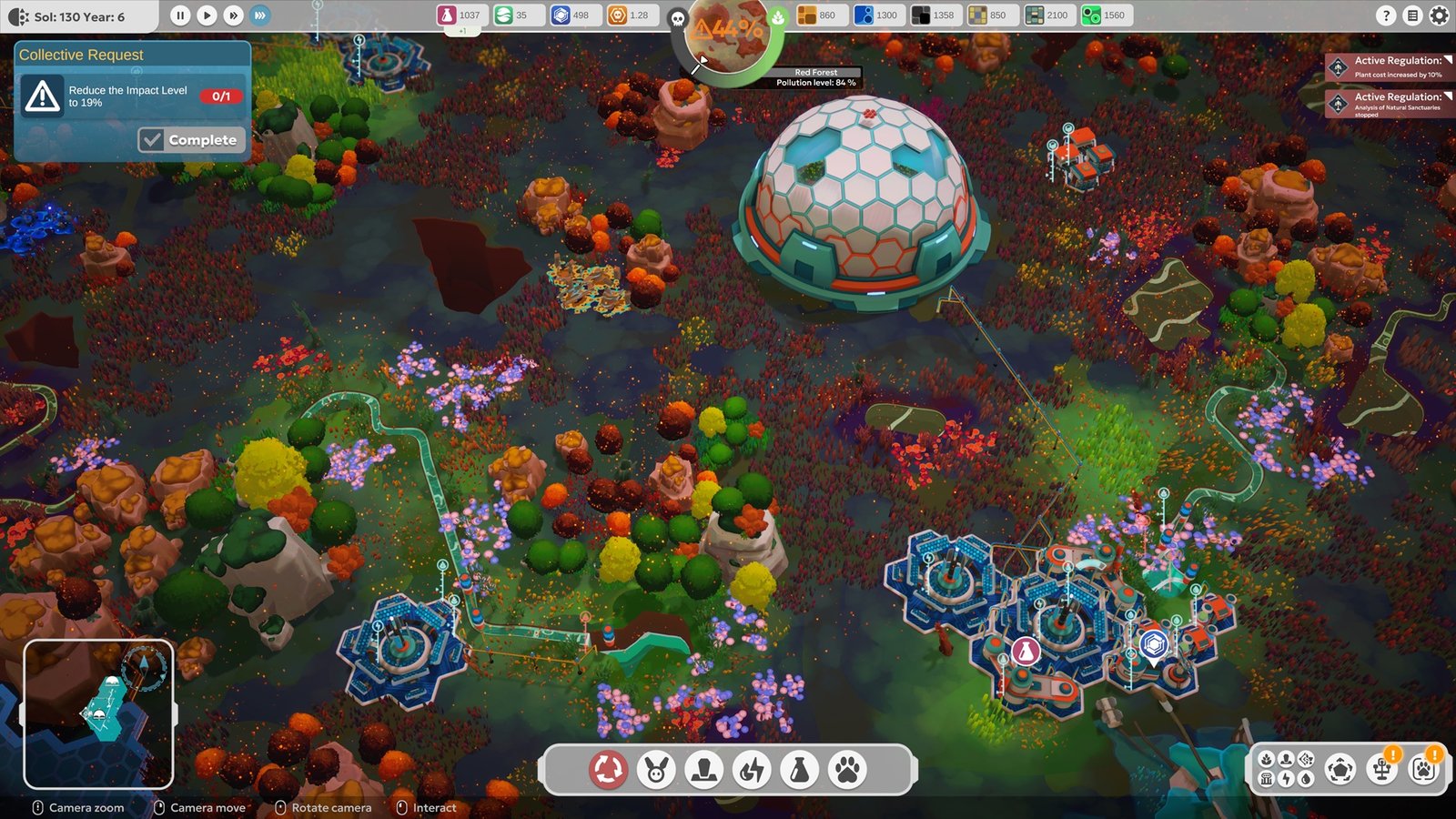
Players who want a faster-paced game can try out the Exploration Guild, who start with a bigger starting area and a self-powered Antenna, which is used to explore more of the planet. While there are no difficulty options in the game, players looking for added challenge can choose the Restoration Guild, who prefer landing on planets that have a lower amount of resources, but the game counters it by giving this guild a larger starting bonus. The final guild, called the Mystic Guild, is about giving players freedom of choice and opting for a more relaxed approach, so this guild could be the ‘sandbox’ mode. The guilds change the starting conditions and offer different perks, but they do not fundamentally change the core gameplay loop enough to make repeated runs feel meaningfully different.
The core gameplay loop of BioEden revolved around you selecting a guild and then landing on a random planet where you start collecting resources, expanding your recycling operations, and trying to remove the radiation and pollution from the planet to make it habitable once again. I like how the game refers to resource collection as recycling. There are multiple types of resources in the game, ranging from Ferrocene, Dinitrogen, Benzarite, and others. Each type of resource is required for different types of structures and constructions in your dome and other buildings.
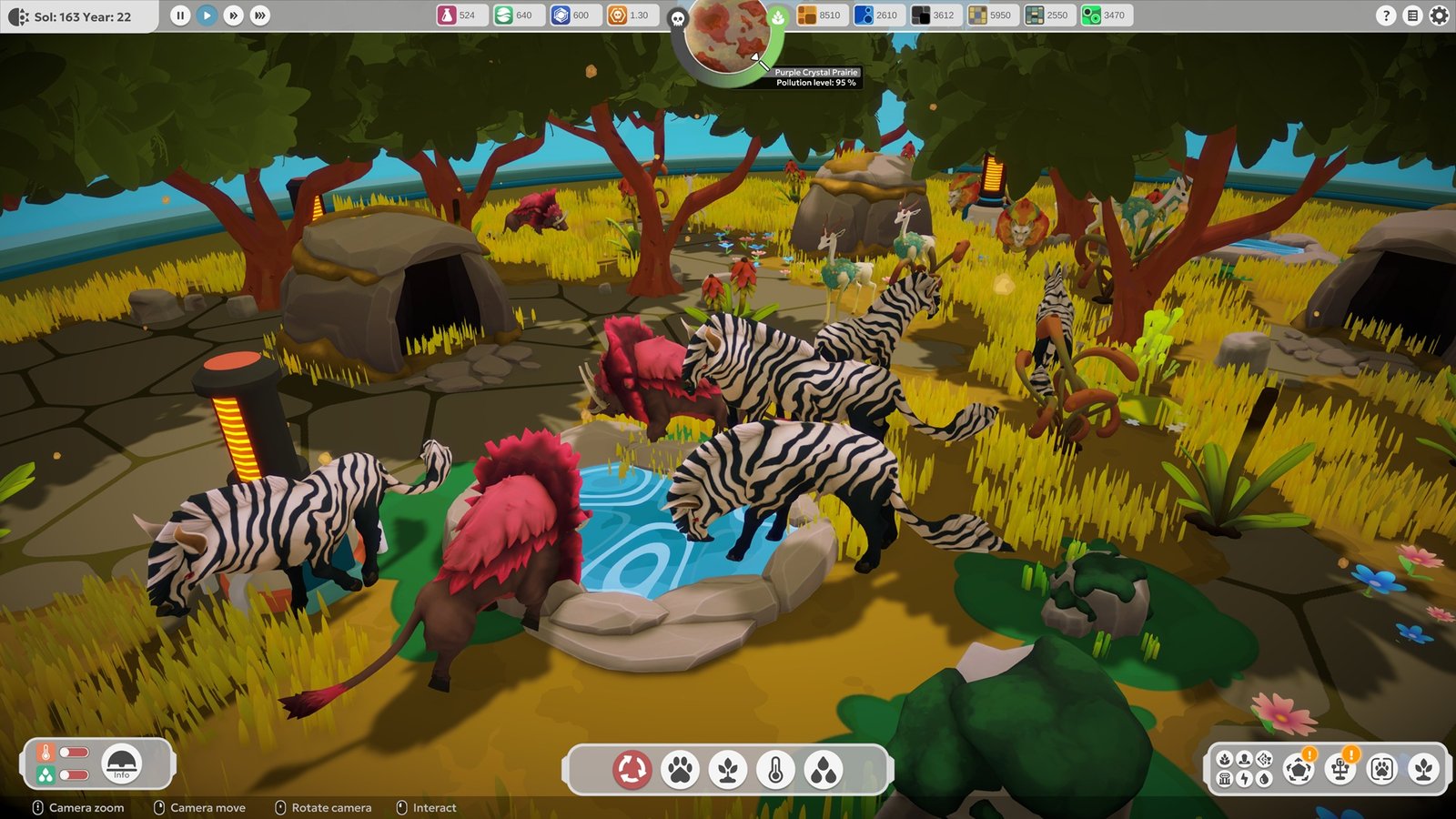
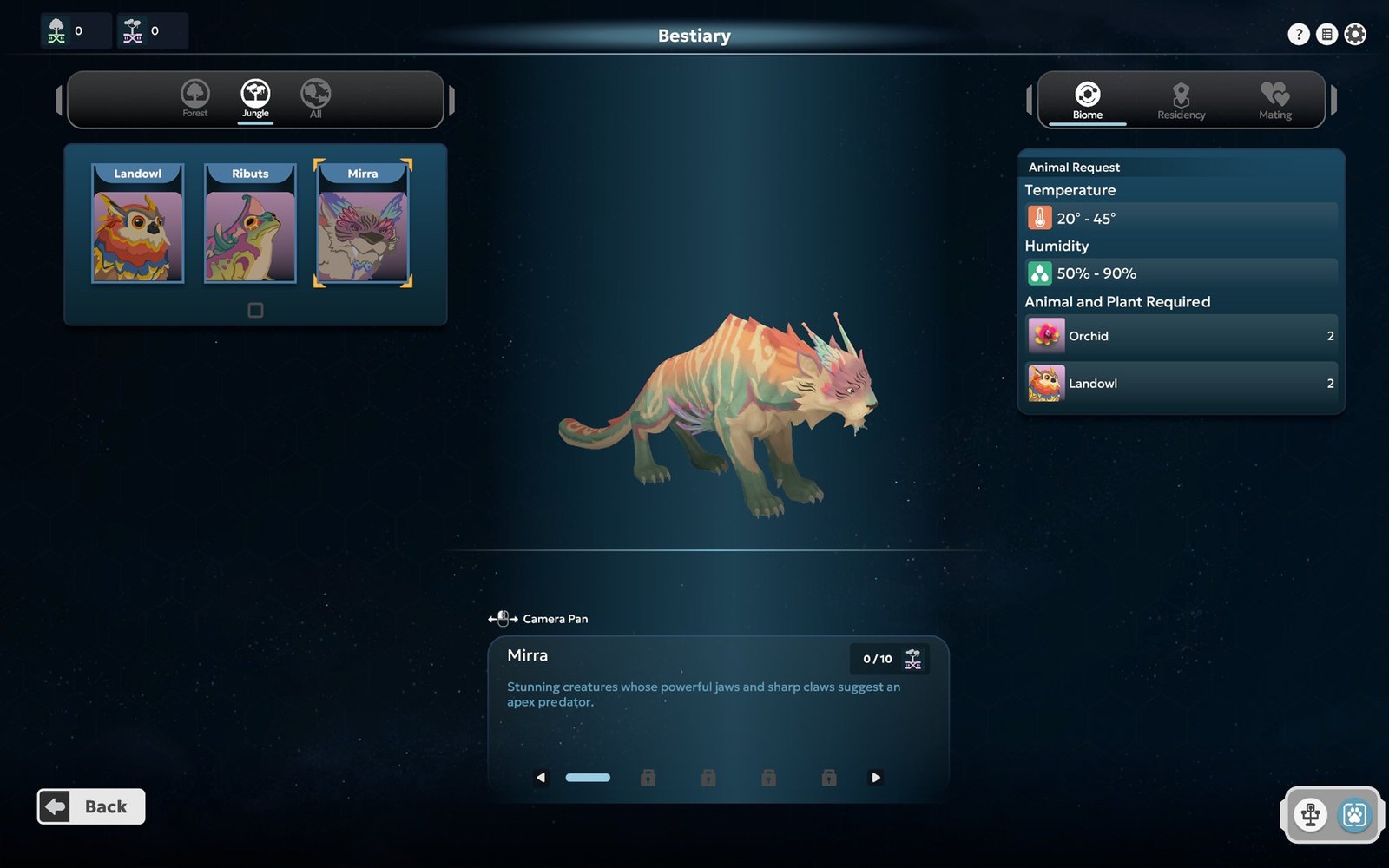
The Dome serves as the main hub of your operations, and inside these domes, you analyze the local fauna and reintroduce them by creating a biome that is suitable for them. Once you have analyzed a species, you will need to place an egg incubator for them inside the dome. Once done, you must prepare their biome for three different stages. These are arrival, residency, and mating. Each progressive stage has increased demands, and with every species moving forward, the demands only increase for every stage. The creatures cannot leave their biomes, so until the planet is healthy enough and you leave them free, the dome serves as some sort of high-tech zoo facility. There is no micromanaging these animals once you meet their requirements, but you have to ensure that there is enough water and food for them.
The game also demands a careful balance between herbivores and carnivores. For analyzing new species, you must first collect DNA points, which can be done by upgrading biomes or completing the Collective missions. The Collective is the main authority that sent you as a Keeper to the planet, along with the chosen guild. You do not own the guild, but rather you are merely guiding them, and the Collective watches your every move. They have complete control over everything, and if you decide to burn down the planet, they will quickly shut you down. Since the planet is already polluted to the extreme, introducing more technology and buildings further damages it, and the more you build, the more chances of a cataclysm, so you have to maintain a balance between producing buildings and conserving the natural atmosphere.
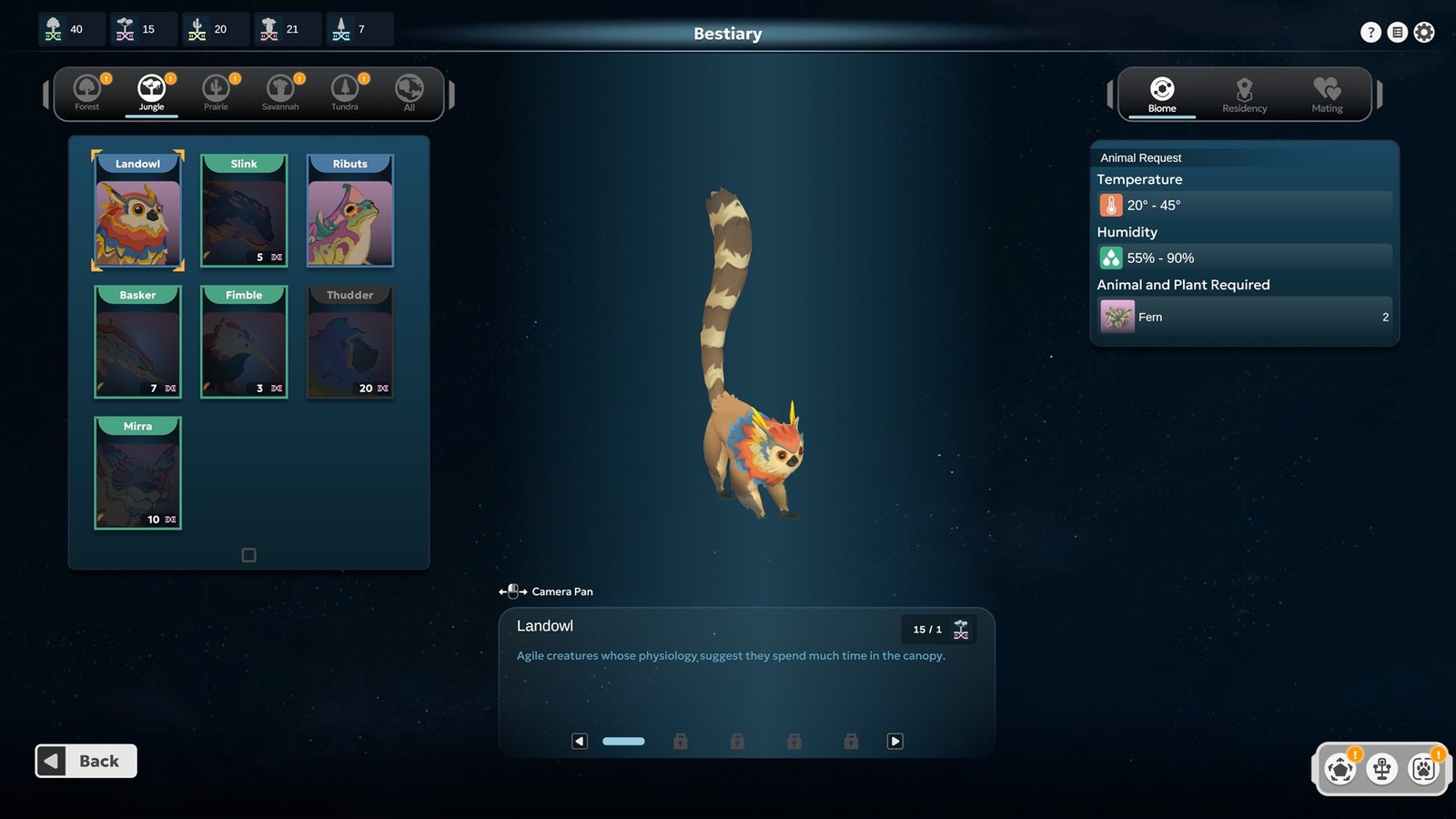
As you recycle the resources from debris, the area is cleaned, and it is restored to its original state. As you progress, you get access to additional buildings which directly work towards improving the planet’s condition, but naturally, they impact the environment negatively on their own as well, so you have to find the perfect balance between the two. The game does not let anything go to waste, as once a building has served its purpose, you can just recycle it back for full price. Every building has certain requirements as well, such as power or water, so you will need to lay down a network of energy infrastructure as well. Everything impacts the planet, so you have to find the perfect balance.
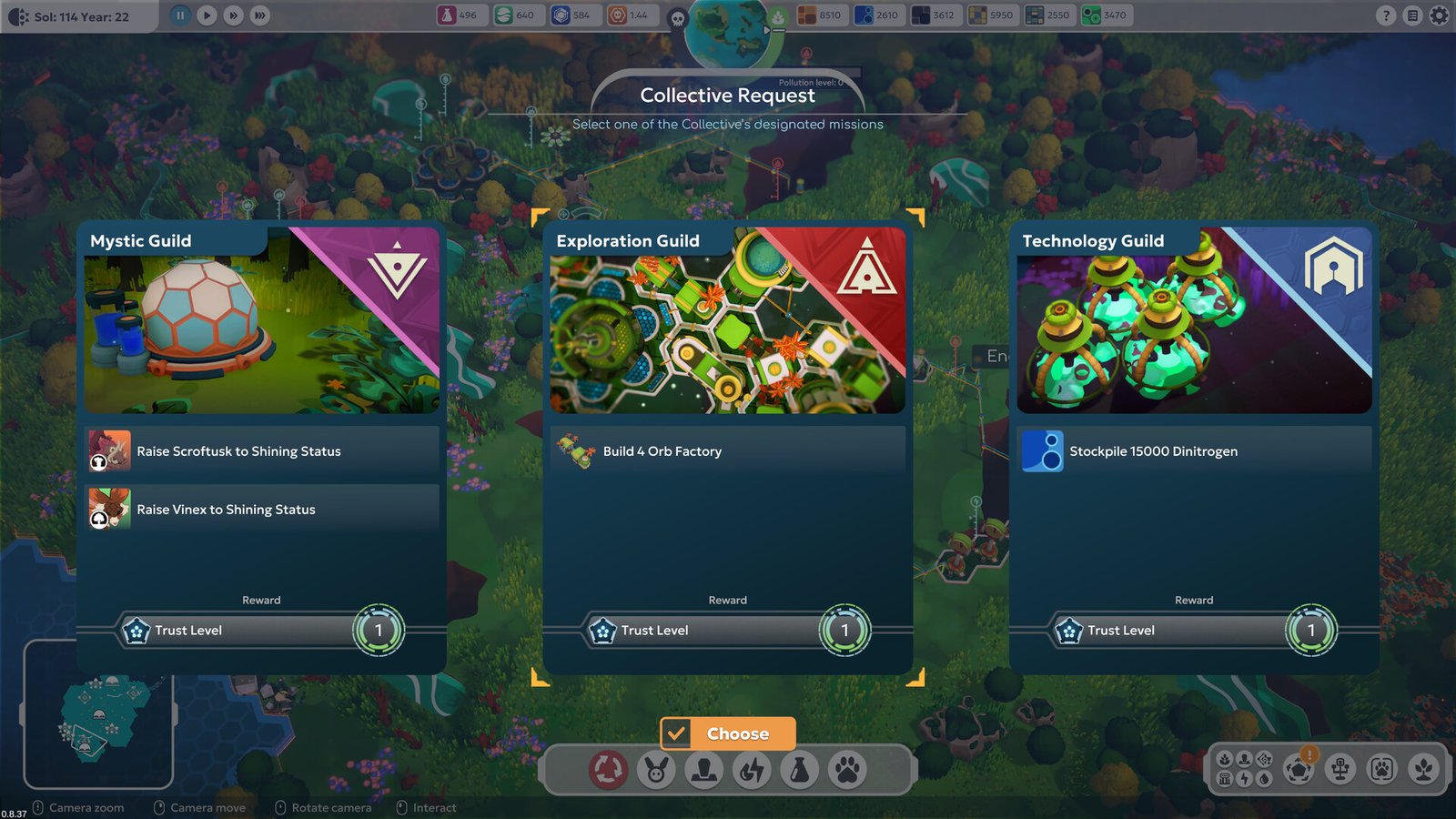
As you progress in the game, the Collective will send tasks and missions your way, which will result in rewards when you complete them. However, everything is very linear. For example, biome updates are linear, and so are the Collective rewards. Every time you level up, you get the same set of rewards, and there are no options to select any custom things from the list. This makes the game feel linear instead of a true management game. This limits your approach, and every game starts to feel pretty much the same.
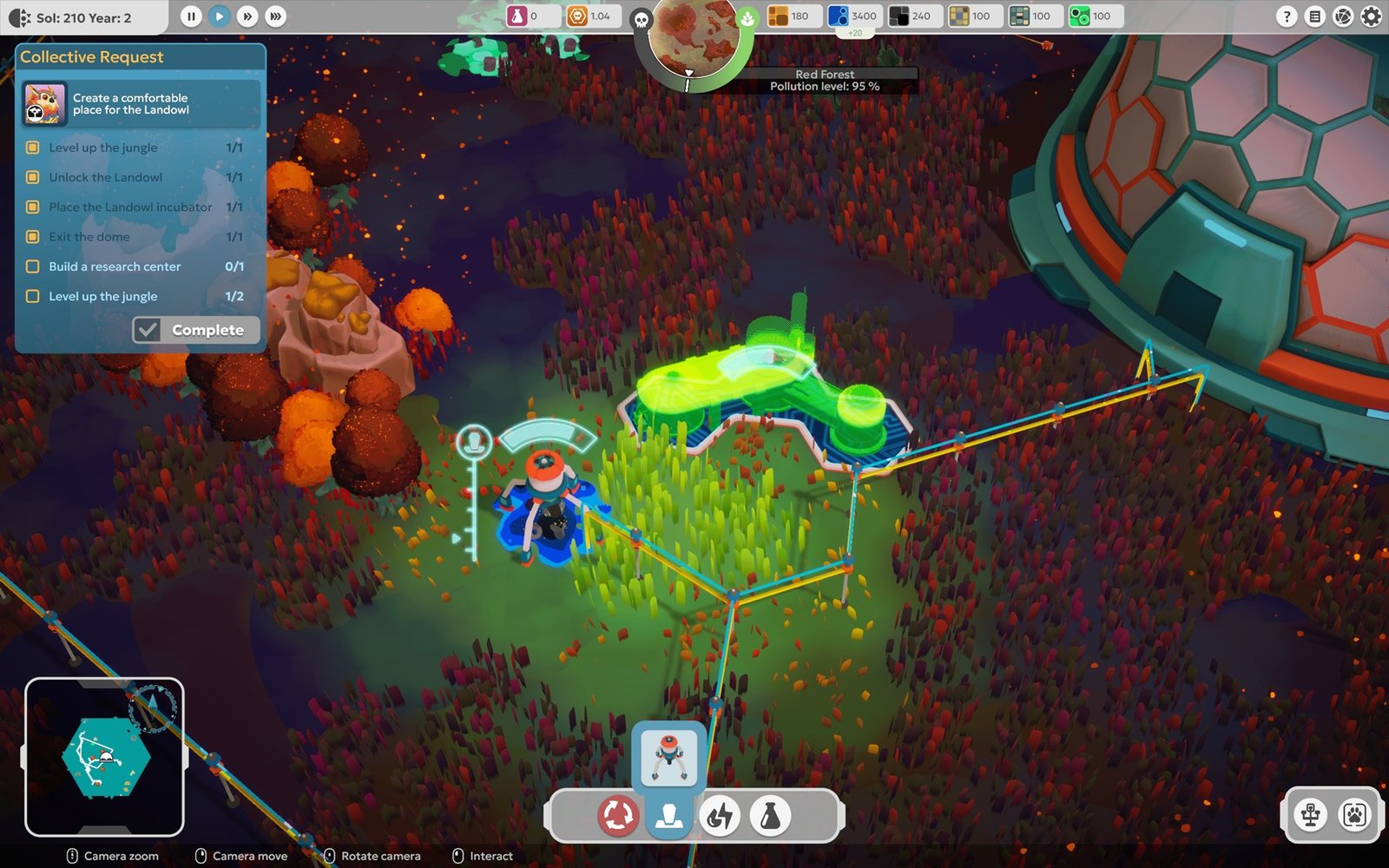
Visually, BioEden is a beautiful game, and it is one of the reasons why I just kept playing it. When you first land on a planet, it looks hideous. There are polluted water sources everywhere, the ground is filthy, and there is a clear indication that it is just dead. As you start working on its restoration, it starts to feel more natural, with green grass sprouting everywhere. The dirty, smoggy clouds start to disappear, and everything starts looking much cleaner. The water turns from a dark green sludge to crystal-clear blue. Even the special effects are amazing as you see your little drones speeding around here and there, collecting and delivering resources.
The creature design is funky, as most look like hybrids of multiple animals joined together. The biomes look good, and the structure design is fairly decent as well. I love the game’s UI as well. It is very simple, yet effective. There is no over-cluttering, and you get clean menus with instructions and information right where you need it. The sound design is also good, as you hear the industrial buzz when you zoom in on buildings, and also hear the animal sounds when you zoom in on them. The soundtrack is also soothing and fits the overall theme of the game well.
BioEden is a gorgeous-looking game, and its design is brilliant; however, the game fails to answer some of its own questions about gameplay. Why can’t we have the animal species after the planet is healed? Why do we need to create their habitat whilst the planet is still dangerous? The core gameplay loop could work absolutely fine without the animal species because they do not connect with anything. They only add another task for you while you try to restore the planet. Having these species inside the domes has absolutely no effect on the planet, and they have no gameplay significance. They are even hidden inside the dome while you are out managing your buildings and resource collection process, so you cannot see them running around most of the time.
There is no free or sandbox mode in the game as well. The main mode is a campaign-driven mode where the Collective keeps assigning you tasks, and if the Crisis Level reaches too high, the game is over. There is no free mode where you can just restore the planet in peace without the Collective intervening in everything. This makes the game’s overall replayability a little less because once you have tried all of the guilds in the game, there is not much to do afterwards. There are no special scenarios or anything else. Apart from guild-specific perks and gameplay style, the core gameplay loop is the same for every guild, so there is little variety in how the game is played.
Coming to the technical aspects, I played the entire game for this review using a keyboard and mouse because playing it with a controller is no easy task. The controls are clunky, and even a single task becomes a chore on it. Since it is a management sim, using a keyboard and mouse is the perfect way to experience it, so while it may come with controller support, I will still say that it is not worth trying with a controller. Just stick to mouse and keyboard, and you will be good to go. Otherwise, the game ran fine on my PC. It is a visually demanding game, but it is optimized well, as I did not encounter any bugs, framerate drops, or other gameplay issues for the entirety of my 30+ hour playtime.
Related News:
Final Verdict:
BioEden offers a satisfying and visually rewarding planet restoration experience, with watching a dead and polluted world gradually transform into a thriving ecosystem being one of its biggest strengths. Its clean UI, beautiful visuals, relaxing soundtrack, and well-optimized performance make the core gameplay loop enjoyable, but the experience lacks the freedom and variety expected from a management game. Linear progression, limited player choice, repetitive guild gameplay, and the absence of a proper sandbox mode hurt its long-term replayability, while the animal system feels disconnected from the game’s core restoration mechanics. BioEden is a charming management experience with a strong foundation, but its restrictive design prevents it from reaching its full potential.
Final Score: 6.5/10
Disclaimer: A PC Steam review code for BioEden was provided by Sandbox Strategies on behalf of Focus Entertainment for this review. For a detailed breakdown of our scoring and review process, please refer to our Review Policy.