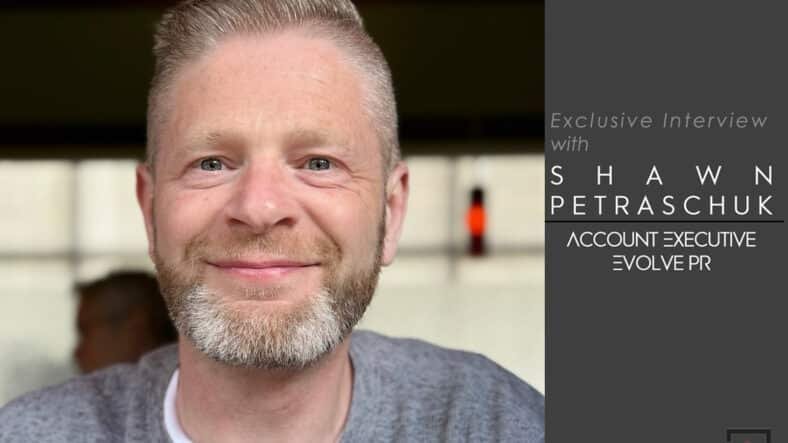
Shawn’s journey through the video game industry is anything but conventional. From co-founding COGconnected to later transitioning into public relations, his career reflects a perspective shaped by experience, adaptability, and a deep understanding of both media and industry communication. Having worked across titles such as The Alters, Frostpunk 2, and numerous indie projects, Shawn has witnessed the evolving relationship between developers, publishers, journalists, and players from multiple angles. In this interview with Shawn Petraschuk, we discuss career reinvention, the realities of modern games PR, and the challenges currently shaping the industry.
GH: Could you introduce yourself to our readers and tell us what first drew you to the video game industry?
SP: I’m Shawn, an account executive with Evolve PR. I’ve always been an avid fan of gaming (as far back as the Vic 20 and the ColecoVision), but I never viewed it as anything I would do as a career when I was younger. I was in my mid-30s when I truly rediscovered my passion for games. I had a job I hated, and games were my escape from the drudges of reality, haha. What I never expected was to transition that escapism into a full-blown career change.
GH: You started working in the video game industry at 40. What prompted the transition at that particular stage of your life?
SP: It all happened quite organically, to be honest. I was working in Vancouver as a transit bus driver and essentially just volunteered to write a review for New Super Mario Bros. U for a website. That was the catalyst to get me into the industry! From there, I ended up a 50% owner in the site I volunteered to write for, built up its viewership, and helped it transition from a hobby site to a proper media outlet with over 40 paid writers on staff, and then utilized the experience I’d garnered there to transition into the PR side of the industry.
Follow-up: Was it a deliberate pivot or something that evolved organically?
SP: As mentioned above, I feel it was all very organic! When I did apply to work at Evolve, that was VERY deliberate, as I couldn’t stomach one more day driving a bus, haha, but apart from that, it all flowed from one part to the next very naturally, as I was excited to do the work.
GH: Did starting later give you a different perspective compared to those who began their careers in their 20s?
SP: I think that is true to some extent, yes! No different than anything else in life, age usually brings experience and some wisdom (if you’re lucky, lol) to any role. I do recall being a bit scared that I was going to age out of the job in some ways, but as I settled into the role, I started to truly realize that this business has no age barrier and there’s room for everyone.
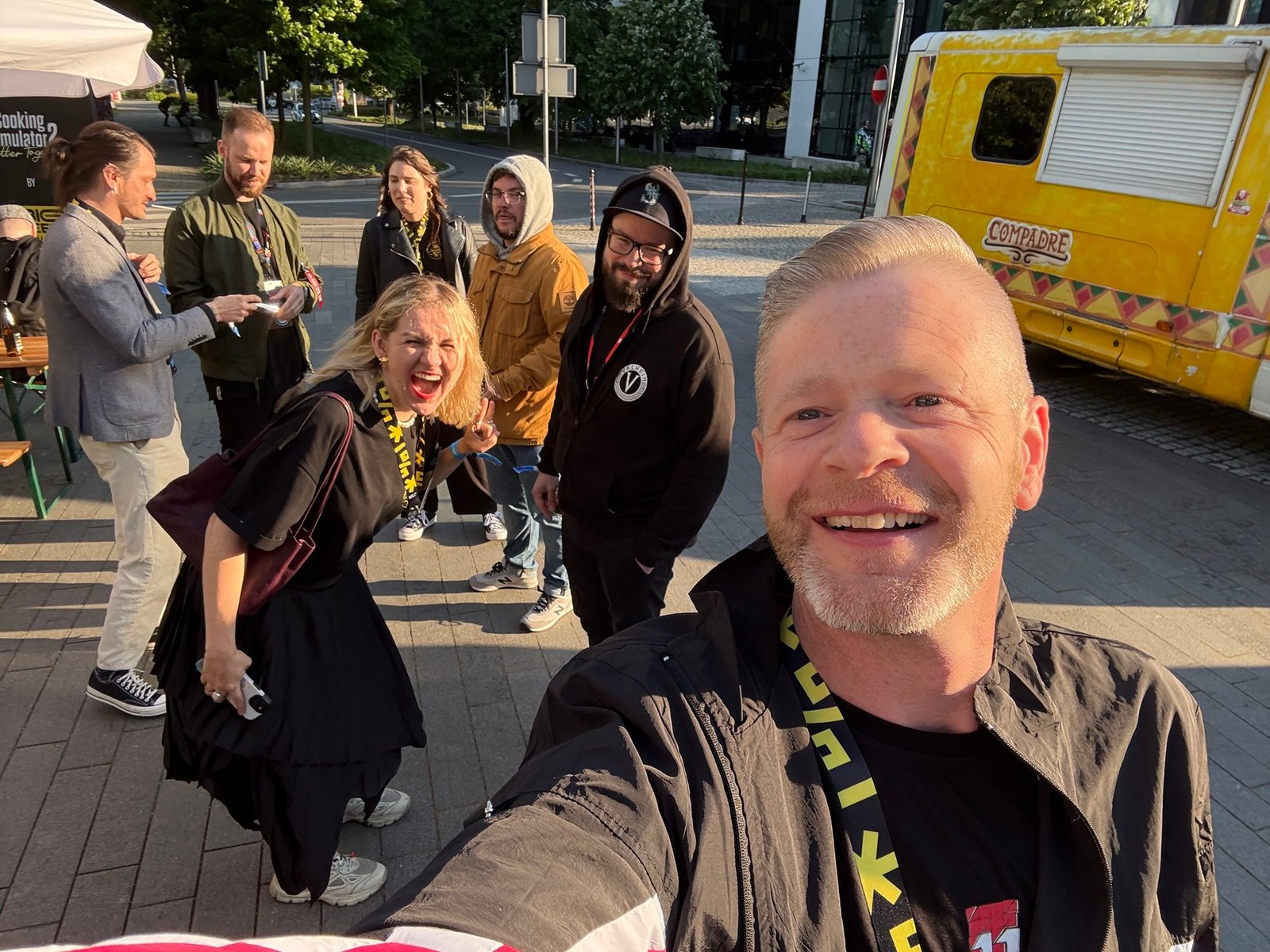
GH: What were the biggest obstacles you faced breaking into the industry at that point?
SP: Honestly, I don’t feel I encountered any obstacles! Work on COGconnected was all my own drive, and when I applied at Evolve (the only application I’ve ever put in for a career position in the games industry), they ended up hiring me. I’ve never looked back!
GH: As a co-founder of COGconnected, what was your original vision for the platform?
SP: We always had hopes that the site would grow to be a self-sustaining machine, where, at the very least, my former partner and I would be able to take on full-time editor roles and leave our previous jobs behind. It was a HUGE grind as I would work 5 days a week at my regular job, doing about 12hr days, and then I’d manage to put in 7 days a week to the site, as well. It was all heart and dedication, but as we all know, surviving in media is difficult, and while we did ok, it was never really anything that would sustain an actual salary.
COG lives on today, but is much smaller than when I left. It’s just a reflection of where the media landscape has moved to in recent years. It’s harder than ever to stay afloat, and I have so much respect for the little guys who keep pushing based on passion alone.
GH: What did building and running a media outlet teach you about how narratives around games are shaped?
SP: I think that more than anything, I learned that ‘creating a story’ extended far beyond just the story that exists within any one game. Creating a story is your whole campaign from start to finish, and knowing how all the different parts of what you’re creating fit together is imperative to your success. We saw all kinds of pitches come our way, some good, some awful, but I gained a ton of perspective on what worked and what didn’t.
In terms of how narratives are shaped by actually covering games, I certainly learned that things could get out of control if PR beats didn’t keep things well measured. By that, I mean that if they hype it up to be more than what it is and allow the media to take control of the conversation, things could spiral fast. One of the worst things you can have happen is seeing media and your players build up what you’re creating to be MORE than what it actually is. Once a hype train has left the station, it can be hard to dial back, and that ultimately leads to disappointment, and sometimes, even failure.
GH: Covering titles like The Alters and Frostpunk 2 requires engaging with complex themes. How did experiences like those influence your understanding of the relationship between developers, media, and audiences?
SP: I feel like these are relationships that are not only within constant states of change, but also different depending on the kinds of titles you’re working with. Working on games like The Alters and Frostpunk 2 is extremely different from working on games like Fortnite, which I handled when it was skyrocketing into the stratosphere, and how developers engaged with media and audiences from one game to the next required a strong understanding of who the game is for and what might be expected.
If a game has a mature tone and adult themes, you have to assume that your audience is smart and nuanced. They understand the complexity of those kinds of narratives and want to be challenged. If a game is bordering on friendslop and chaos, that’s often an audience who’s simply there for a good time and doesn’t necessarily need, or want, the heaviness that comes with the aforementioned titles. That doesn’t mean they aren’t smart or nuanced, of course, but it simply means they look for different things when they choose to play a game. Understanding player motivations is key to any game you’re trying to promote.
GH: Moving from journalism to PR is a significant shift. What motivated that change?
SP: Two things, really! First, succeeding in media is a huge grind, and I was exhausted holding down my full-time job and running a website as co-EiC. Second, I knew I couldn’t keep up double duty for much longer, so when I saw a chance that would move me away from my old career and into the industry I loved so much, it was an absolute no-brainer to apply.
GH: Before joining Evolve PR, did you consider establishing your own PR agency?
SP: Oh, good god no! I’ve come to understand the complexities of surviving in this industry, and no matter where you fit in, it’s a ton of hard work. I have the utmost respect for the entrepreneurs out there, including my bosses here at Evolve, and while I knew I’d learned a ton on the journalism side of this business, I also knew that I had a ton to learn about what it took to cross over and do a great job on the other side of the fence. I’m not exaggerating when I say that I spent the first six months of my career here at Evolve not knowing what the hell I was supposed to do every day!
GH: How does your background in media inform the way you approach PR strategy today?
SP: I’m not sure if it really informs my strategy as much as you might think. Understanding what may be of interest to the media in particular is always at the top of mind, and understanding that interest doesn’t necessarily mean clicks and good SEO – the survival metric of any site – are both helpful.
The PR to media/creators/audiences’ pipeline has changed so drastically in the 8+ years I’ve been here, so if anything, I’ve adapted to be much more robust in my approach to a campaign than I ever needed to be back in 2018.
GH: Having sat on both sides, where do you think misunderstandings most often arise between journalists and PR professionals?
SP: A good PR person realizes that there are two sides to working with a journalist. They’re looking for stories to tell, but they sure as heck don’t want you to tell them the story. I think some folks approach pitching a good reporter by telling them WHAT to write about, and that often leads to ignored pitches. You need to trust that if you give a writer all your background information and details on what you’re working with, they’ll see the story how they want to write it. They’re smart… which is why they do what they do. You have to trust that!
I’ve been fortunate enough that I haven’t had many, if any, true misunderstandings with any journalist I’ve worked with. Mutual respect and understanding that we’re all working with limited time and resources – now more than ever, I’d say – has allowed me to be quite successful in this regard. As well, understanding that I can be friends with journalists without crossing professional lines – work and play are obviously different – has allowed me to genuinely get to know a lot of the folks I pitch to on a regular basis.
GH: Was there a moment when you felt you had fully transitioned from critic to advocate?
SP: Oddly enough, this was something I noticed rather quickly. I lost count of how many reviews I did in my time with COG and freelancing for a number of other sites and magazines, and while I always felt I approached things fairly and with a critical eye, I also realized that true criticism could run so much deeper.
As I started pitching my own games, reading the reviews that came back at launch, and absorbing all that information, I realized that maybe I was never the best person to be criticizing games. Reviewers saw things I wouldn’t see in a million years! While I could point out likes and dislikes, a good reviewer could dismantle things at a deeper level, and their feedback could be crucial to navigating a game from a so-so reception to a positive one.
I’m a much better hype guy than I ever was a critic, so moving into PR was absolutely the best decision for me.
GH: From your perspective, how does PR differ when supporting major releases versus indie titles?
SP: There’s one very obvious difference in that getting someone to pay attention to a well-known and established IP is a million times easier than having someone respond to a pitch for something they’ve never heard of before.
Each comes with its own challenges, to be honest. With a major release that has all the eyeballs on it you’d ever need, managing things like hype and player expectations becomes imperative. If it’s a sequel to an existing IP, players already know what they like, and they’ll let you know if things are moving in a direction they don’t like.
For an indie title, the job changes quite drastically. You need to know exactly what your USPs are and how to get players, creators, and media alike on board. It can be much more grassroots with a ton of personal outreach, and you have a much more difficult job finding your place in and amongst the noise of the industry on a daily basis. Using one of my latest clients as an example, we have been very fortunate to break through the noise with Emberville as we focus on the most compelling parts of what makes the game interesting while working hard to make sure we place assets and opportunities in spots that will garner the visibility we need.
There’s a ton more to this, of course, but on the surface, I’d certainly say they’re two different beasts!
GH: What communication mistakes do studios most commonly make when engaging with media?
SP: I feel like the biggest misconception some studios have is simply the expectation that whatever it is they’re selling, media will be buying. So perhaps it’s less on the communication side overall, but more so tempering what they ‘expect’ to realize that the onus is on us/them to put pitches, ideas, and games together that are relevant to the interests of any one outlet’s readership.
And to be fair, not every game will find an audience with the media. There are plenty of very well-established games that have a bare minimum presence in media coverage and rely solely on word of mouth, social media presence, or creator and community engagement.
Understanding what you have in your pocket and who it speaks to most can be a difficult thing for some studios to wrap their heads around, and pushing too hard for a result that really isn’t in the cards is not only a waste of resources, but could damage future working relationships with the outlets they’re pushing on.
GH: The industry is currently facing layoffs, evolving monetization models, and heightened community scrutiny. From a PR standpoint, what feels most urgent to address?
SP: All of the above? If we know one thing about the games industry, it’s that it is constantly evolving. It pauses for no one, so dynamically adapting to changes is essential. Money is tighter, but companies are also trying to squeeze every penny they can out of consumers. Communities are smarter than ever, and they know what they want and what they absolutely don’t want. Layoffs are happening as the industry tries to right the ship after going a bit too hard on growth during Covid when we were all trapped inside.
In terms of PR specifically, knowing what to say and when to say it is important. Knowing when to shut up and stay out of it – when industry discourse is on a rampage, for example – is equally important. I feel like good PR tries to prioritize anything and everything as needed rather than trying to hyperfocus on any one specific thing. If you’re only looking in one direction, you’ll miss what’s happening right behind you that could be just as important to your success. Essentially, good PR is 360 degrees of attention to the best of your ability.
GH: Do you believe trust between players, publishers, and media is strengthening or eroding?
SP: This can vary greatly from company to company, but there is no such thing as permanent goodwill. A publisher can be on top of the world and make one hiccup that results in them having to climb that ladder of trust right from the bottom rung. You rarely fall one or two rungs, but plummet to the ground, and gaining that back can take years.
Players have been burned too many times by false promises, so they’ve learned to speak up when they see something that sets off a red flag from a publisher. They also question the media more than ever – instead often placing ultimate trust in a creator, perhaps – and will cry ‘shill’ or ‘paid review’ on a whim with no concrete proof of their claims. It can be hard to navigate that kind of anger, but you also have to try to understand that their mistrust is often, but not always, rooted in some kind of previous slight. They have a reason for their lack of trust.
To answer the question, it really does go both ways. There are players, publishers, and media who are working towards understanding each other to build a more trusting relationship, but there are certainly groups from all three who can act in ways that erode trust.
GH: You built your career without a university degree. How do you view formal education versus lived experience in this industry?
SP: I know a lot of people go to school for PR specifically, but I can say with some amount of authority (I think, haha) that experience and understanding your audience is what will take you over the finish line. I’m certain, of course, that there are absolutely critical base pieces of knowledge that you can learn in a classroom, but until you’ve gotten your hands dirty in the day-to-day of the games industry, you’ll never really grasp what the work entails.
GH: What skills proved most valuable in your journey? Particularly those that can’t be taught in a classroom.
SP: Personality. Full stop. We all know this is a business, and no one wants to work for free, but adding personality to your work each and every day is what makes you stand out from the rest of the pack. Media and creators are inundated with emails, DMs, pitches, and more on a daily basis, so why would they choose to engage with you over anyone else?
Don’t get me wrong, sometimes, in more urgent scenarios, you can’t afford to add a little bit of personable commentary to your outreach, but if and when time allows you to do so, being personable and not just a pitch machine will serve you well. Talk to people and get to know them, their likes and dislikes, and the things they do outside of their job. You can’t teach being personable, but understanding that as an industry, it can be equal parts business and relationships, is a leg up when it comes to success.
GH: What would you say to someone who feels “too late” or “underqualified” to pursue a career in games?
SP: Impostor syndrome comes for us all, so stay the course and shoot your shot! I felt both, and now I’m fairly certain this is the industry I’ll end up retiring in. Sometimes, you just need to trust that you have what it takes, even if your insides are screaming at you otherwise.
GH: Looking back, what defines success for you now? And what does longevity in the video game industry truly require?
SP: For me, success is finding a job in an industry that actually encapsulates my passions. At 40, I had never had a job I loved or anything truly resembling a ‘career’. It always felt like the thing I was doing until the next thing came along. So being here now, where I wake up every morning excited to go to work, is about as much success as I could ask for. And money. We all like money, haha.
As for longevity, the number one thing I can say is adaptability. When I first started in this industry, it was all media, all the time. Then came YouTube, then Twitch, and now, TikTok. The way we talk about games has changed. The way we promote games has changed. The games being made have changed. If you’re not willing to change with the industry, you’ll be left behind. Stagnancy is the enemy of innovation, so even if you don’t love it, learn to roll with the punches and adapt as needed!
As the video game industry continues to evolve, voices shaped by both experience and perspective remain increasingly valuable. Through his journey from co-founding COGconnected to working in public relations later in life, Shawn offers a viewpoint grounded in adaptability, communication, and a clear understanding of how the relationship between developers, media, and players continues to shift. Whether discussing PR strategy, industry challenges, or career reinvention, one thing remains clear: longevity in games is rarely defined by a traditional path.
Related:
Finally, we would like to thank Shawn for taking the time to participate in this interview and for offering thoughtful insights into his journey and the evolving video game industry.