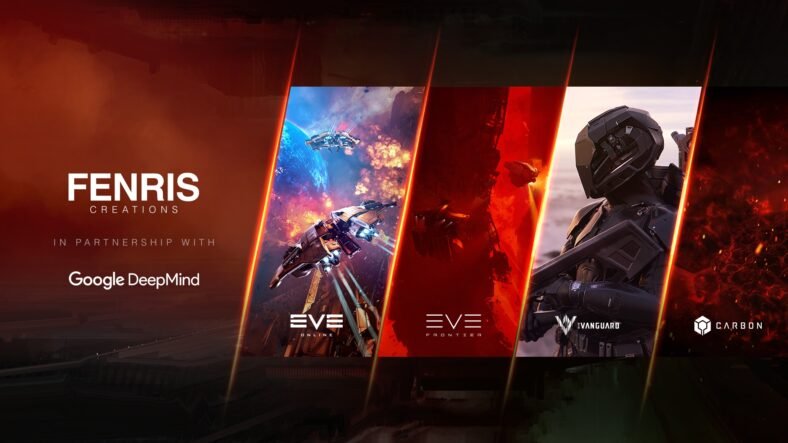
Fenris Creations has officially opened up Carbon, the engine framework behind EVE Online and EVE Frontier, making it fully open source as of today.
Carbon has been in development for more than 20 years. It’s the technology running EVE Online’s single-shard universe, its player-driven economy, and some of the biggest multiplayer fights ever recorded, including the Guinness World Record battle that packed 8,825 players into a single system.
The release covers more than two dozen Carbon modules, essentially the core building blocks Fenris Creations uses to run its games. That includes Destiny, the physics and pathfinding system that keeps those massive battles from grinding to a halt, and Trinity, the graphics module responsible for EVE’s sprawling sci-fi visuals. Beyond those two, the open-source modules also cover networking, UI, audio, resource management, scripting, scheduling, and the broader toolset needed to build large persistent worlds.
Ben Hunter, Senior Development Director for Core Technology at Fenris Creations, framed the move as bigger than a code drop. Carbon, he said, was built to support worlds “that can endure for decades,” and has already carried EVE Online through more than 20 years of continuous operation, from routine play to record-setting battles. He described open sourcing it as a way of making that foundation “visible, understandable, and useful to others,” and a bet that persistent online worlds get better when more people can study and build on what’s underneath them.
What sets Carbon apart from most licensable game engines is where it came from. Rather than being built for broad commercial use, it was developed inside a live studio, shaped entirely around keeping EVE Online running on a scale for over 23 years. That means it was optimized for speed, performance, and long-term stability rather than flexibility across genres.
This isn’t Fenris Creations’ first move toward opening things up to its community. EVE Online has leaned on third-party tools, public APIs, and player-built infrastructure, from economic tracking to alliance logistics, for years. Open-sourcing Carbon pushes that same philosophy down to the engine level, giving developers and researchers direct access to the technology itself, not just the data it produces.
Carbon isn’t going anywhere in-house, either. It’ll keep powering EVE Online and EVE Frontier, Fenris Creations’ hardcore space survival MMO currently in development. For Frontier specifically, the open engine ties into a bigger goal: a moddable, player-shaped universe where builders can create their own systems and tools that actually persist in the game world.
Related News:
The Carbon repositories are live now on GitHub for anyone looking to dig in.