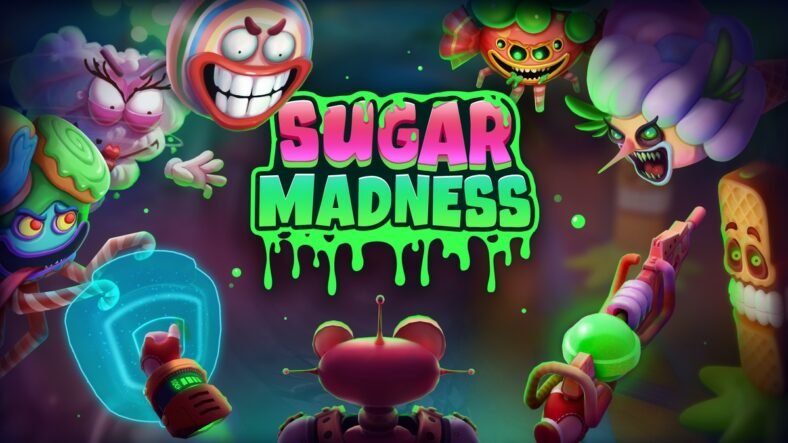
JOLLYCO is a game development studio known for titles such as Jolly Battle, Jolly Match, Sugar Mess, and its latest VR adventure, Sugar Madness. Following the launch of the game, we had the opportunity to chat with the team to discuss the vision behind the project, the challenges of developing for virtual reality, and the community’s response since release. We also spoke about the studio’s plans and what players can expect next. Answering our questions here is Andrey Grechko, Project Manager at JOLLYCO. Without further ado, let’s dive into our exclusive interview with JOLLYCO.
GH: Please tell our readers a little bit about your studio and what sort of games you guys have cooked up before Sugar Madness.
AG: At JOLLYCO, our VR journey started with Sugar Mess – Let’s Play Jolly Battle, a colorful arcade-style VR shooter that helped us build our foundation in VR interaction, player comfort, and optimization for standalone hardware.
We later expanded into mixed reality with Jolly Match 3 MR, a free-to-play puzzle experience that explored a different side of immersive gameplay and spatial interaction.
Both projects shaped the development of Sugar Madness. With this game, we wanted to take everything we learned about VR and create a more intense action experience built around physical combat, skill-based gameplay, and cooperative play.
GH: For players coming across Sugar Madness for the first time, could you introduce the game and explain the original vision that inspired its candy-themed yet surprisingly dark world?
AG: Sugar Madness is a fast-paced VR action shooter set in a twisted candy kingdom transformed by a failed experiment conducted by Dr. Sour. Players take on the role of an advanced robotic prototype, fighting through corrupted zones, battling hostile enemies and machines, and uncovering the cause of the disaster.
The original vision was to take a familiar, colorful candy-inspired world and turn it into something unexpected, a place that looks playful on the surface but hides a darker, more intense action experience underneath.
GH: The contrast between colorful candy environments and grotesque enemies creates a unique identity for the game. How did your team arrive at this artistic direction, and what made you confident that this unusual combination would resonate with VR players?
AG: We wanted Sugar Madness to have a strong visual identity that players could recognize immediately. The contrast between bright candy environments and unusual enemy designs allowed us to create a world that feels playful but still delivers exciting action.
This approach also works especially well in VR because players are physically inside the environment. Clear visuals help with readability, while unexpected enemies and situations create memorable moments.
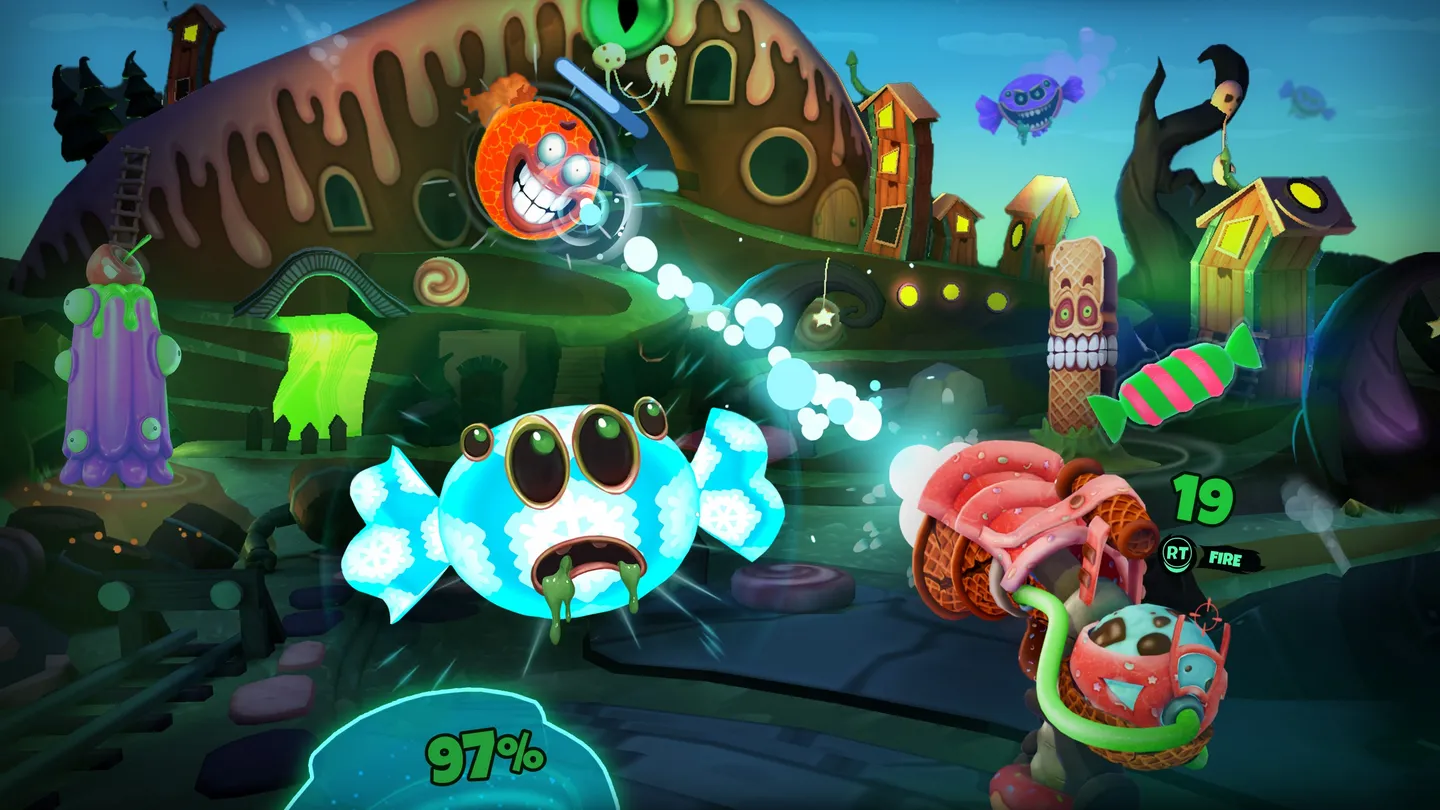 GH: Sugar Madness combines wave-based arenas, rail-shooter sequences, mini-games, and large-scale boss encounters within a single campaign. What led to that structure instead of focusing solely on one gameplay style?
AG: We wanted the campaign to constantly change its rhythm. Different gameplay styles allowed us to create a better pacing curve, from intense combat encounters to lighter moments and larger boss battles.
Each element serves a purpose: wave battles focus on skill and survival, rail sections add variety, mini-games provide short breaks, and bosses deliver the biggest challenges and memorable moments.
GH: VR shooters constantly balance immersion with player comfort. What were some of the biggest design decisions you made regarding movement, combat pacing, and player fatigue during development?
AG: Player comfort was a major priority throughout development. We carefully controlled movement speed, camera behavior, and combat intensity to make sure the experience remained exciting without becoming overwhelming.
We also paid close attention to pacing. Instead of maintaining maximum intensity at all times, we designed moments where players could recover before the next challenge. This helped create a more balanced experience, especially during longer sessions.
GH: Physical interaction is at the heart of Sugar Madness, from grabbing weapons to melee combat and dodging incoming attacks. Which interaction proved the most difficult to perfect in VR, and why?
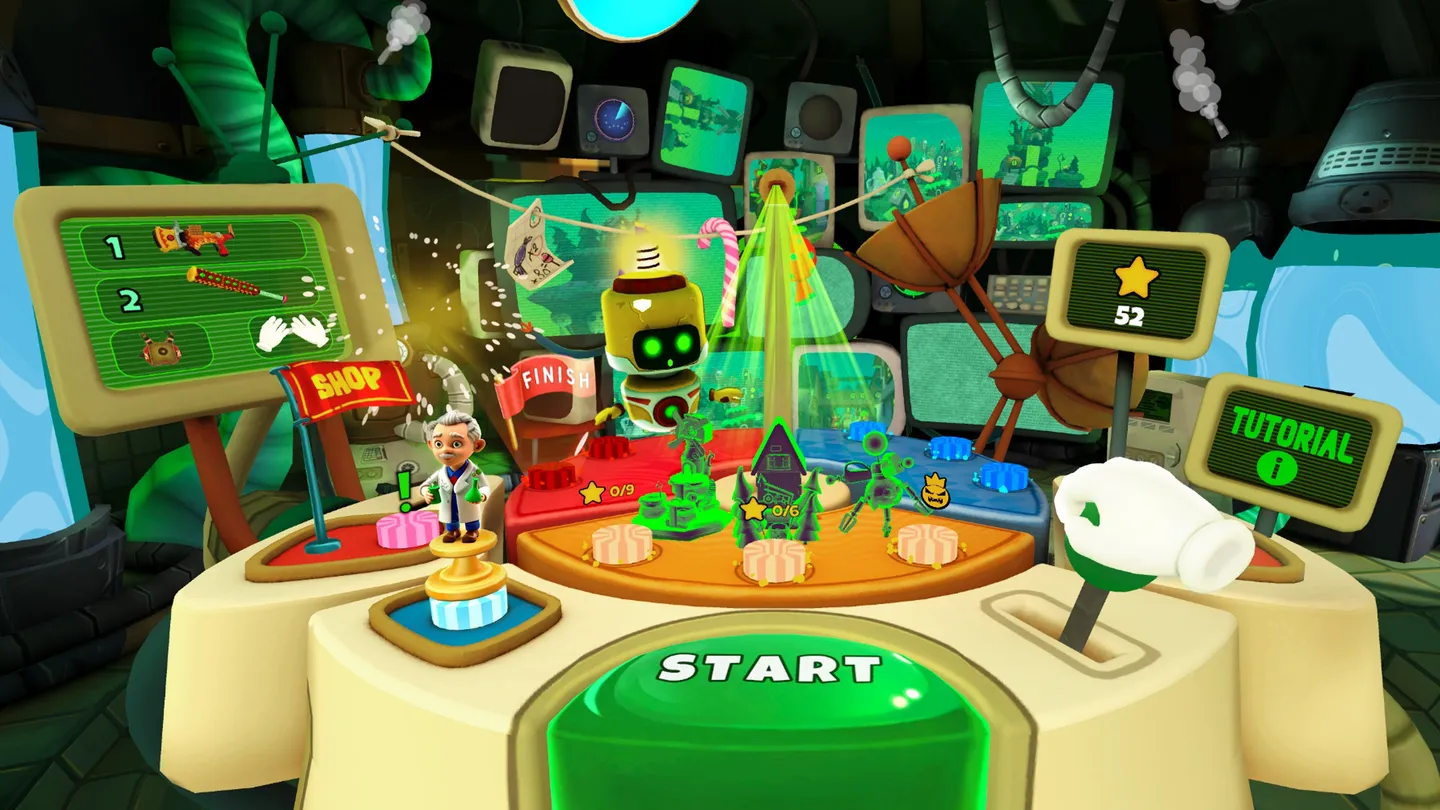
AG: The most difficult challenge was perfecting the physical transition between primary weapons, like the Sugar Blaster or Juice Gun, and defensive gear, such as a melee bat or bubble trap.
We refined the manual interaction system to ensure these swaps felt immediate and responsive, allowing players to move instantly from firing to defending without breaking their combat rhythm.
GH: Boss fights are often the highlight of action games. What philosophy guided the design of your multi-phase bosses, and how did you ensure they remained challenging without becoming frustrating?
AG: Our focus was creating bosses that felt challenging but understandable. In VR, players need to quickly read attacks and react physically, so clarity is essential.
Each boss phase introduces new mechanics, attack patterns, or weak points while providing clear feedback. We wanted victories to come from learning and adapting rather than simply surviving waves of damage.
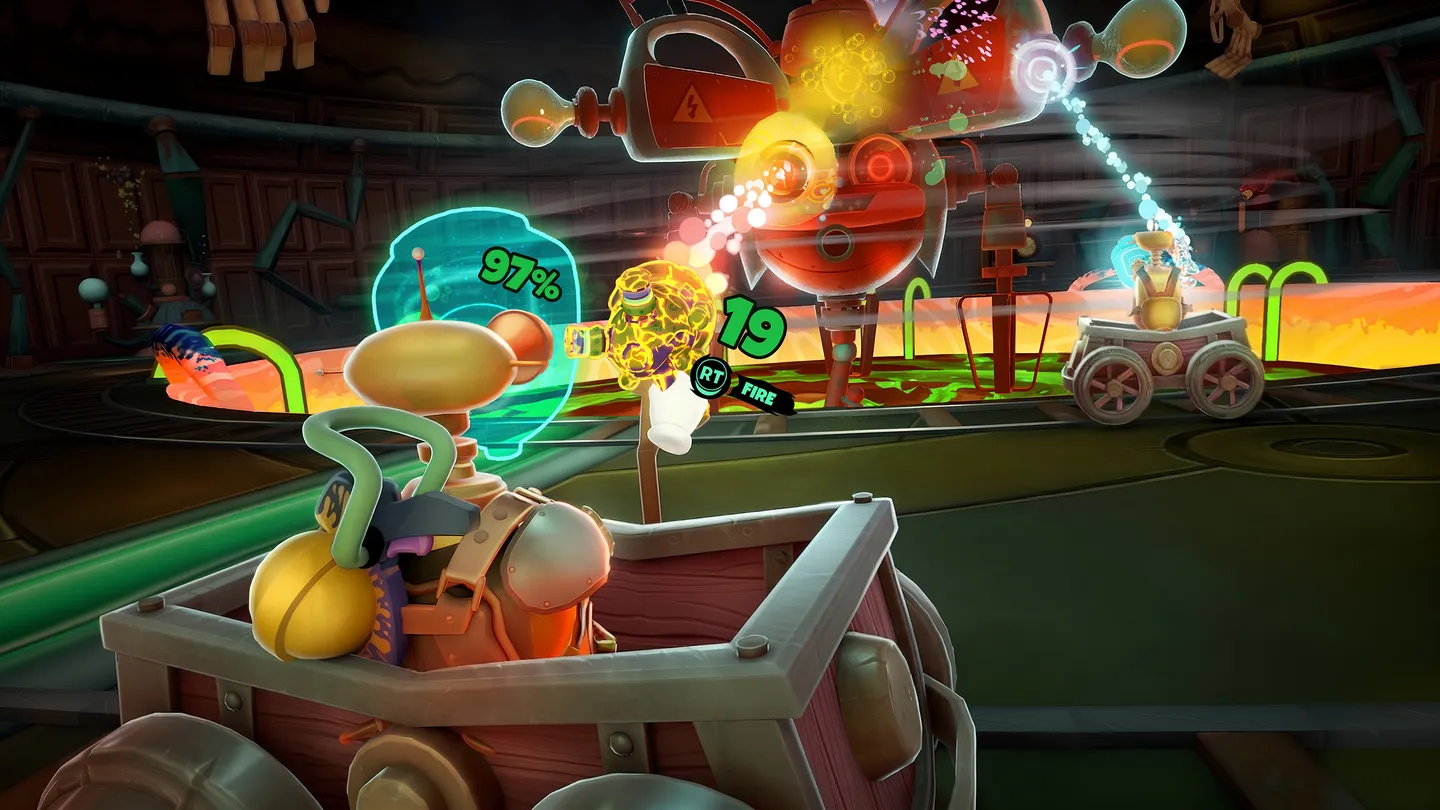 GH: Co-op is a major addition compared to your previous VR projects. At what stage of development did you decide it should become a core feature, and what technical or gameplay challenges came with implementing multiplayer?
AG: Co-op was part of our vision at an early stage of development because VR naturally creates social experiences.
From a technical perspective, our biggest challenge was synchronizing essential combat states across standalone Quest headsets to ensure that gameplay remained responsive for both players simultaneously.
On the gameplay side, we had to carefully adjust the co-op balance; we wanted to increase the pressure and enemy count for two players without creating so much visual noise that the action became difficult to read or the hardware performance suffered.
GH: Many VR developers struggle to maintain stable performance while delivering visually rich environments and large numbers of enemies. What were the biggest optimization challenges you encountered on Meta Quest hardware?
AG: To ensure a smooth experience, our primary technical target was maintaining a stable 72 frames per second on standalone Quest devices, as this is critical for both player comfort and responsive combat. To achieve this, we implemented strict performance budgets for shaders, particles, and enemy counts.
We also utilized a system that disabled objects not currently in the player’s view, reactivating them only when needed to reduce the rendering workload.
For players sensitive to intense movement, we added comfort vignetting to help limit peripheral motion and reduce discomfort during the game’s faster sequences.
GH: How did you strike the balance between accessibility for newcomers and depth for experienced VR players?
AG: We designed Sugar Madness around gradual learning and mastery. New players can quickly understand the basics, while experienced players can improve their skills through more challenging encounters and optional objectives.
Weapons were also designed around different playstyles, allowing players to find approaches that match their preferences, whether they prefer direct action, precision, or experimenting with different mechanics.
GH: Before launch, the game went through public playtests and community feedback. Looking back now, what were the most valuable lessons those playtests taught the team, and which changes had the biggest impact on the final release?
AG: One of the biggest lessons was understanding how differently players experience VR compared to traditional games. Some effects that looked impressive on a monitor could become distracting inside a headset.
Feedback helped us improve combat readability, refine visual effects, and make the overall experience more comfortable while keeping the action intense.
 GH: Now that Sugar Madness has been in players’ hands for a while, has there been any feedback that genuinely surprised the team?
AG: We were pleasantly surprised by how quickly players adapted to the game’s deeper mechanics, including elemental weapons, manual interactions, and combat strategies.
Many players found that once they understood the systems, those mechanics became one of the most satisfying parts of the experience.
GH: Since release, have you identified any gameplay systems or mechanics that you now wish you had approached differently?
AG: The main thing we would revisit is the weapon interaction layout. During development, we discovered that a different physical placement could have made switching weapons even more intuitive.
Although changing the system late in development was not possible without major risks, it gave us valuable insight that we will apply to future VR projects.
GH: Which aspect of the game are you personally most proud of, and why?
AG: We are most proud of the combat feel. Creating shooting mechanics that feel responsive, satisfying, and fair in VR required many iterations across weapons, feedback, audio, and interactions.
Seeing players enjoy the physicality of combat and the challenge of mastering the systems has been one of the biggest rewards.
GH: With the game already featuring multiple biomes, bosses, and co-op, do you see Sugar Madness as a title that will continue evolving through updates, or was your goal to deliver a more self-contained experience from day one?
AG: Our main goal was to deliver a complete and polished VR adventure with a strong beginning, progression curve, and conclusion.
At the same time, Sugar Madness gave us valuable experience building cooperative VR systems and action-focused gameplay, which will influence our future projects.
GH: Finally, what’s next for JOLLYCO? Can players expect new content for Sugar Madness, support for additional VR platforms, or is the team already exploring entirely new VR projects?
AG: Right now, our main focus is on post-launch promotion for Sugar Madness. We are participating in game festivals, showcases, and other gaming events to introduce the game to a wider VR audience and continue building visibility around the project.
In the medium term, we are also planning to bring Sugar Madness to additional VR platforms. We will announce these releases to the gaming community in advance once the timing and platform details are confirmed.
Looking further ahead, we are considering DLC content that could expand the game with new biomes, additional weapons, and improvements or changes to the co-op mode.
At the same time, Sugar Madness has given us a lot of valuable experience in VR combat, interaction design, and cooperative gameplay. We will definitely use everything we learned from this project in our future VR titles.
For more Sugar Madness, make sure to check out our review of the game as well. Sugar Madness is currently available for Meta Quest VR platforms.