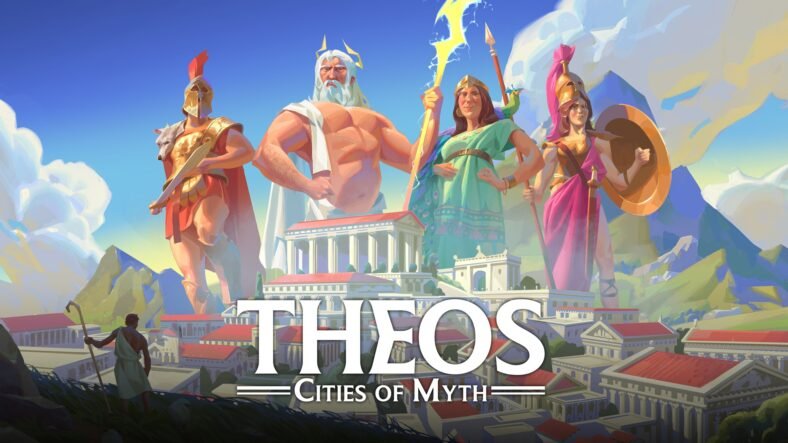
Developed by Triskell Interactive and published by Dotemu, Theos: Cities of Myth is a city-building strategy game inspired by ancient Greek mythology. With the Olympian gods watching over your growing settlements, the game tasks you with establishing thriving cities, managing resources, expanding your economy, and keeping your population happy. While its setting and presentation immediately make a strong impression, there is more to building a successful city than simply putting up beautiful structures. Fortunately, Theos gets several things right, even if some of its mechanics leave room for improvement. This is our review of the PC Steam release of Theos: Cities of Myth, in which we try to please some gods and build huge sanctuaries for them.
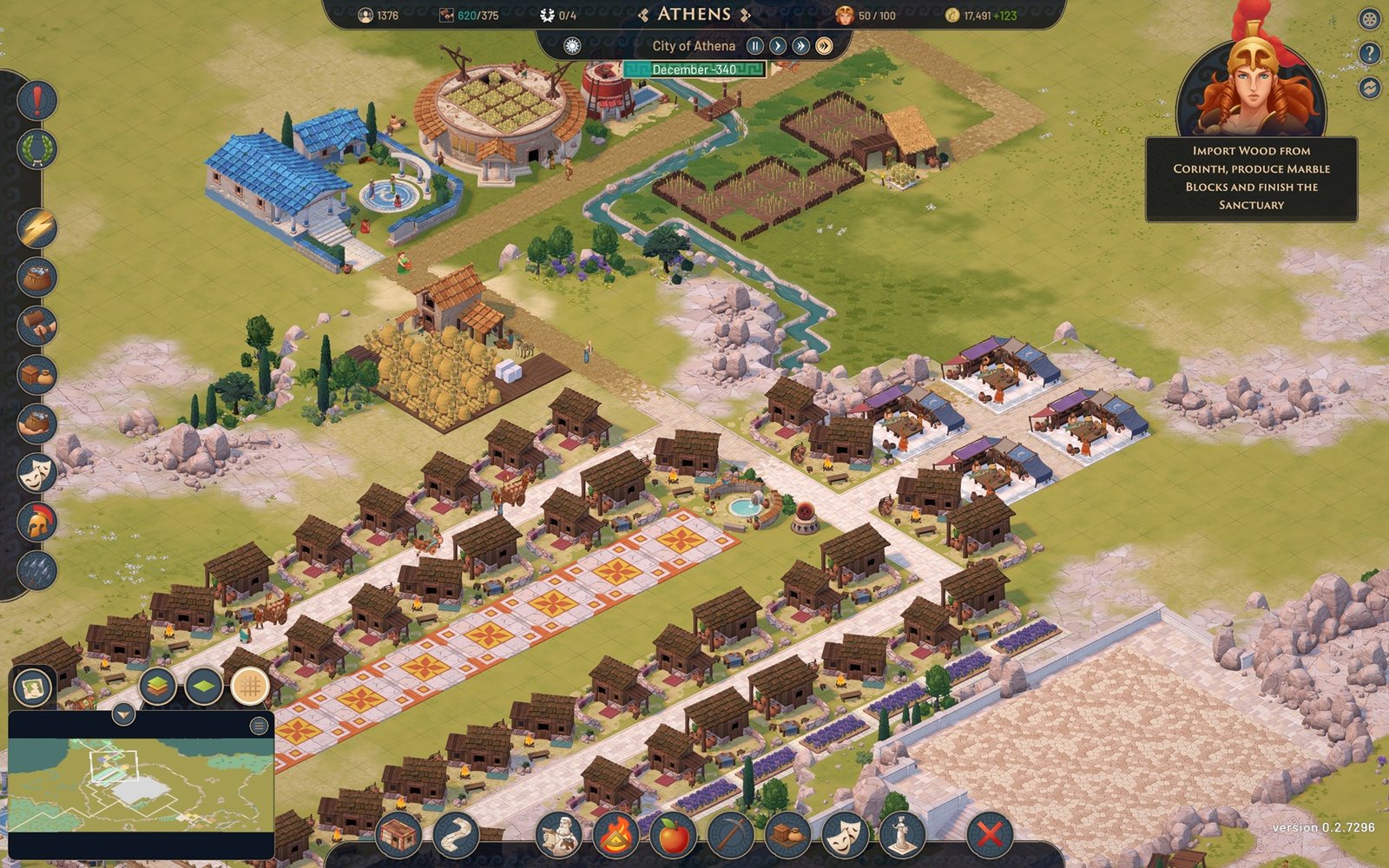
At its core, Theos: Cities of Myth plays like a traditional city builder. You start with basic houses, connect them with roads, establish a food supply, provide clean water for citizens, and set up maintenance facilities. From there, you gradually introduce local food production, expand your economy, and start collecting resources such as stone, marble, and other materials. Unlike many other city-building games, building in Theos depends entirely on gold, which you collect through taxes your citizens pay.
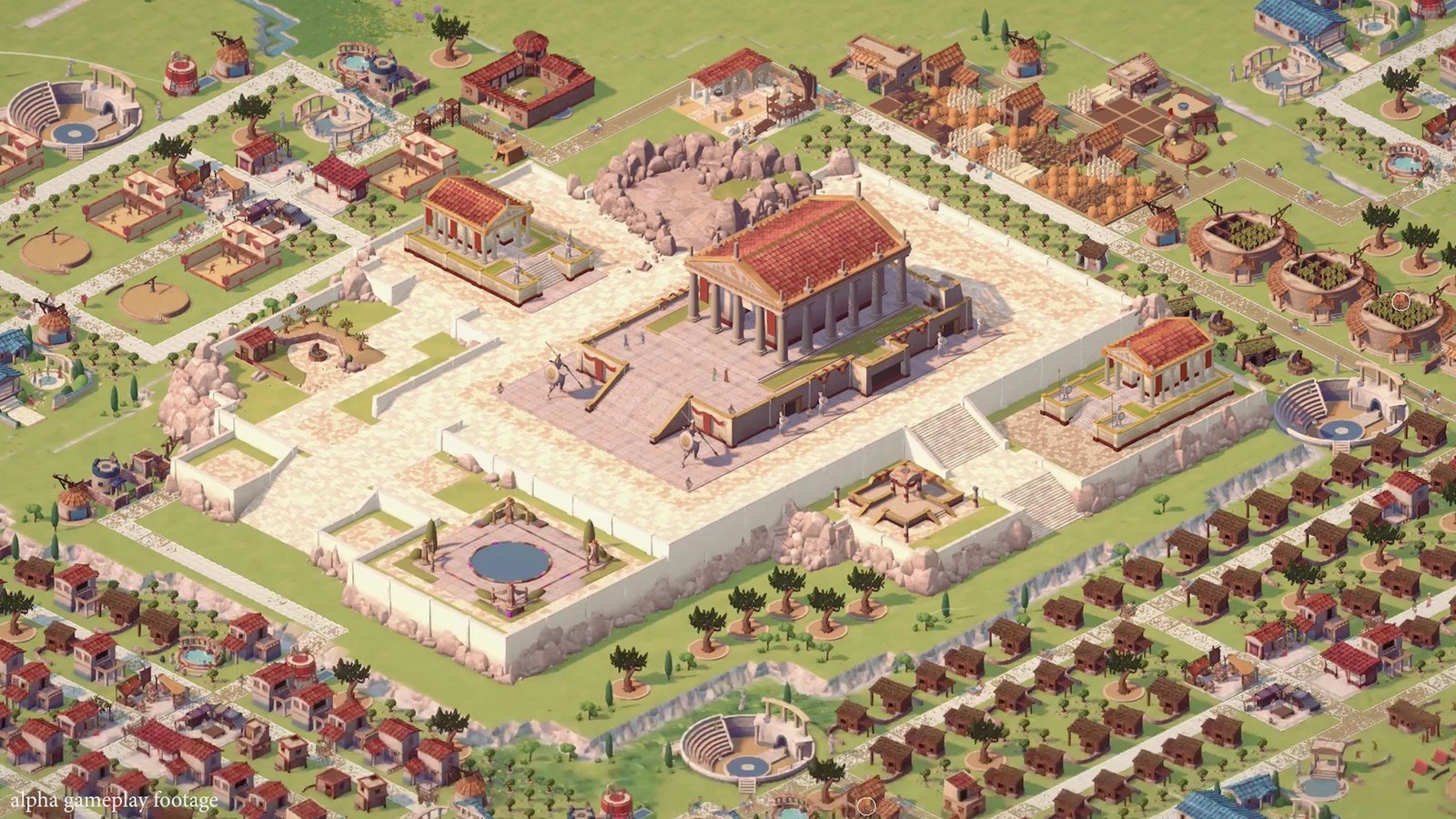
Resources are handled by automatic production facilities that take care of consumption and deliveries. Once you have the basic necessities covered, houses begin to evolve, and citizens start demanding secondary services such as philosophy, religion, and other amenities. Meeting these needs allows them to progress further, unlocking additional food, resources, and production facilities that help you expand your settlements while earning the favor of your chosen gods.
I particularly like the game’s user interface. It is simple, effective, and makes managing different aspects of your city relatively straightforward. The management systems are not overly complex, and once you establish a steady production and resource flow, you can leave your city running for extended periods without worrying about every little detail. Everything works fairly smoothly, with resource nodes that never run out and citizens who continue working automatically.
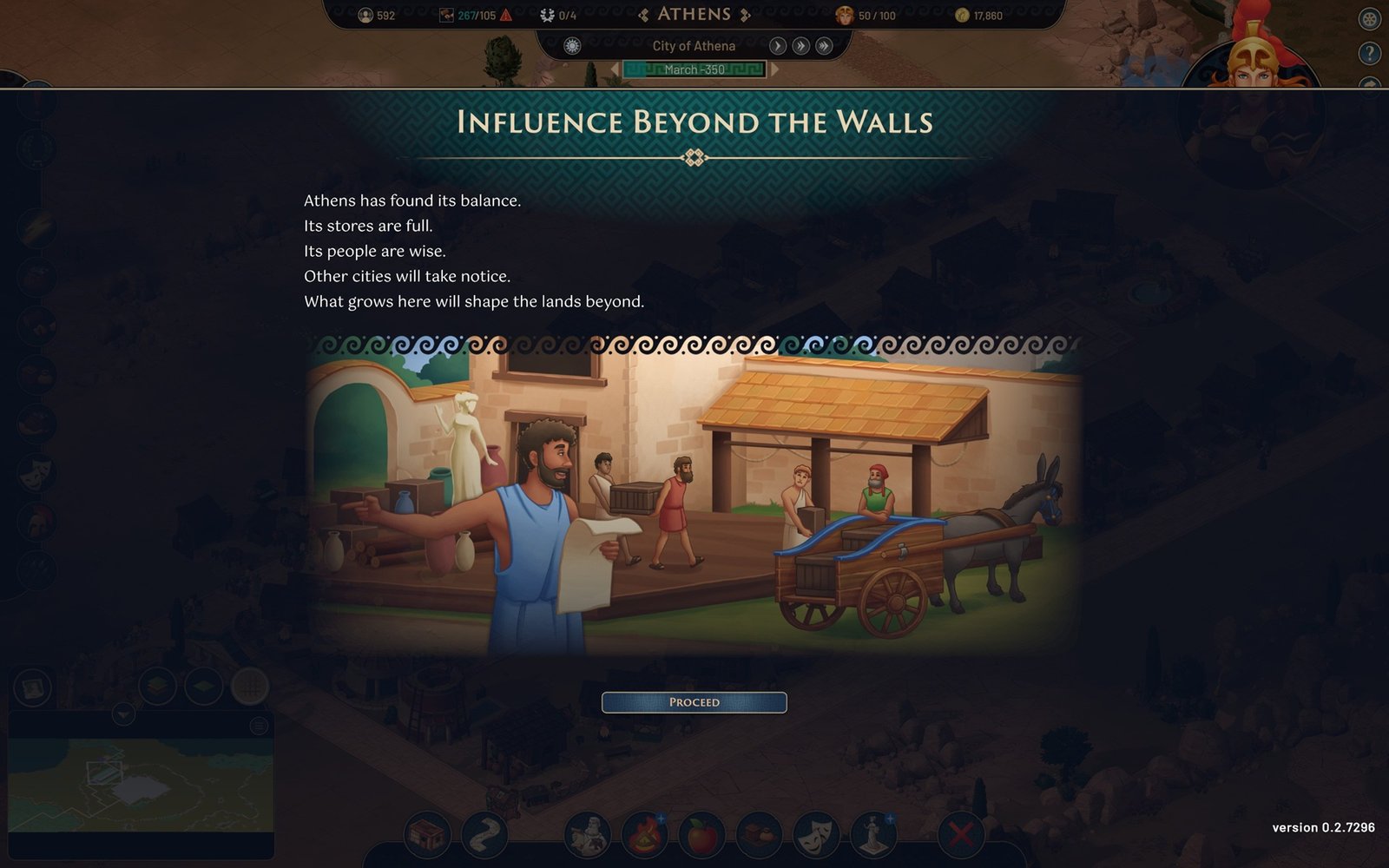
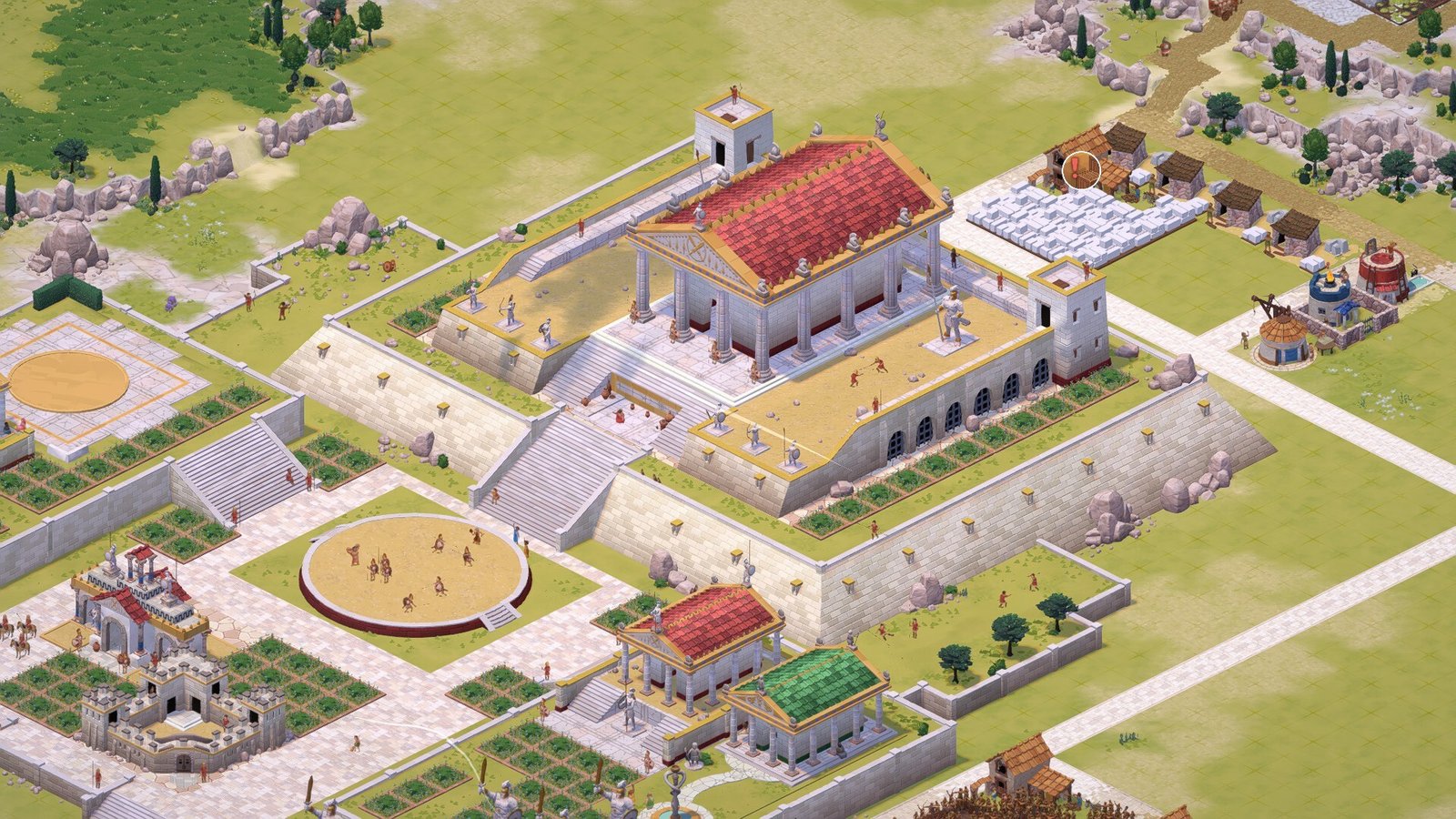
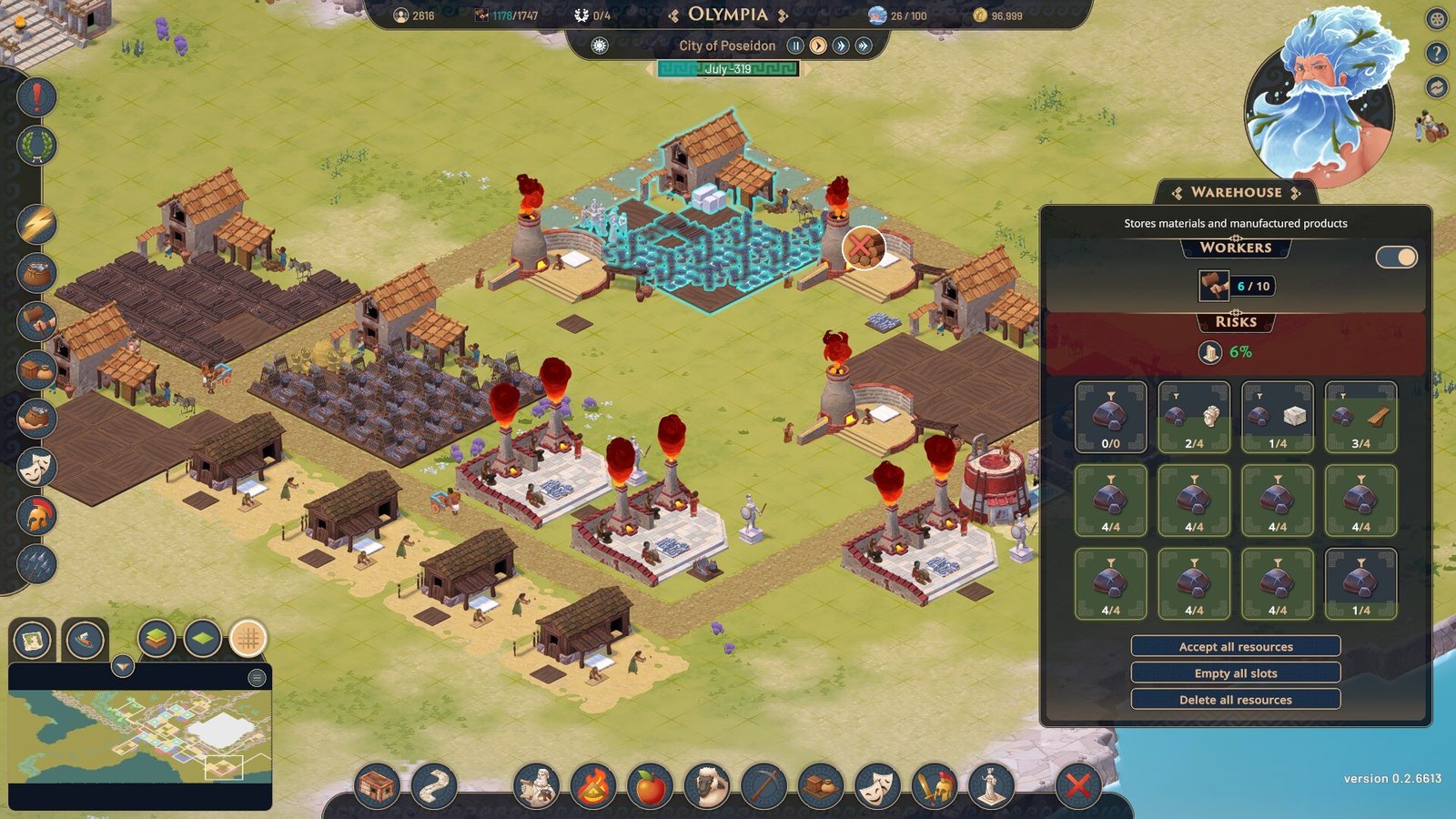
However, it is the smaller details that make the biggest difference. The buildings feature charming animations and little humorous touches that give the settlements plenty of personality. Food processing facilities, for example, have workers moving around their respective structures, while mining operations feature workers using tools to extract stone and marble. There is even a woman constantly shouting orders through a loudspeaker at one of the mining sites. These little details are amusing and add character to an otherwise traditional city-building experience.
It is worth mentioning that these animations are largely decorative rather than actual representations of the production processes. The workers do not necessarily perform the tasks associated with the buildings’ production cycles. Nevertheless, they make the cities feel considerably more active and populated. Nothing feels particularly out of place, and there is always something happening across the settlement.
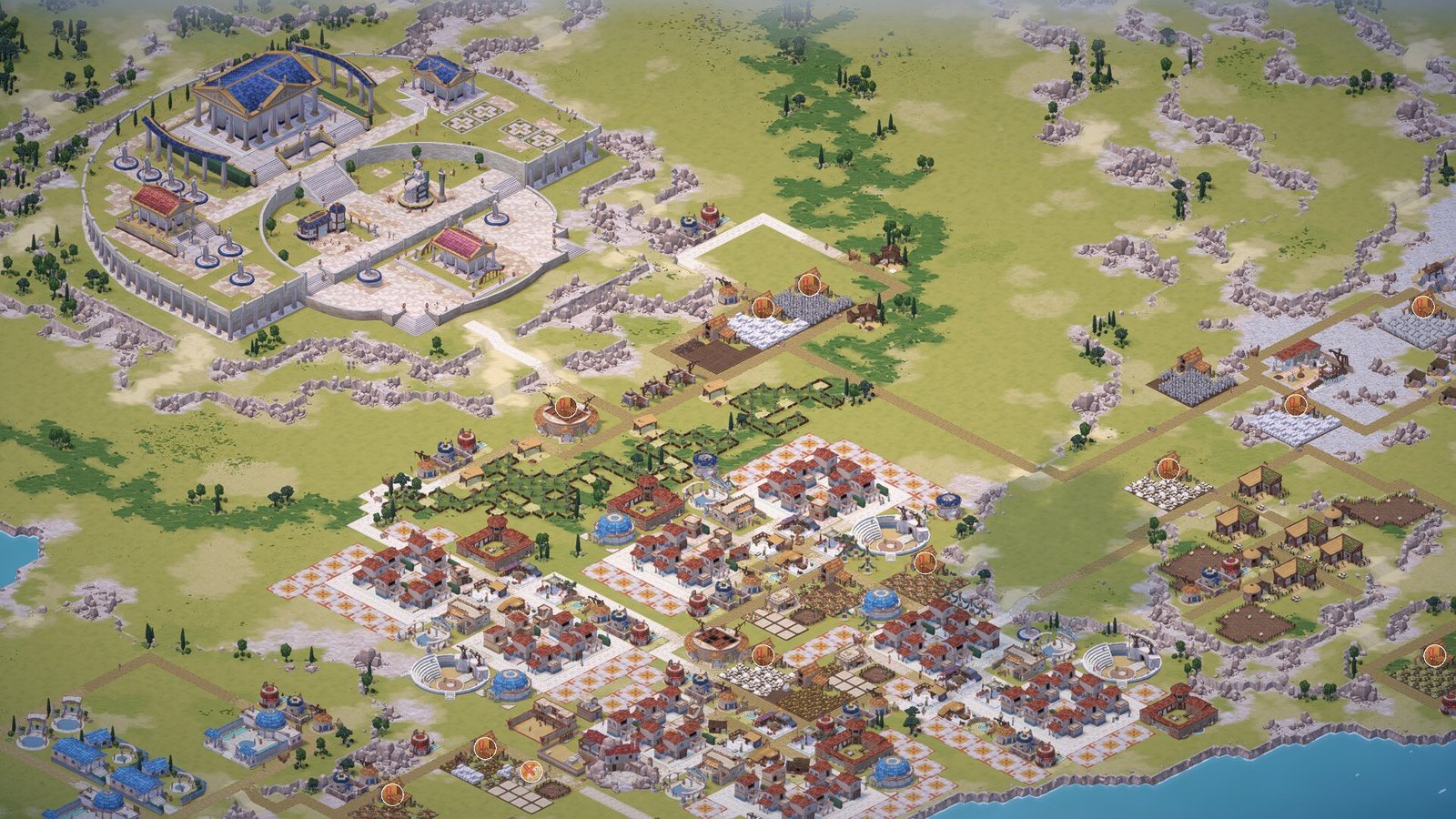
Visual presentation is easily one of the game’s strongest aspects, and I particularly enjoyed watching my cities grow and become increasingly populated.
At its core, Theos: Cities of Myth offers a fairly solid city-building experience. Establishing production facilities, managing resources, maintaining the economy, and expanding settlements provide a satisfying gameplay loop. There is a sense of progress as you gradually develop your city and work towards fulfilling its requirements.
The Olympian gods also play an interesting role in the experience. Rather than serving as antagonists or presenting an overwhelming challenge, they act more like guides, helping steer players through their journey. This approach works reasonably well and complements the game’s mythology-inspired setting.
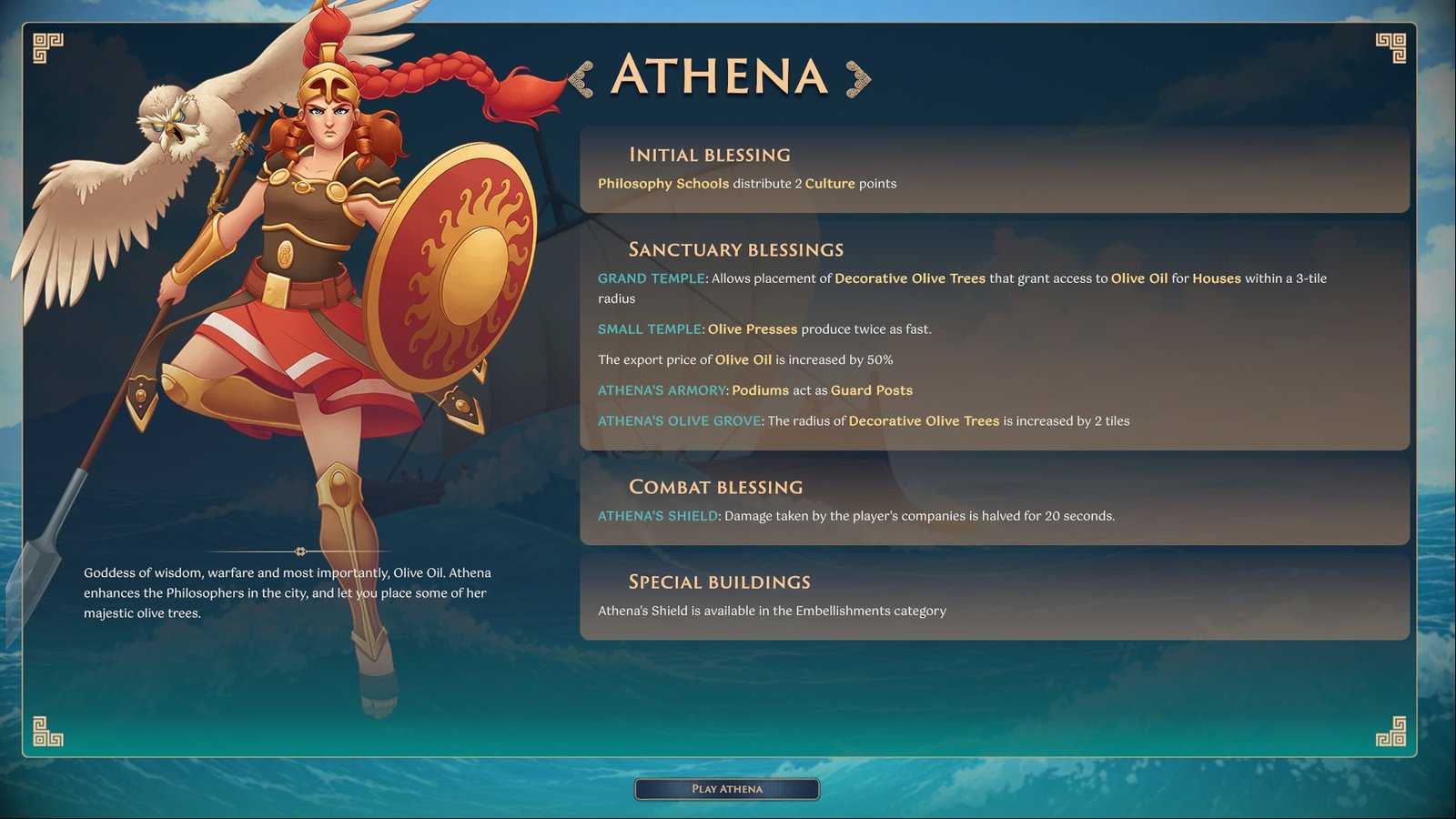
You have multiple options in the game when it comes to Gods like Ares, Athena, Poseidon, Zeus, and others. Each god brings his own set of unique blessings, including an Initial Blessing, which is available right from the start of the game. Additional blessings like Sanctuary Blessings, Combat Blessings, and Special Buildings are unlocked as you progress with the city’s development. You must remain in good standing with the god to receive these blessings by building temples and their sanctuaries, keeping taxes low, and being good to your people.
For example, Athena will grant you bonuses like special Olive Trees and increased olive oil production, while Hermes will grant you lower import costs and higher export costs. Depending on the current god, you will be able to take full benefit of their unique resources and blessings as long as you are in their good graces. The game is not overly brutal, so you can manage it fairly easily.
However, while the fundamentals are solid, I found some of the city-building mechanics somewhat limiting. There is a decent amount of management involved, but the overall systems could have offered more depth and flexibility. Players looking for particularly complex city management might find the experience a little restrictive.
Theos: Cities of Myth currently offers two main game modes: Adventure and Sandbox. While both provide different ways to approach the city-building experience, the selection feels somewhat limited.
Adventure mode introduces objectives and challenges that encourage players to develop their settlements and progress through different scenarios. Each scenario revolves around a particular god and their city-building base. However, I found that some of these objectives rely more on grinding and waiting than on presenting genuinely difficult challenges. Certain tasks can take a considerable amount of time to complete, which occasionally makes progression feel slower than necessary.
Sandbox mode, meanwhile, provides a more relaxed experience for players who simply want to build and manage their settlements without following the same objective-driven structure.
I would have liked to see more variety in the available modes, particularly considering how much potential the game’s setting offers. The existing options are functional, but additional scenarios and challenges could have made the overall package considerably more engaging.
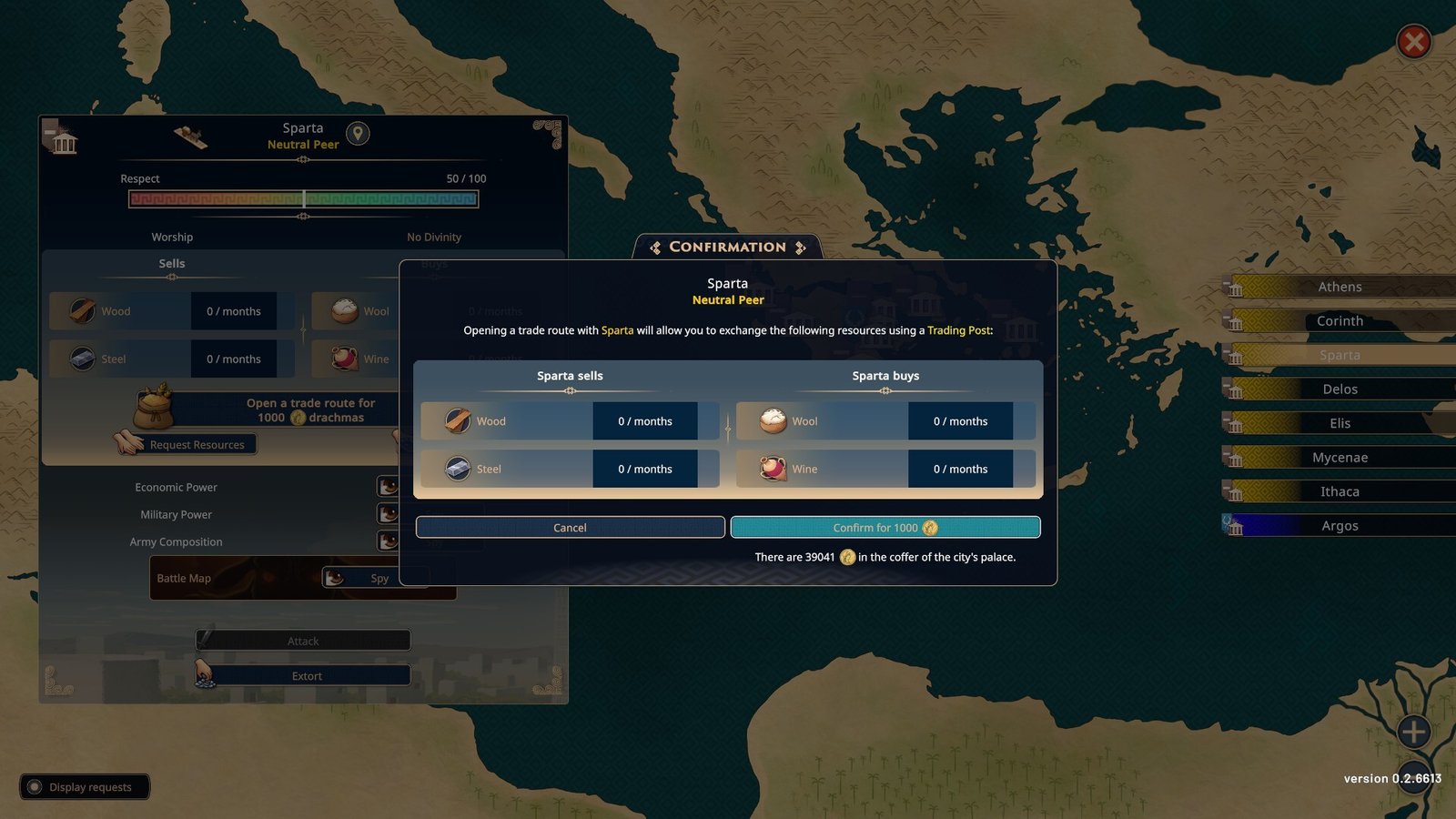
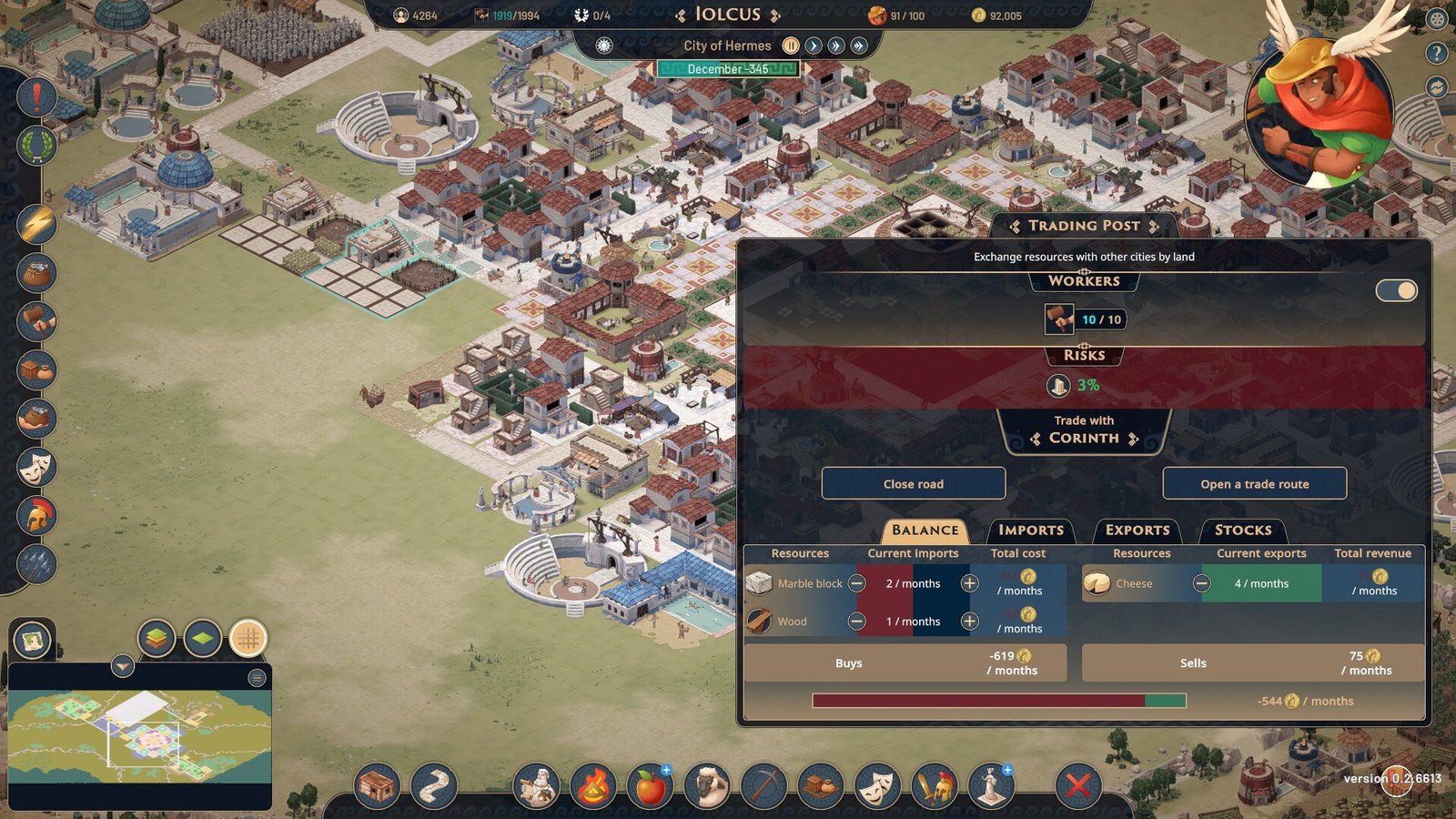
The game also has no custom map building. The sandbox mode feels a little restrictive because the game offers pre-built maps for cities like Ithaca, Sparta, Athens, Thebes, and more. Each map has a limited availability of gods that you can choose, along with resources you can collect. There is no option for custom seeds or creating a city without choosing a god, which limits the sandbox mode a little bit. Since resources are limited as well, this means that in every game, you must trade with other cities for resources that your current map lacks. You can create trade routes with multiple cities at the same time, and not just buy products from them but also sell your own surplus items if the city buys them.
One aspect I genuinely appreciated was the dedicated tutorial section. Instead of relying entirely on introductory missions or expecting players to figure everything out themselves, Theos provides detailed, playable tutorials covering different mechanics. This makes learning the various systems considerably easier, particularly for newcomers to the genre.
Unfortunately, combat is where Theos: Cities of Myth struggles the most. While the game includes military elements, I found the actual combat experience rather disappointing.
The biggest issue is unit control. Moving and managing military units does not feel particularly responsive, and engagements can quickly become confusing. The hit detection also leaves a lot to be desired. Units frequently overlap or combine visually during encounters, making it difficult to understand what is happening. It is difficult to feel invested in battles when the basic interactions lack the responsiveness and clarity expected from a strategy game. I would have preferred a more refined combat system, with better unit control and more convincing engagements.
Combat is not necessarily the primary attraction of Theos, but its implementation is disappointing enough that I found myself far more interested in developing my cities than engaging in military encounters. This makes the game much better because if you do not want to engage in combat, you can select a god that prefers city building, trade, and peace, and you can completely avoid the combat aspect of the game, which is what I did mostly.
My biggest disappointment with Theos: Cities of Myth is its sound design. For a game that places so much emphasis on creating beautiful, bustling settlements, the audio presentation feels surprisingly underwhelming. Despite having dozens of buildings, workers, and activities taking place across the city, the settlements rarely sound as lively as they look. Most of the ambient audio feels generic, and there is very little that makes the city sound like a genuinely active place.
Music also tends to overpower the surrounding ambience. Even when playing without the soundtrack, the environmental sounds are not particularly impressive or engaging. There is a noticeable disconnect between what you see happening on screen and what you actually hear.
This is especially disappointing because the visual presentation does such a wonderful job of making the settlements feel alive. Better environmental audio, more distinctive building sounds, and more varied activity-related effects could have significantly improved the overall experience.
Related News:
- Theos: Cities of Myth Gameplay Trailer Shows How Players Will Build Cities to Please the Gods
- Charming Roguelite-City Builder Hybrid EcoGnomix Now Available on PC
Final Verdict:
Theos: Cities of Myth is a beautiful Greek mythology-inspired city builder that gets several important things right but falls short in a few key areas. I thoroughly enjoyed developing settlements, managing resources, earning the favor of the gods, and watching my cities come to life through their charming animations and little humorous details. The straightforward management systems and detailed tutorials also make it an accessible experience for newcomers to the genre. However, limited city-building mechanics, a restrictive Sandbox mode, grindy Adventure objectives, and particularly disappointing sound design hold it back. Combat is another weak point, although the freedom to largely avoid it by choosing a peaceful god is a welcome option. Despite these shortcomings, there is a solid and enjoyable city builder underneath it all, and fans of the genre will find plenty to appreciate. It just needs more depth, variety, and polish to become something truly special.
Final Score: 7.5/10
Disclaimer: A PC Steam code for Theos: Cities of Myth was provided by Tinsley PR on behalf of Dotemu for this review. For a detailed breakdown of our scoring and review process, please refer to our Review Policy.