I will admit that when I first heard the pitch for Sugar Madness, a candy kingdom overrun by mutated sweets that you have to shoot your way through in VR, I expected something disposable. A cute gimmick that wears thin after the first ten minutes. Then I strapped in on my Meta Quest 3, watched Dr. Sour’s experiments go horribly wrong, and found myself dodging fireballs from a possessed jawbreaker while trying not to laugh. This is our review of Sugar Madness on Meta Quest 3, where we fight through the Candy Kingdom and defeat epic bosses.
Sugar Madness puts you in the middle of a candy kingdom that has gone completely wrong. Dr. Sour, the mad scientist behind the mess, pushed his experiments too far, and now the once-peaceful sweets have turned into hostile candy morphs. Mutant jawbreakers, twisted gummy creatures, and other sugar-coated nightmares stand between you and the restoration of order. The premise is not deep, and it does not try to be. Sugar Madness knows exactly what kind of game it is, and it leans into the silliness with colorful environments, goofy enemy designs, and a tone that never takes itself too seriously.
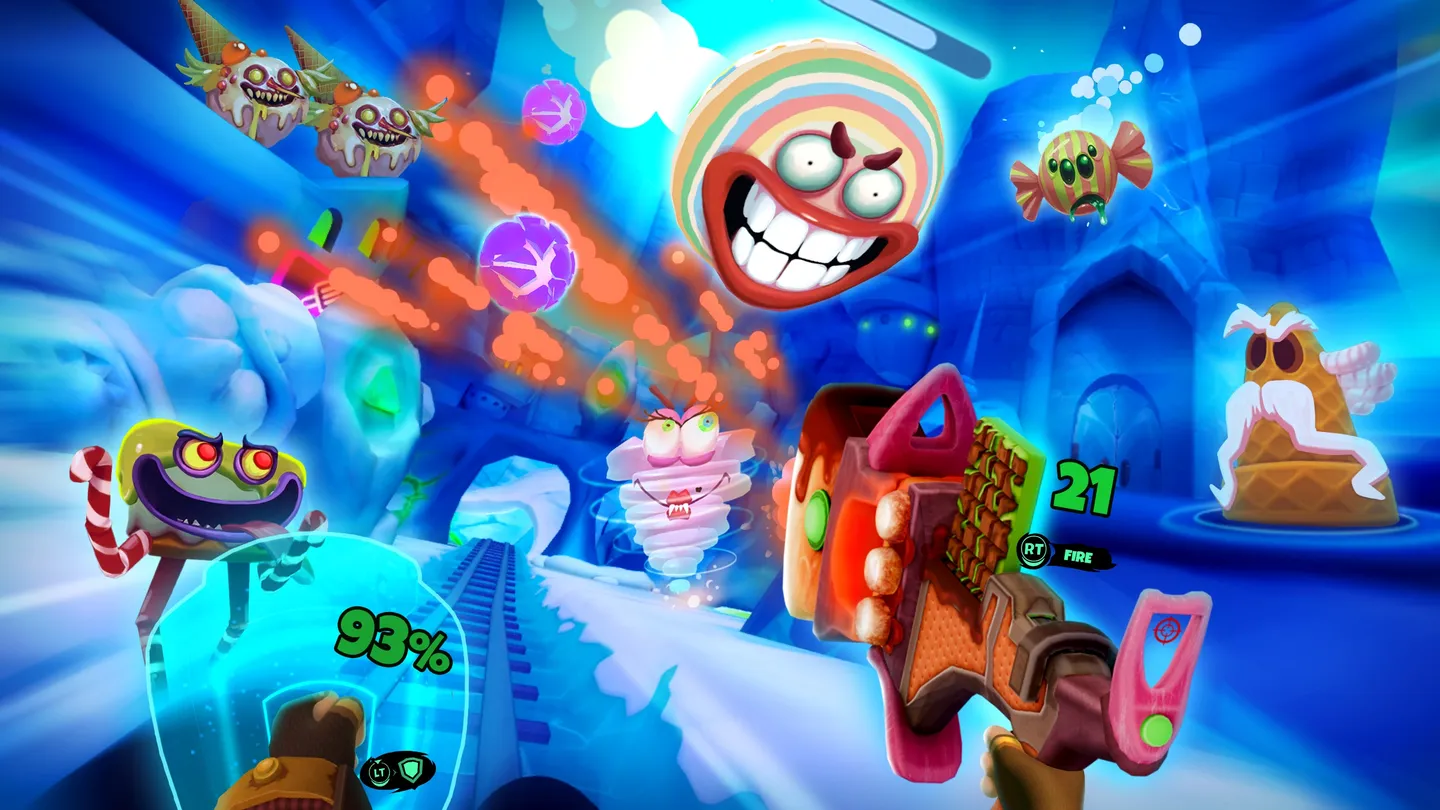
Combat is a mix of wave shooter and rail shooter segments, and the game wastes no time getting you into the action. You are handed weapons early and thrown at incoming enemies almost immediately, with difficulty ramping up gradually as new enemy types and mechanics get introduced. The best addition here is the elemental weapon system. Enemies come in fire and ice types, and switching your weapon’s element to counter them is what keeps the shooting from turning into mindless point-and-spray. It sounds simple on paper, but it adds a real layer of strategy, especially once multiple enemy types start showing up in the same wave and you have to reposition and swap elements on the fly.
You also get a rechargeable shield instead of a second weapon in your off hand, which was a choice I had mixed feelings about at first. It means you cannot dual-wield, but the shield overloads if you lean on it too much or take too much damage, so you are forced to actually manage it rather than turtling behind it the entire fight. Dodging incoming projectiles physically, ducking and leaning out of the way, adds a nice bit of movement to what could otherwise be a stationary shooting gallery.
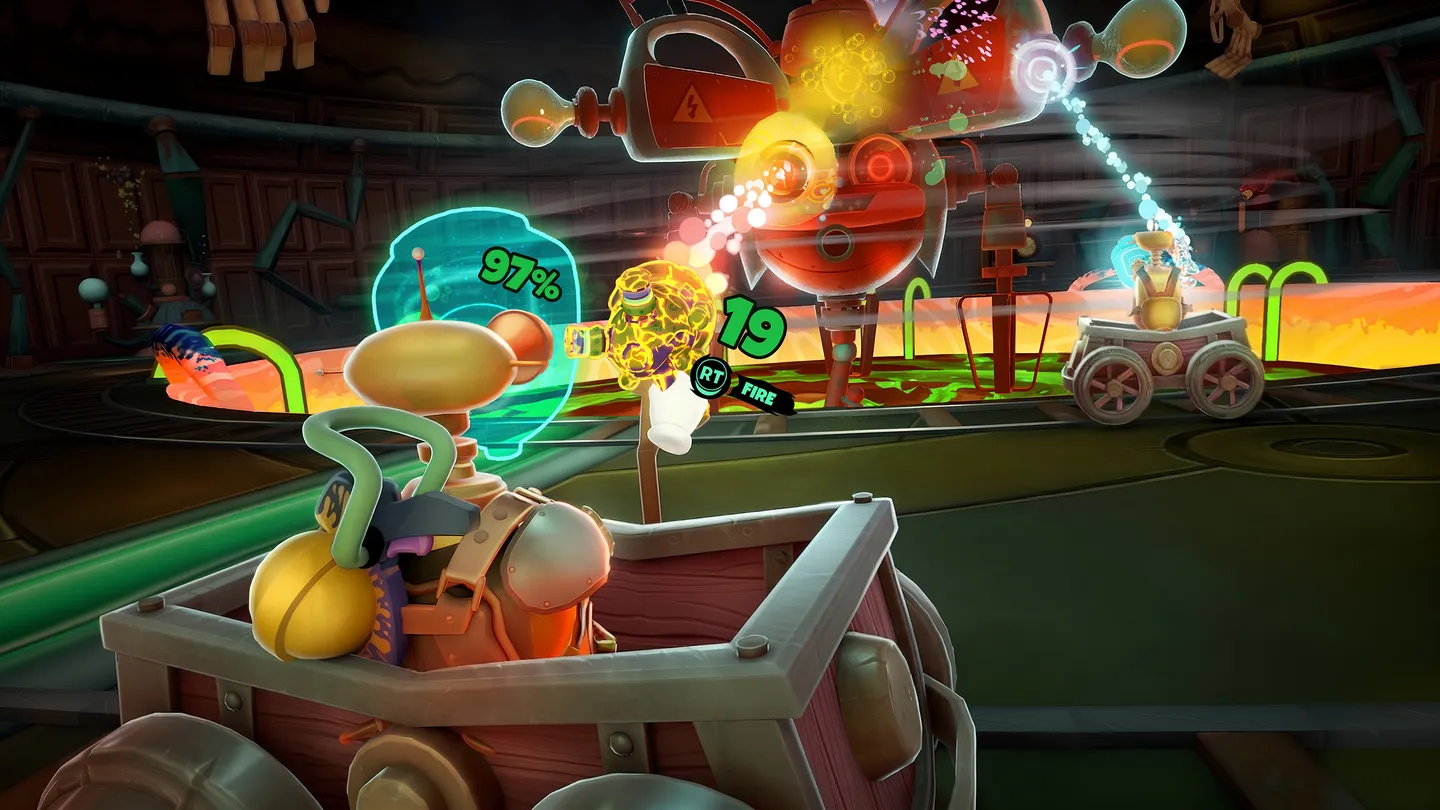
Where Sugar Madness really shines is in its boss fights. Every boss comes with multiple phases, distinct attack patterns, and puzzle-like weak points you need to figure out rather than just shoot at until the health bar empties. One encounter had me destroying elemental asteroids and targeting spinning bulbs before I could even get a shot at the boss’s real weak point, its eyes, all while dodging laser attacks and clearing smaller enemies. These fights genuinely capture that classic arcade boss-battle feeling, closer to Star Fox or a Mario Galaxy set piece than most VR shooters bother to attempt. When a boss finally goes down, it feels earned, and I found myself wishing there were more of them scattered through the campaign.
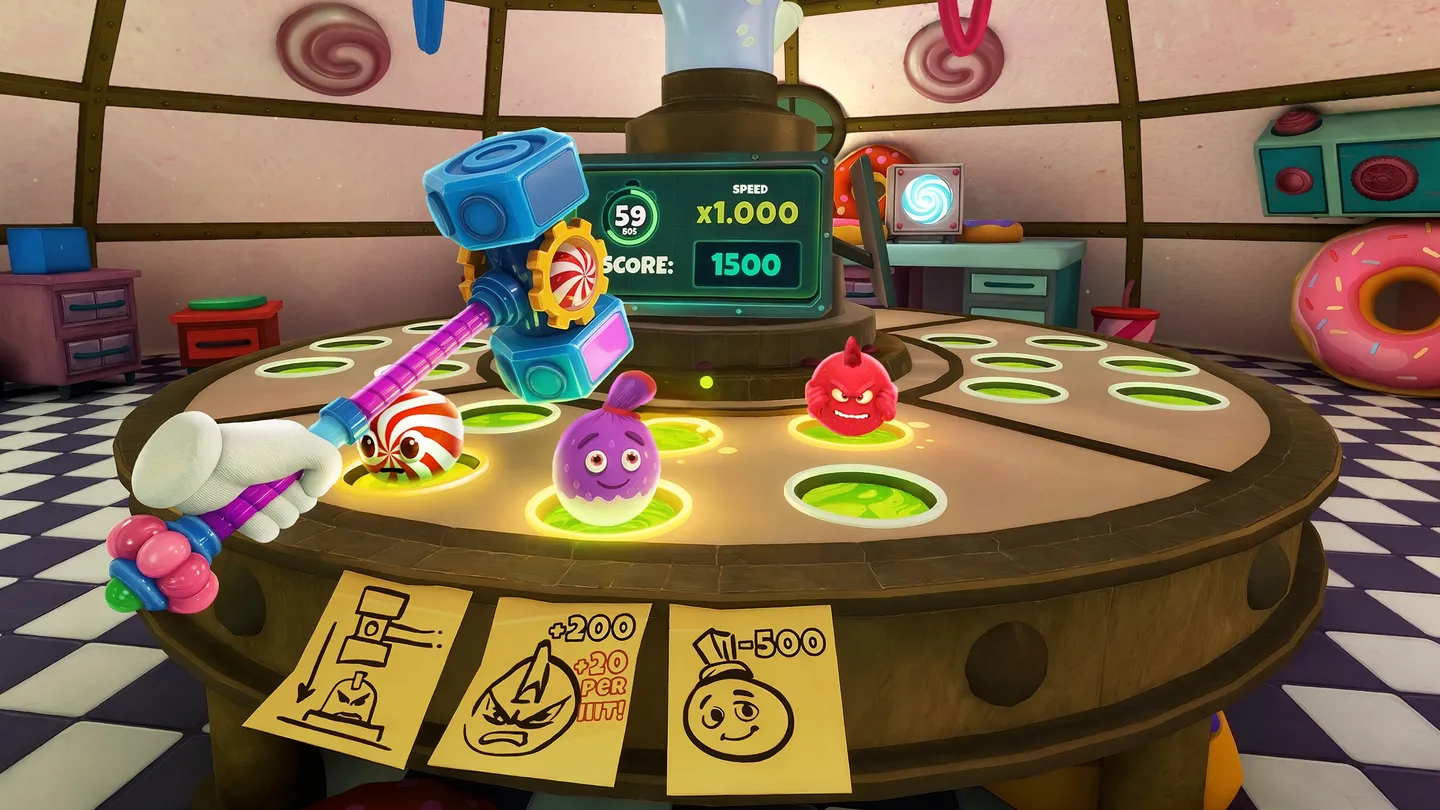
Outside of the main combat, Sugar Madness fills its levels with minigames that give you a break from shooting without slowing the pace down. Popping bubbles for bonus time, a whack-a-mole-style challenge where you have to hit only the angry candies, a candy-sorting game that turns into a genuine test of reflexes, and a rhythm-based minigame all make appearances. None of them are going to blow anyone away individually, but they do a good job of breaking up the pacing and adding a bit of variety between firefights, and playing them in co-op with a friend makes the whole thing considerably more fun.
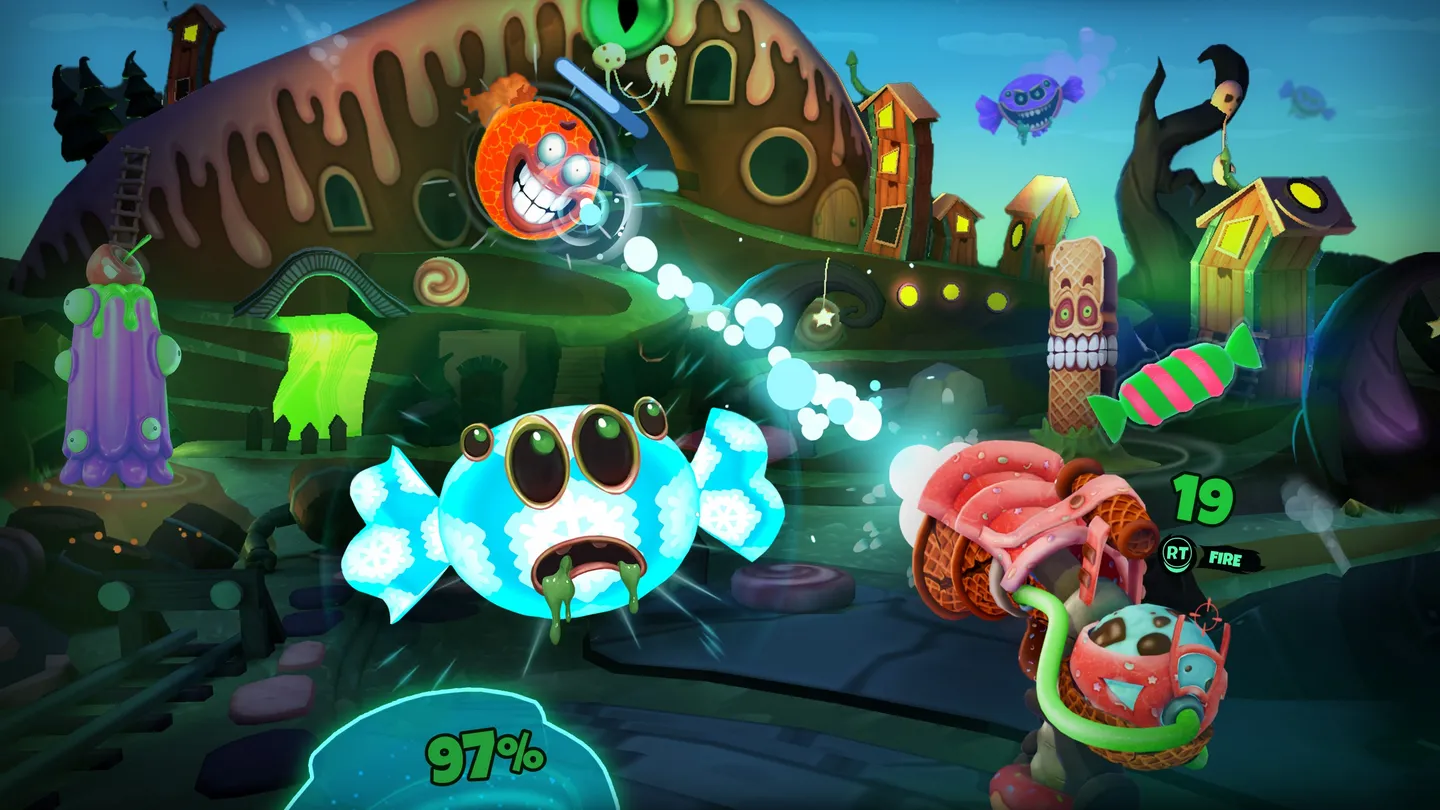
Co-op is one of the game’s stronger features in general. Shielding each other, calling out enemy elements, and reviving a struggling teammate mid-wave gives Sugar Madness a party-game energy that solo play cannot fully replicate. It is the kind of chaotic, cooperative shooting that works best when someone next to you is panicking about a Spongebob-shaped candy monster charging at their face.
Unfortunately, the game’s weaknesses start showing up quickly once the initial charm wears off. The weapon roster is thin: three primary weapons and two secondary tools, and that is the entire arsenal for the whole campaign. The juice pistol becomes the obvious best-in-class option once upgraded, which flattens out some of the strategic variety the elemental system was building. Enemy variety runs into the same problem. You will be fighting recognizable repeats well before the campaign wraps up, and by the end, I counted only around seven distinct enemy types.
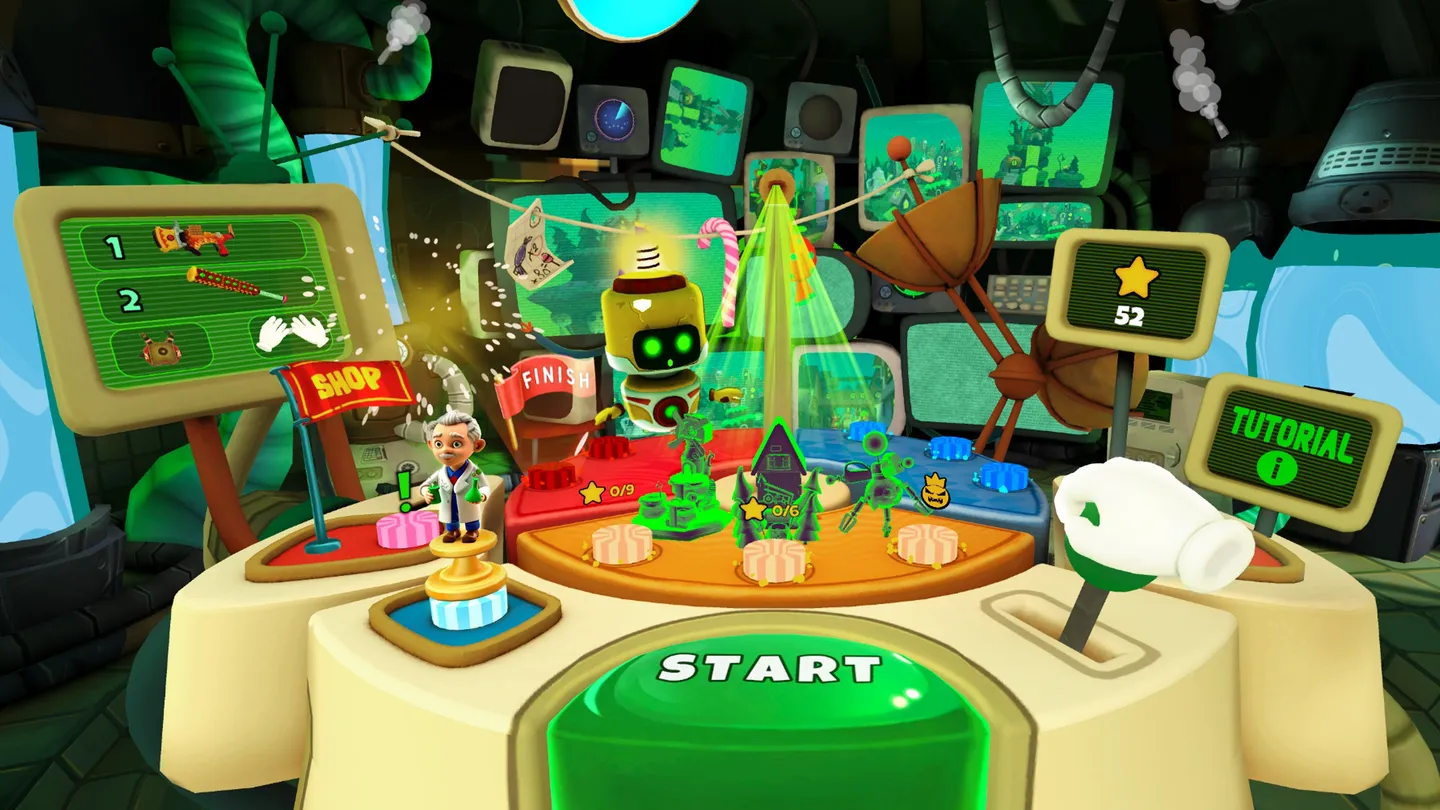
The progression system does not do the game any favors either. Levels only allow you to earn one star per run, pushing you to replay content you have already cleared instead of offering more of it. Sugar Madness only has three major world sections, each capped off with a boss fight, and since those boss fights are clearly the best part of the game, having so few of them stings. Add in a campaign that can be finished in roughly 90 minutes, and the overall amount of content starts to feel thin next to the asking price.
On the technical side, Sugar Madness runs smoothly on Meta Quest 3, with bright, readable visuals even during hectic multi-enemy waves, and the candy-world art style gives it a personality that helps it stand out from the usual VR shooter crowd.
Sugar Madness is a game defined by a genuinely excellent core wrapped around a disappointingly small amount of content. The boss fights alone make a strong case for checking it out, and the elemental combat and co-op chaos are legitimately fun while they last. But limited weapons, repetitive enemies, and a short campaign stretched thin through forced replays keep it from being an easy recommendation at full price.
Related Articles:
- Review: Arizona Sunshine 2 – Satisfying Zombie Headshots Headline This New VR Shooter
- Competitive VR Shooter VAIL VR Open Beta Begins Today
- VR Shooter In Death: Unchained Released, Available on Oculus Quest
- Interview – JOLLYCO INC – Developer of Sugar Madness
Final Verdict:
Sugar Madness nails the moment-to-moment thrill of its boss fights and elemental combat, and co-op makes the chaos even better. But a thin weapon roster, repetitive enemies, and a campaign padded out through forced replays hold it back from reaching its full potential. It is a fun, colorful shooter that is worth playing by fans of VR shooters whether it is rail shooters or wave shooters.
Final Score: 7.5/10
Disclaimer: A Meta Quest review code for Sugar Madness was provided by JOLLYCO INC for this review. For a detailed breakdown of our scoring and review process, please refer to our Review Policy.