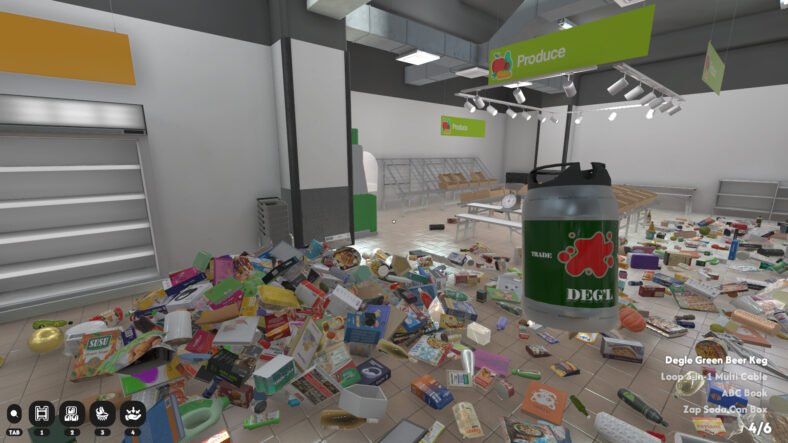
This Supermarket Chaos Beginner’s Guide details some tips and tricks for players who are just jumping into the game and want to master the art of sorting items. At first, Supermarket Chaos looks like a simple game about sorting products onto shelves. However, once the store starts filling up, you will quickly have to deal with growing queues, misplaced items, and constant pressure.
Tips and Tricks Guide – Supermarket Chaos
The following are all the tips and tricks you can follow to organize better.
Organize by Product Sections
One of the biggest improvements you can make is changing how you think about sorting products. Instead of trying to remember the exact shelf for every single item, start grouping products by their general section. The game includes thousands of different items, and memorizing each one is both difficult and unnecessary.
For example, rather than asking yourself where one specific drink belongs, recognize that it is a beverage and head toward the drinks section. Once you arrive there, finding the correct shelf becomes much easier. The large department signs around the supermarket become much more useful when you think this way.
This approach also lets you clean entire areas at once. Rather than carrying random products all over the store, you can clear one section before moving to another. Whether it is frozen foods, drinks, snacks, or candy, working in larger groups keeps everything organized and prevents small mistakes from turning into bigger problems later.
Learn from Shelf Feedback
A mistake many new players make is relying on real-life supermarket logic instead of learning how Supermarket Chaos organizes its products. Whenever you place an item on the wrong shelf, the game immediately tells you through its shelf feedback. If an item turns red, don’t treat it as a simple mistake. Instead, use it as a clue about how the game categorizes products.
Your first instinct may be to move the item to a nearby shelf because it seems similar. For example, sugar might seem like it belongs with breakfast foods or sweets. However, the game often follows its own internal system rather than real-world expectations.
Instead of continuing to test nearby shelves, move to a completely different product family. Doing this helps you discover the game’s hidden patterns much faster. Some placements may seem unusual at first. Sugar, for instance, may fit better with tea or candy than with breakfast products. Once you accept the game’s own organization system instead of fighting it, sorting products becomes much quicker.
Upgrade Skills in the Right Order
Choosing the right upgrades early makes a noticeable difference throughout your run. While several upgrades look useful, some provide much greater value than others.
The best place to start is Extra Carry. Increasing the number of items you can carry on each trip improves nearly everything you do. You will spend less time walking back and forth, complete more work each trip, and maintain better control over the growing mess. After improving your carrying capacity, focus on Match Finder and Shelf Finder.
Match Finder helps you locate identical products nearby, making it much easier to collect groups of matching items instead of searching randomly. Shelf Finder reduces the time spent looking for the correct shelf after you have already identified the right section.
Make Temporary Sorting Piles
You don’t need to place every product onto a shelf immediately. In fact, trying to do so often slows you down. A much better approach is to create temporary piles based on product families while you clean the store.
Instead of dropping everything into one large mixed pile, separate your items into smaller groups. Keep drinks together, hygiene products together, frozen foods together, and continue doing the same for other categories.
The piles don’t have to be perfectly organized. Their purpose is simply to reduce the number of decisions you will need to make later. Once the products are grouped, you can pick up an entire category and stock that section in one trip. This creates a smoother workflow.
Another benefit is that your working area stays visually organized. Mixed piles quickly become confusing, while grouped piles let you understand what is on the floor with just a quick glance.
Learn the Categories
Some sections in Supermarket Chaos look obvious but actually follow rules that surprise many players. Instead of assuming products belong where they would in a real supermarket, let the game’s feedback show you the correct answer.
Breakfast foods, sweets, tea, and candy often overlap in unexpected ways. Products such as sugar, coffee, and certain snacks don’t always belong where most players expect them to. If one section rejects the item, don’t keep forcing it into nearby shelves. Test another product family and let the shelf feedback guide your decision.
Prepared meals create another common mistake. Many players try placing ready-to-eat food alongside regular groceries, but products like sushi and prepared meals actually belong in the Bento section. Visually similar items can also be confusing. Drinks, wine, alcohol, cleaning supplies, and personal care products may all come in bottles, but each belongs in a completely different department.
Start With the Easiest Sections
The way you begin a run has a big impact on how smoothly the rest of it goes. Instead of grabbing random items, focus first on sections that are easy to recognize. Categories like Books, Electronics, Home Decor, Frozen Foods, and Drinks stand out visually, making it much easier to identify where their products belong.
Since these sections require very little guessing, you can organize them quickly and start earning money sooner. That extra income lets you unlock your first upgrades earlier, making the rest of the run much easier to manage.
Many players make the mistake of starting with confusing categories like the pantry or sweets because they think they will get the difficult work out of the way first. In reality, these sections contain more unusual item placements, so you will waste more time checking shelves and making mistakes if you tackle them too early.
Unlock the Carry Upgrade
The Too Heavy achievement requires you to carry 10 or more items at once, but trying to earn it late in a run usually creates unnecessary problems. A better strategy is to prepare for it from the beginning. Invest in the Extra Carry upgrade until you can comfortably hold ten items in a single trip.
However, carrying more items isn’t enough on its own. Try filling your inventory with products whose destinations you already know. Otherwise, you will end up holding a full load while wondering where everything belongs, forcing you to drop another messy pile onto the floor.
Using Match Finder makes this even easier. Once you pick up one item, the skill highlights matching products nearby, allowing you to collect a full group without wasting time searching.
Save Your Tools for the Right Moments
Skills like Match Finder and Shelf Finder become much stronger when they are used at the right time instead of every chance you get. At first, it is tempting to activate them whenever you are unsure about something. While that may seem helpful, it often slows your overall progress instead of improving it.
Match Finder works best after you have already cleaned part of the supermarket. Once an area is fairly organized, you can grab one product, activate the skill, and quickly collect every matching item nearby. This lets you clear large groups of repeated products in a single sweep.
Shelf Finder should also be used differently from what many players expect. Its main purpose isn’t to tell you what category an item belongs to. Instead, it is most useful when you already know the correct department but don’t want to waste time searching for the exact shelf.
Stay Organized Until the Final Items
The last part of a run feels very different from the beginning. Once you only have around 1,500 items remaining, speed becomes less important than accuracy. At this stage, guessing where products belong usually creates extra work because every mistake means another trip back across the supermarket.
Continue using the section map, Finder tools, and your temporary sorting piles even near the end. Keeping the store organized throughout the run makes these final items much easier to deal with. Some categories are also more likely to hide leftover products than others. Pantry items, drinks, and prepared meals are common places where forgotten objects remain.
Complete Easy Achievements Early
Several achievements can be finished almost immediately, and it is worth getting them out of the way before the supermarket becomes crowded.
Objectives like Music Duty or Do Not Throw, which involve tossing a few items into an empty aisle, only take a few moments while the store is still clean. There is also the simple achievement for placing your first item correctly, which happens almost automatically if you pay attention at the start.
Leaving these objectives until later often creates unnecessary distractions. Once the supermarket becomes cluttered, even small achievements can interrupt your rhythm and make organization more difficult.
That is all for this guide. Additional Supermarket Chaos guides are linked below:
That is everything for our Supermarket Chaos Beginner’s Guide. If you have some tips and tricks for us on how to sort the items effectively, let us know in the comments section below.