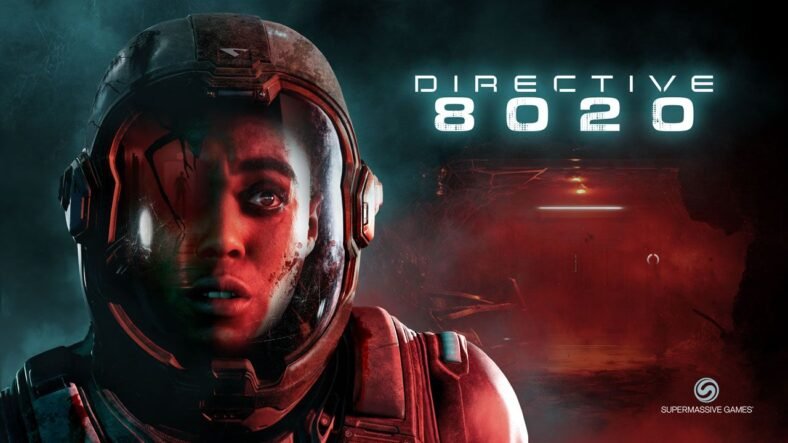
Horror and space go hand-in-hand, and as different space horror movies have established, the unknown is best left alone. Every time humans try to reach into the deep, unknown, they are met with forces beyond their control, leading to chaos, death, and one of the best cosmic horror adventures for the screen. Throw in an evil corporation in the mix, and you have the perfect recipe for disaster. After scaring us on Earth, Supermassive Games is taking us to outer space in their latest title, where we are treated to cosmic horrors with their signature choice-driven narrative, exceptional design, and excellent acting. In our review of the PC Steam release of Directive 8020, we try to explore a haunting space vessel and sneak around to survive a mimicking alien lifeform.
About Spoilers: Before we begin with the review, I would like to mention here that I have tried my best to keep this review as spoiler-free as possible, but there might be certain small things that might get spoiled for you if you are planning to jump into the game with as little information about it as possible.

The narrative of Directive 8020 is inspired by iconic space-horror movies like The Thing and Invasion of the Body Snatchers, with some elements from games like Dead Space. The story revolves around a team of astronauts sent into space aboard the ship Cassiopeia, bound for the planet Tau Ceti F. After some uncertain developments, the original plan of orbiting the planet becomes unfeasible, and the ship ends up crashing on the planet. Now the team must do everything they can to avoid the alien lifeform, which can imitate humans, and decide whether they want to save themselves or the entire human civilization back on Earth. As typical as this sounds, there are some exceptional twists in the story that I certainly do not want to spoil here. For me, this is the best narrative that Supermassive Games has created so far in The Dark Pictures Anthology, and you are definitely in for a surprise.
Like a good horror movie, the initial chapters build up the pace for the latter levels where the action really steps up. As you begin the game, you are given the opportunity of selecting the Survivor mode, which is the traditional choice-driven narrative experience, or the Explorer mode, which gives you access to the all-new Turning Points system implemented in the game. This comes with a brand-new screen, where you can see all of the sequences of each episode and check out the different branching paths leading from it. Using this menu, you can instantly rewind to that scenario and change a choice if you are not happy about it. This gives flexibility and allows players to experience the story in a much more relaxed manner. If you prefer completing the story in one go with your choices shaping up the story without any rewinds, you can play Survivor mode, which unlocks Turning Points only after you have completed the story once.
Turning Points makes the game much more accessible and allows players to tailor their story however they want. If you killed a crewmate but wanted them to survive, you can instantly replay it and try again with another choice that saves them. Accidentally ran into an alien that killed you? Rewind and try another way. I will mention that this somewhat removes the challenging element from the game, because it removes the consequence element from the game that you normally expect from a game from Supermassive Games, but at the same time, it makes the game playable for a wider range of casual horror fans. Serious fans can still explore the Survival mode to play Directive 8020 in an unforgiving manner.
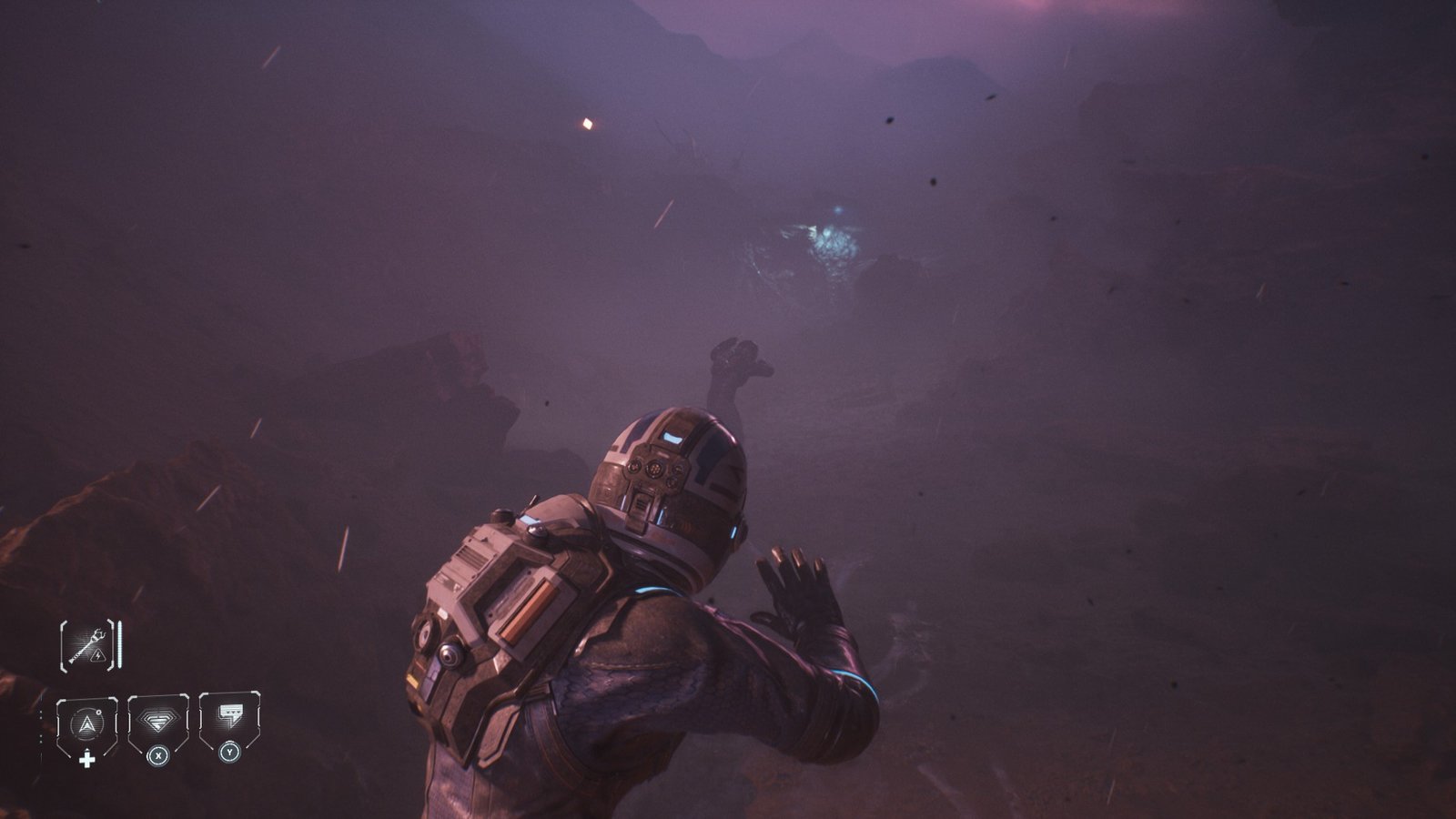
Similar to previous titles in the anthology, Directive 8020 has a choice-based system, but the gameplay overall is much more than just QTEs and decision-making. Between the story beats, you have exploration sections where you are free to explore a certain area of the spaceship. On multiple occasions, you will be required to explore different facilities on board for various puzzle-based tasks. These sections will sometimes require you to use stealth and evade real-time alien threats that are actively hunting you. Each scenario is unique and sometimes will require you to perform additional tasks like finding a fuel cell to power a door to escape or using a crane to drop a container to create paths. These sections introduce a new level of immersion to the franchise, which previously relied mostly on QTEs and cinematic story-telling mostly.
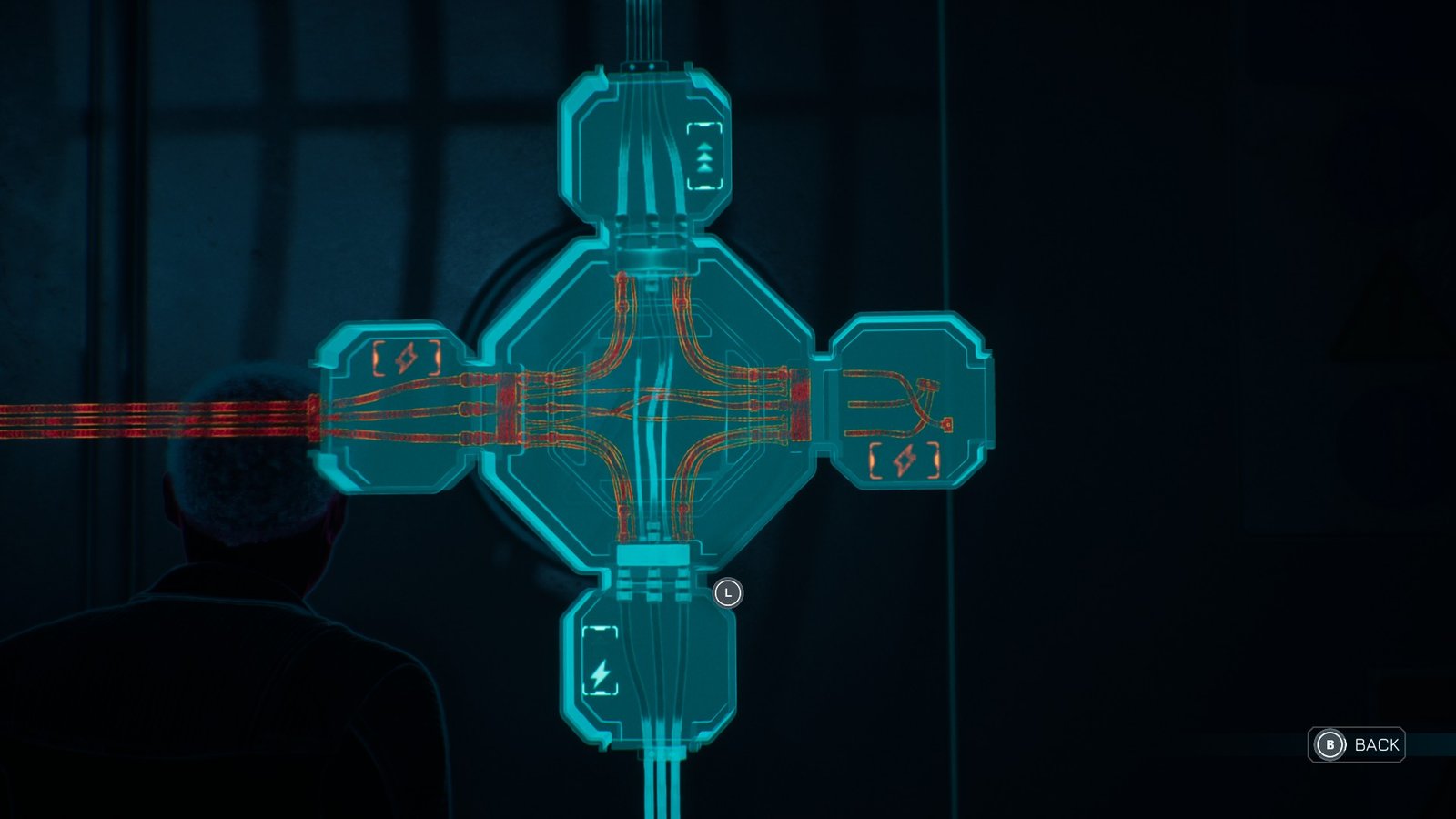
The new stealth sections are pretty tense, and Directive 8020 really shines with its crisp gameplay mechanics. As you are moving around while aliens are hunting you, the characters respond to your commands pretty well. Despite having only one mimic or Hunter to evade in each scenario, the game kept the tensions high with an unpredictable behavior of their movement patterns. While mimics are more predictable, their evolved form, hunters, are the tougher ones to avoid.
The game keeps the tension high by ensuring that the easiest path always has some obstacles for you to overcome like there may be shattered glass on the path which will attract the enemies to your position instantly, or if Hunters, the evolved form of mimics, may disappear completely and then re-appear suddenly in front of the door where you are supposed to go through from and you may be required to distract them first. The game manages a decent balance between psychological horror and creature horror despite having multiple enemies in the game. During sequences where an alien is not actively hunting you, the game scares you by using sounds and atmospheric jump scares, like a screen or light turning on suddenly.

The choices in the game will shape your story, and sometimes even the smallest decision will come back and hit you where you least expect it. Since the alien lifeform can imitate your crew members, the choices you make here are even more critical than before because you may side with an imposter rather than the real one. Apart from the main Turning Point choices in the game, smaller decisions will also shape the traits and bring out a certain type of personality for the characters, like you can choose to joke around in serious conditions, or you can decide to be stern as you order people around. Each decision will increase that particular character’s traits, leading to unlocking a Destiny for them.
Beyond the gameplay mechanics, Directive 8020 also features an excellent cast, with each actor delivering a convincing performance in their respective roles. From Lashana Lynch as Brianna Young, the ship’s pilot, to Danny Sapani as Commander Stafford, the crew feels distinct thanks to strong facial animation, believable body language, and confident dialogue delivery. Stafford, in particular, stands out for balancing authority with genuine care for his crew, and those traits are reflected naturally in his performance. My personal favorite, however, was Eisele, played by Lotte Verbeek, whose character evolves impressively over the course of the story.
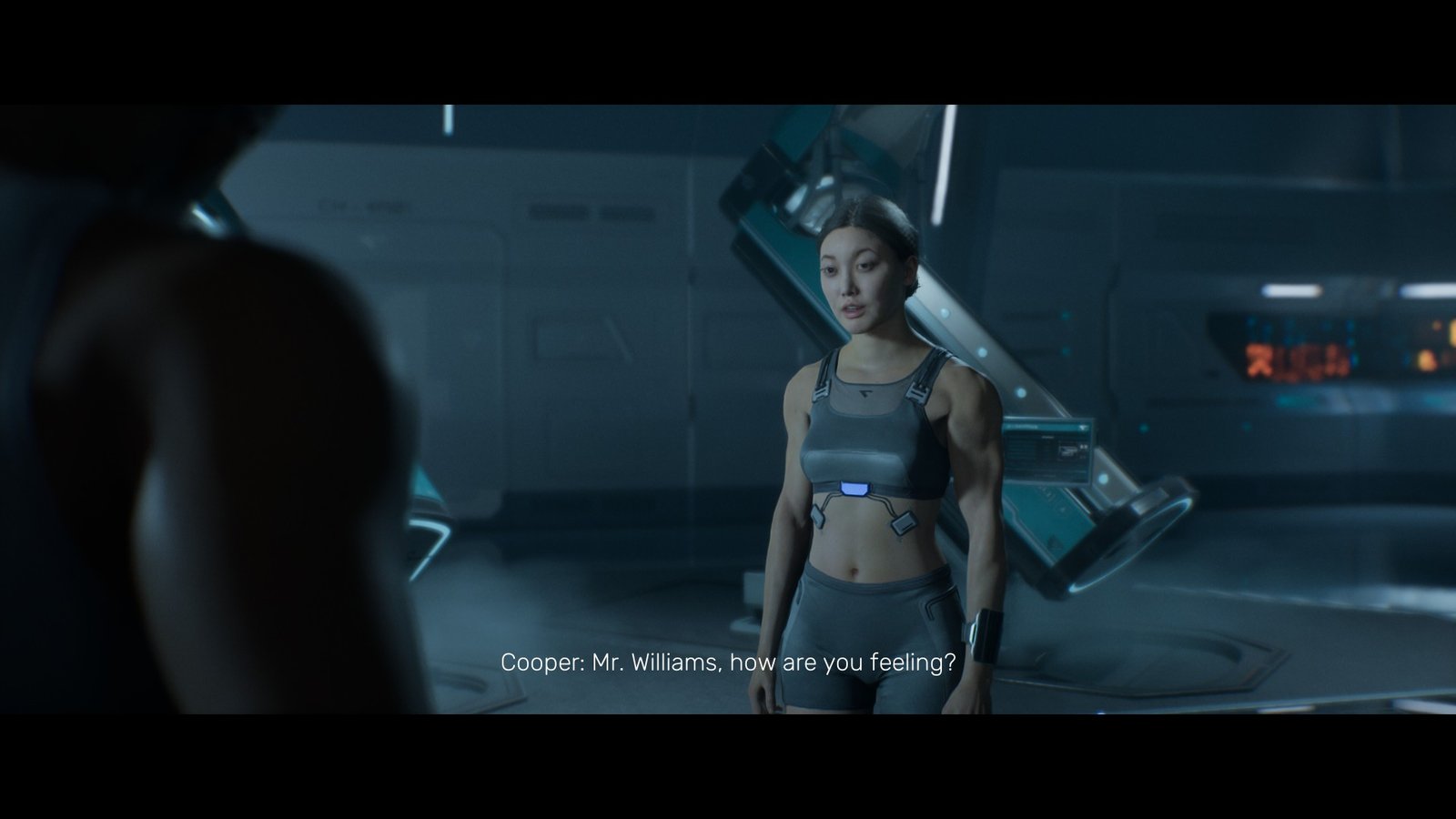
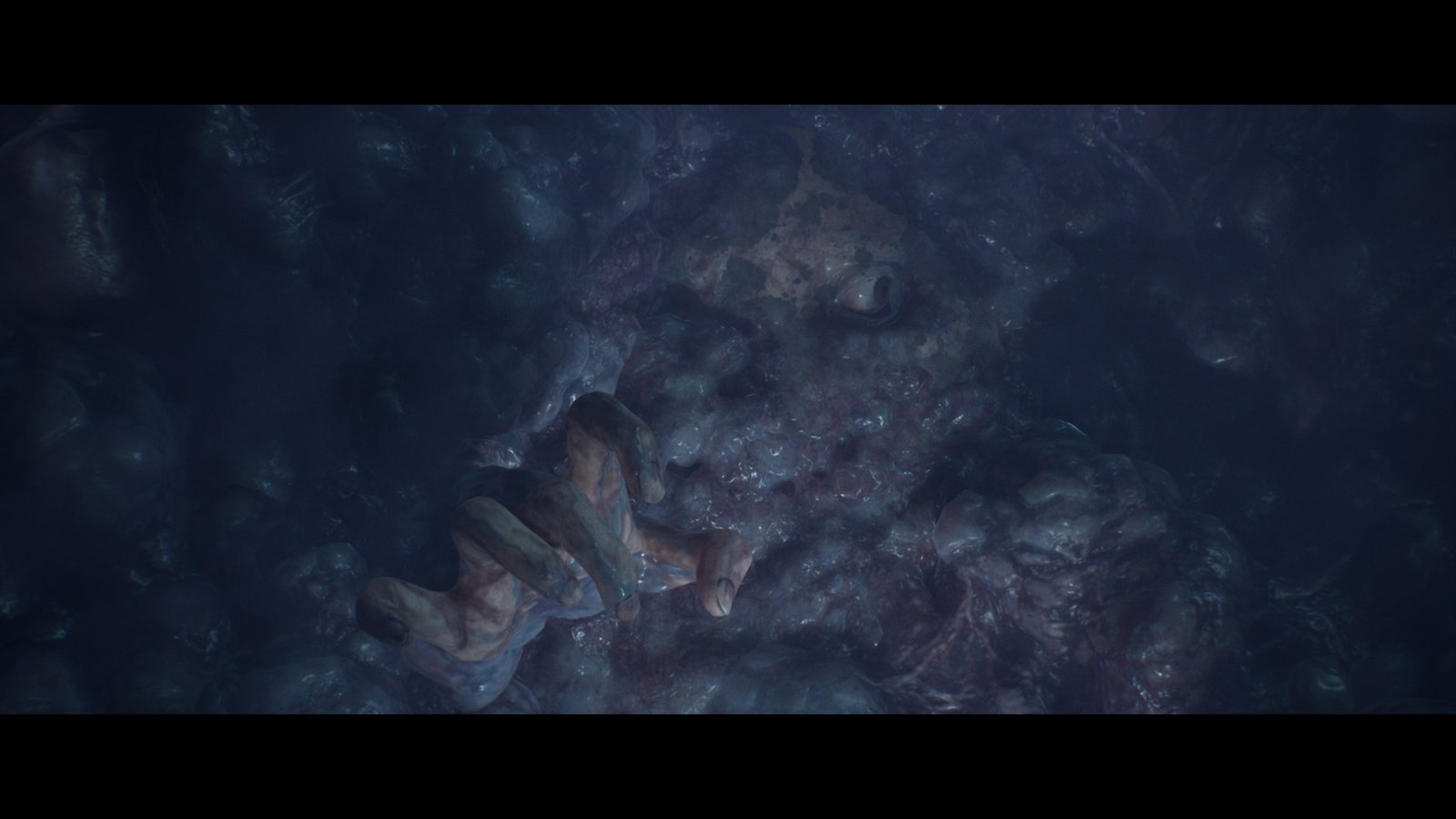
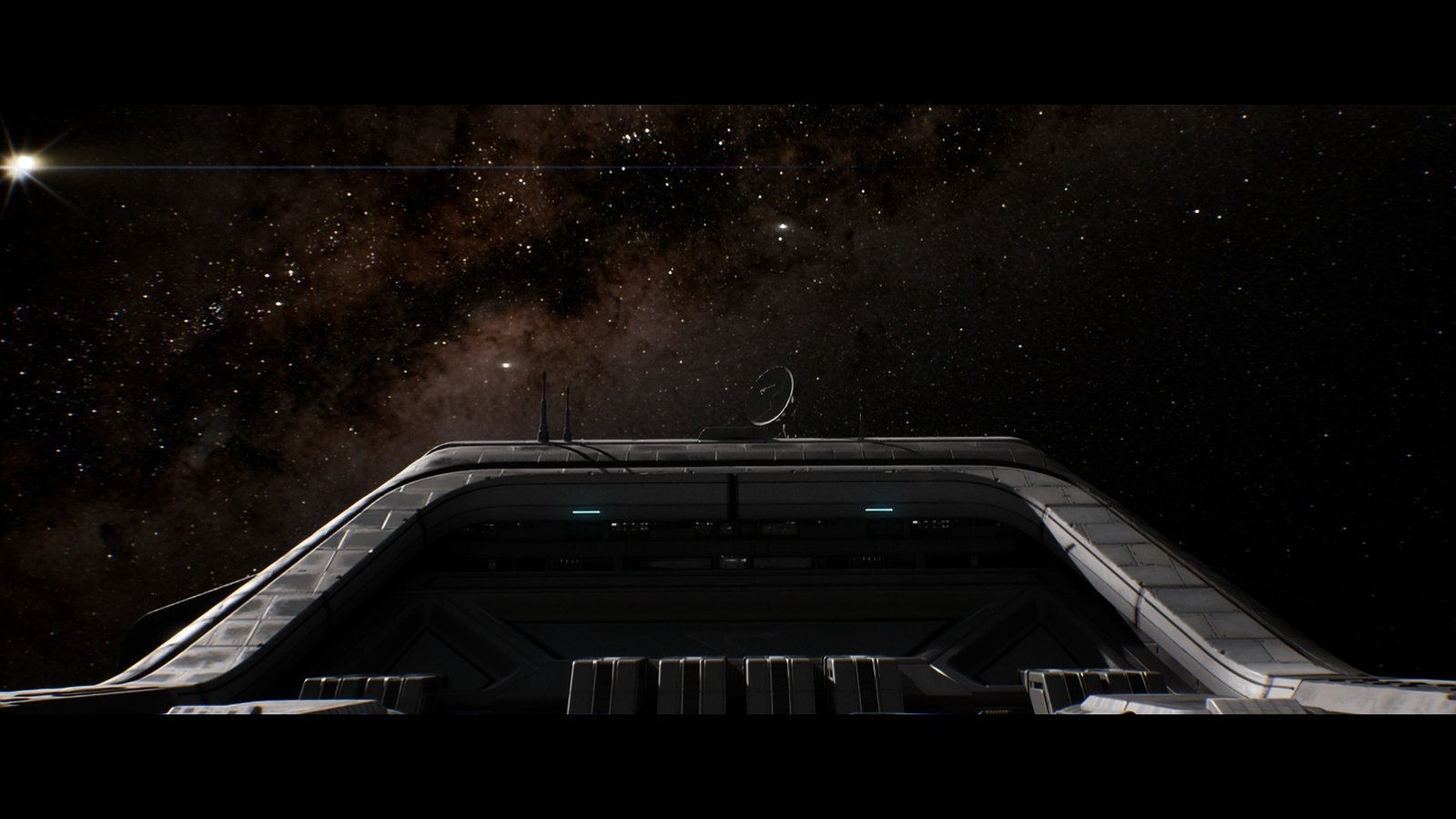
Visually, Directive 8020 is easily one of Supermassive Games’ strongest productions to date. Built on Unreal Engine 5, Directive 8020 delivers impressive visual fidelity across both gameplay and cinematics. The vessel, the enemies, and the environments look striking, especially with RTX on. The lighting plays a critical role in creating the haunting atmosphere of the game. In certain sections, you will find fully lit rooms suddenly going dark due to some malfunction, or while avoiding enemies, only a small section of the area will be lit by a dim light, creating an intense and tense environment. The texture details, especially on the alien organism, are insane to look at.
The game offers multiple visual settings for you to tailor your experience and the amount of visual fidelity your PC can deliver. Both inside and outside the cinematics, you feel no difference in characters or the environment, making it an exceptionally good-looking game. The facial expressions correctly align with the dialogue, and you can feel things like happiness, sadness, and tension in both the face and the voice of the actors. There were a few instances where the dialogue appeared out of sync for me, but this was a few rare occurrences throughout the 15-hour playthrough. A decently-timed playthrough can take you anywhere between 10-12 hours, but if you take your sweet time with it as I did, it can easily take you up to 15 hours.
Beyond the first playthrough, Directive 8020 offers strong replayability thanks to its Turning Points system, allowing players to revisit individual chapters and experiment with different outcomes. Certain endings and narrative branches depend on decisions made much earlier in the story, which encourages revisiting the opening chapters to uncover alternative paths and missed possibilities. While a full replay is not strictly necessary unless you want to experience the story differently, the system adds meaningful value for completionists. Pacing is also handled more effectively here than in earlier entries, with tension established early and maintained consistently as the alien threat escalates throughout the campaign.
The overall design of the ship is as you would normally expect it to be. Your typical exploration sections involve you exploring different sections like the Science Lab, Reactor Room, Bridge Ops, Crew Quarters, and the plethora of doors, elevators, and corridors connecting them. But as typical as it may seem, everything transforms completely. As you progress through the story, the ship, which appeared like a normal spaceship designed to sustain human life, starts to transform based on the alien organism’s growth. Corridors and rooms that were normal become filled with its growth. Corridors, rooms, and even elevator shafts become clogged with the gross overgrowth, completely changing the atmosphere of the game.
The alien overgrowth completely transforms the ship’s interior, giving familiar environments a disturbing new identity. Areas that once felt recognizable gradually become warped and unidentifiable, making the vessel resemble an alien nest rather than a space built for human survival. Further elevating the atmosphere is Directive 8020’s exceptional sound design. From its haunting soundtrack to the smallest environmental effects, every audio element complements the visual presentation to create a deeply immersive space horror experience. The mechanical beeps of the ship, distant metal clangs echoing through ventilation shafts, and the unsettling movement of enemies nearby combine to deliver an atmosphere that feels both surreal and deeply unsettling.
Coming to the technical side of the game, the game froze for me during different sections of gameplay, and the framerates were not too great either. I would love to see some additional optimization in the game to make it smoother. During one playthrough session, the game also switched to the integrated APU rather than the dedicated GPU, which is one of the strangest issues I have ever seen in any of the games I have ever played. Minor framerate dips occur throughout the game because, visually, Directive 8020 is an impressive game, and it is demanding on the hardware with features such as RTX shadows and texture density on the alien organism and smoke/fog effects.
Final Verdict:
Directive 8020 stands as the strongest entry yet in The Dark Pictures Anthology, delivering a clear evolution in both gameplay and presentation. The introduction of the Turning Points system adds meaningful flexibility, allowing players to revisit key moments and experience the narrative from different perspectives without friction. Combined with striking visuals, a well-executed narrative, and a consistently unsettling atmosphere, Directive 8020 is an easy recommendation for horror fans and one of the best horror releases of the year so far.
Final Score: 9.5/10
Disclaimer: A PC Steam review code for Directive 8020 was provided by Sandbox Strategies on behalf of Supermassive Games for this review. Read our Review Policy.