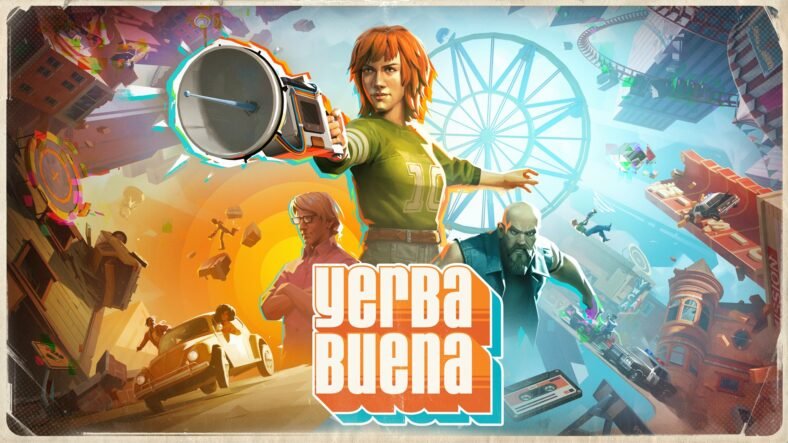
Developed by Mad About Pandas and published by Focus Entertainment, Yerba Buena is a sandbox-like puzzle game featuring cool 70s aesthetics and tough puzzles to crack. The unique name of this game comes from the city in which it is set. If you played sandbox puzzle games like Portal, you will feel right at home in Yerba Buena because it offers high levels, and puzzles are at the heart of its gameplay. Every level brings new mechanics to play around with as you move around things and copy and paste movement traits. This is our review of the PC Steam release of Yerba Buena, in which we turn a city upside down while trying to save our friend from a biker gang.
Yerba Buena’s narrative revolves around Barb, a girl who is trying to land a job but fails to get to her interview on time because her bicycle gets a puncture. As she tries to figure out what to do next, her long-time friend Russel picks her up in his cab and offers her a ride to her destination. On the way, things get turned around as a biker gang member kidnaps Russel and takes him captive. Amid all the hassle, he drops a locked briefcase containing a sonic-weapon-like device called the Oscillator, which can copy and paste motion traits from certain items in the environment.
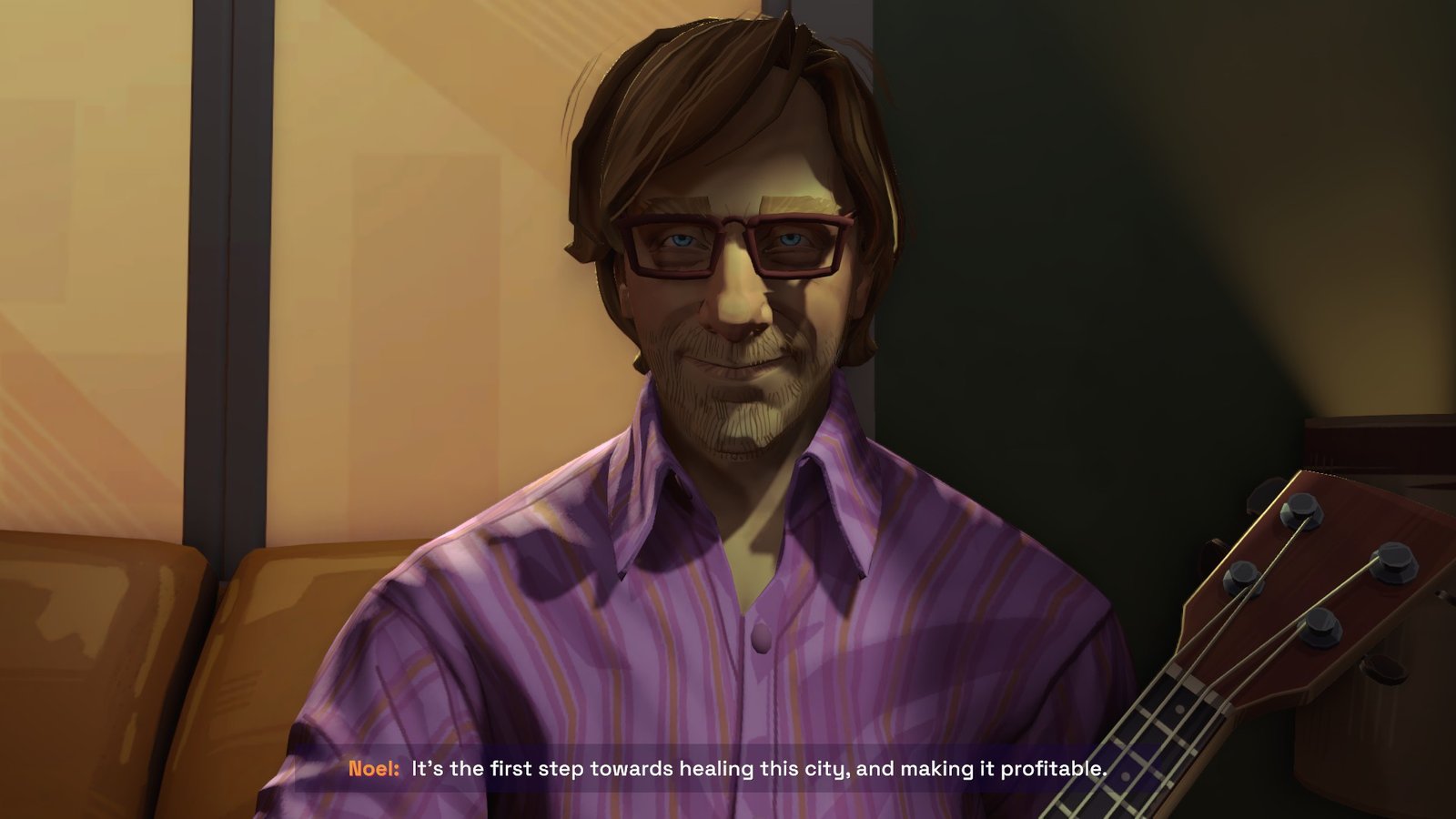
The game takes place in 1970s San Francisco, and a strange phenomenon known as the glitch is spreading all over it. This weird phenomenon affects certain items, which become a hazard if interacted with. As Barb comes into possession of the Oscillator, she is transported to another dimension where she becomes aware of its unique powers and decides to use them to save Russel. It turns out that the bad guy who kidnaps Russel is one of the members of the biker gang terrorizing the city and is also the main character of a video game in which Barb is an NPC. The Oscillator was meant for Bear’s use, but now that it has dropped with Barb, she must use it and try her best to continue Bear’s story and save Russel.
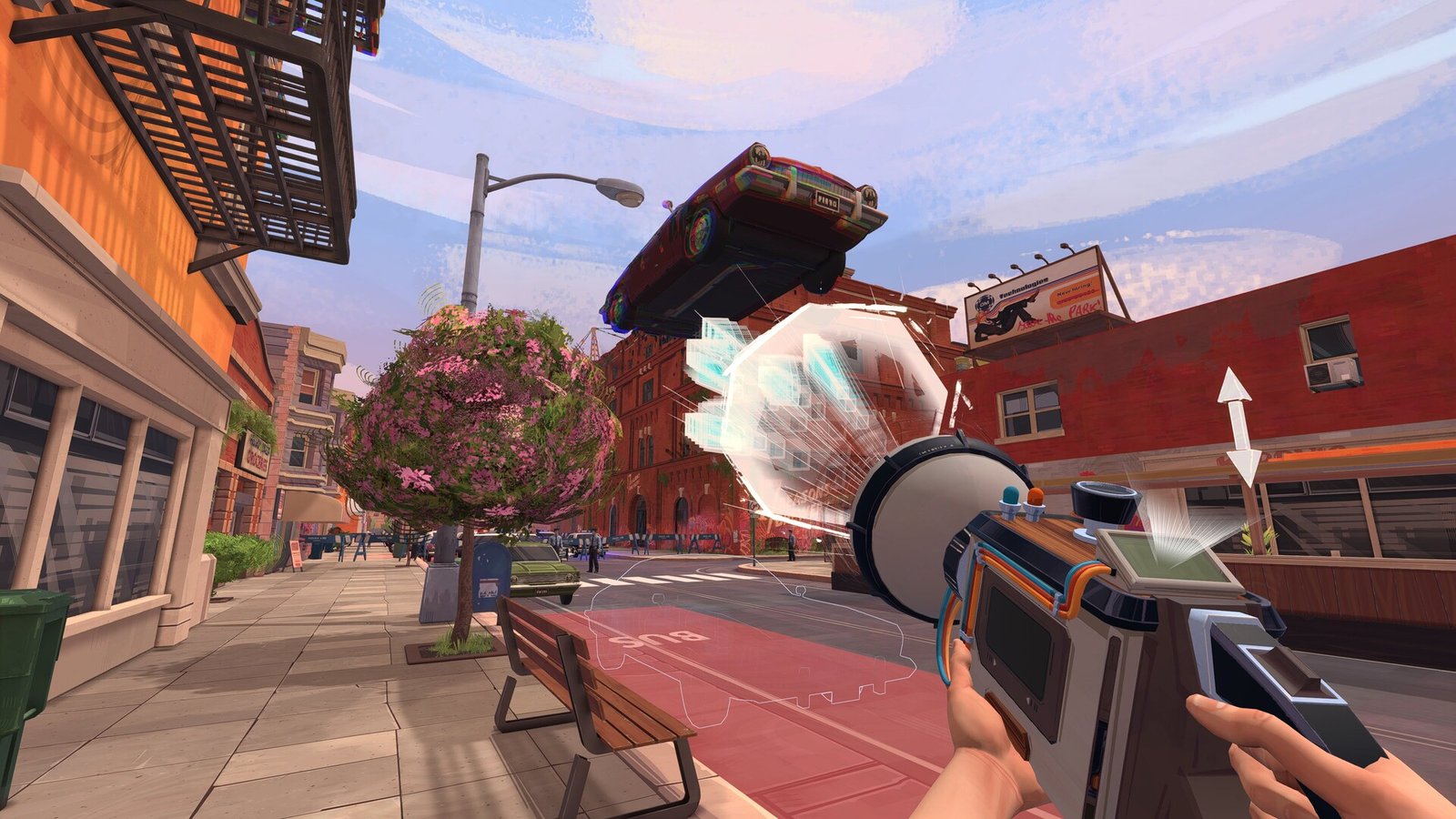
There are some typical twists in the game’s narrative involving an evil corporation, and we are left with solving puzzles throughout the city using the Oscillator. The gameplay revolves around solving puzzles to move ahead and reaching certain points, which sometimes requires a little bit of platforming as well. Just like all good puzzle games, there is no handholding in the game, and you have to figure out everything that you need to do yourself. To help you out, it comes with a scan that shows all interactable items on the screen. Orange outlines represent items with motion traits that can be copied, and blue outlines represent items where these motion traits can be copied.
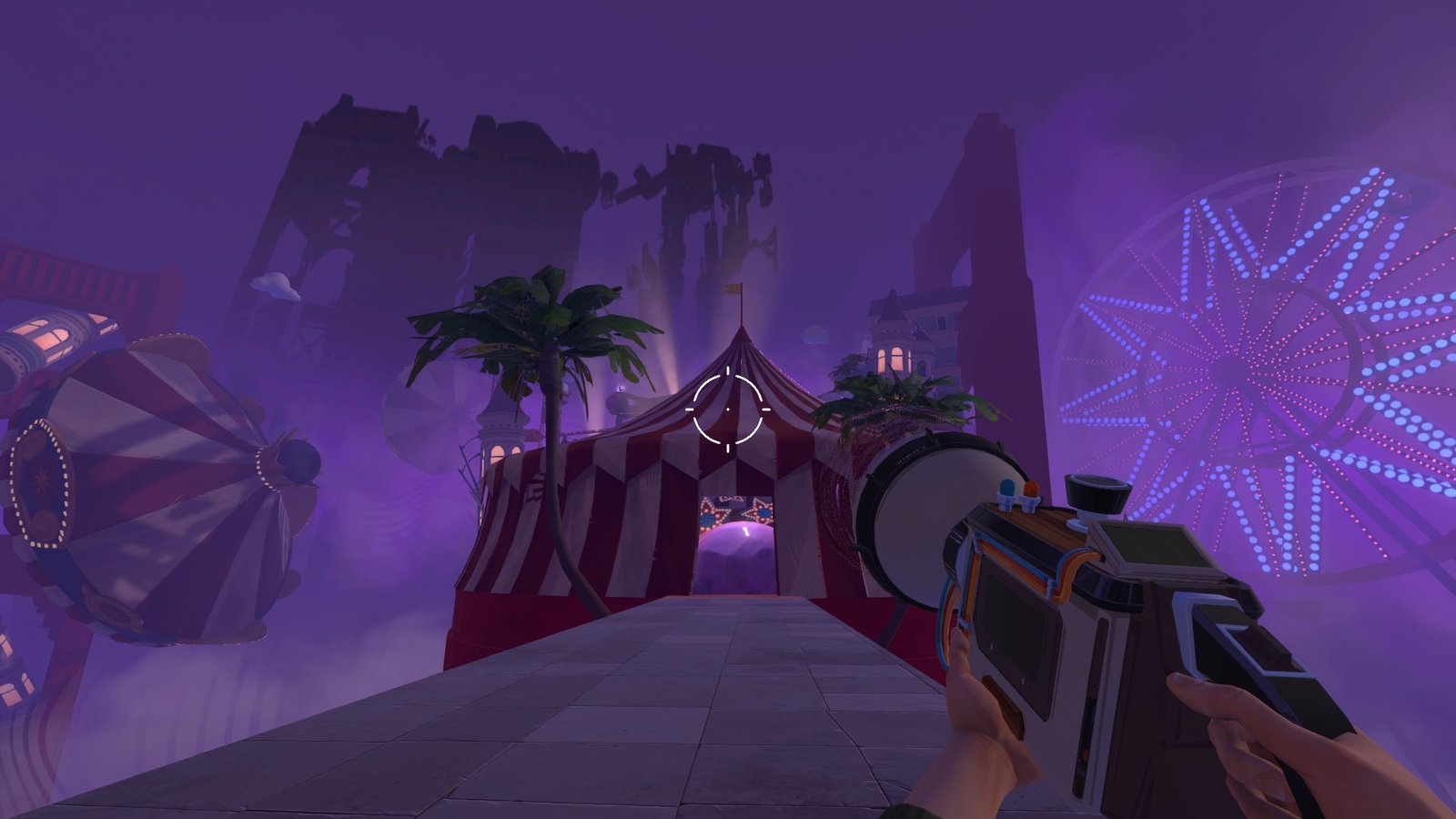
These could be cars moving on the road, a fist punch coming out of a box, an AC fan spinning, or any other thing that has some sort of movement. By copying these movement traits, you can make glitched items move around in the game to solve puzzles. The game starts really strongly with its first puzzle, in which you literally move whole apartments around and use them as platforms to move around. It feels surreal to move entire buildings and vehicles around for the first time, and it does not get old. With progression, you unlock new abilities that allow you to apply other traits, which change how the item behaves, like bouncing off walls or turning items into steam, allowing you to pass through them.
These abilities are in the form of tape cassettes, which are inserted into the Oscillator to unlock. The cassette-based upgrades are stylish and meaningfully expand puzzle complexity. As you continue to unlock new abilities, the puzzles start to get more complicated as you have to use the newly unlocked abilities to solve puzzles while copying and pasting motion traits at the same time. This gradually increases the difficulty level of the game as well, leading to tougher puzzles and platforming sections.
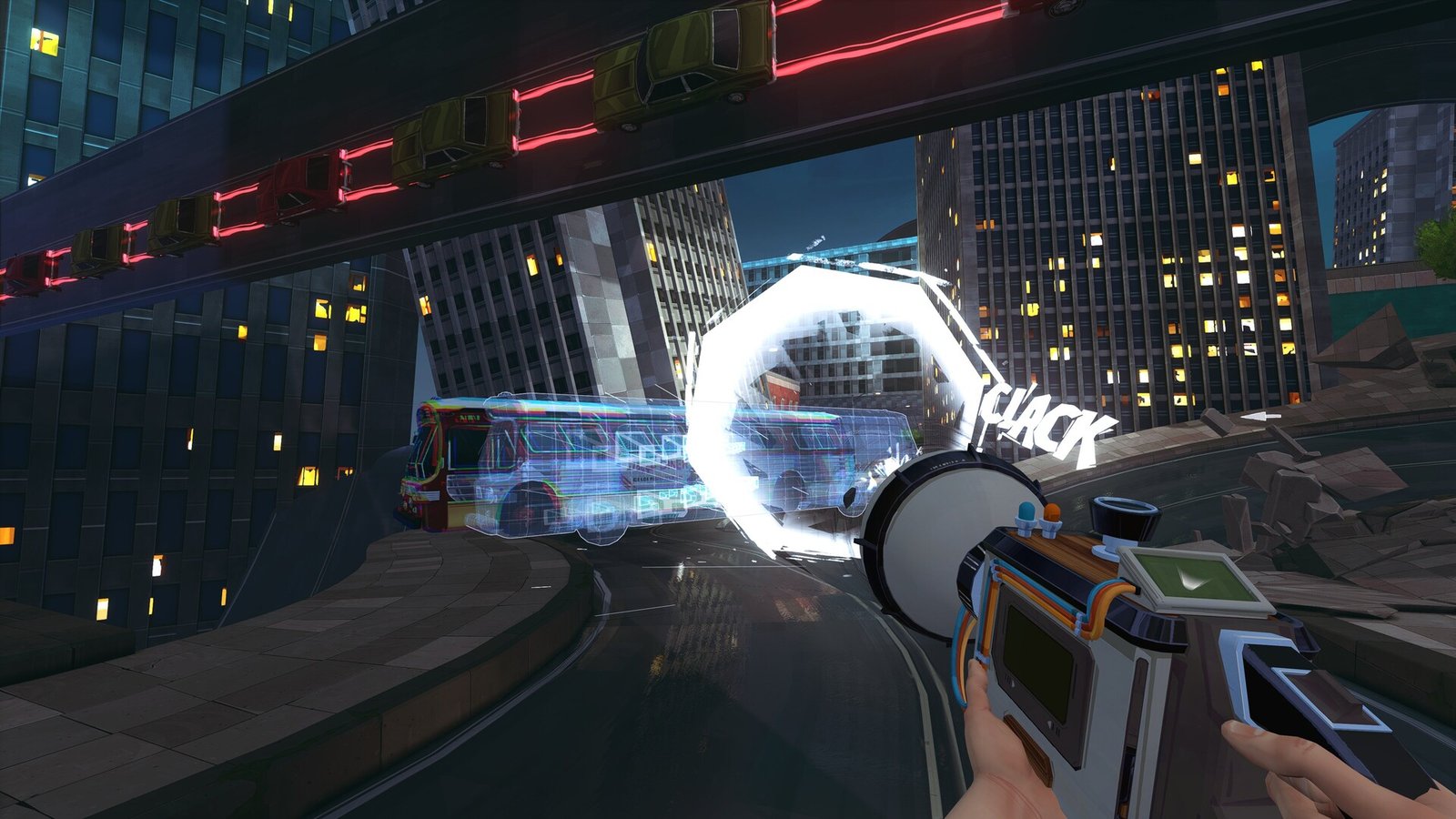
My favorite aspect of Yerba Buena is its visual art style and level design. While you spent quite a long time in the virtual space, San Francisco itself looks beautiful in the game. The city captures the 70s theme very accurately, complete with afros, cassettes, and colorful clothes. The glitched items look very surreal in the mix, and the character design is pretty cool as well. I also liked how most puzzles spanned multiple areas, instead of a single one. Hopping around a level designed around a whole city block is more fun than trying to figure out what to do inside a single ruin. As you progress in the game and explore more areas, each level brings something new to look at and enjoy. Character animations and special effects are nothing to scream about, but they are fairly decent as well.
Even though Barb cannot die in the game, certain puzzles gave a really big headache because of its spawn point system. While most puzzles do not require you to do a lot of platforming, certain ones require you to jump around on glitching platforms while using the oscillator to add or remove motion traits to progress further. Quite early in the game, I was trying to solve a puzzle, and I fell down while trying to jump on a platform, and the game spawned me right at the beginning of the puzzle. This happened over 5 times, and I had to backtrack every time just to figure out what I needed to do. Mechanics like this really break the immersion, especially in a game where death is literally irrelevant, and you have to figure out how to solve a puzzle.
This issue did not apply to a lot of puzzles in the game, but it did ruin the gameplay for me when puzzles spanned over a large area. I liked the open-world puzzles a lot because it shows how the developers go beyond the typical single-location puzzle design. Larger puzzles require more complex thinking and take a lot more effort to create, and I am all up for it, but small mechanics like respawning me at the beginning of the puzzle and making me reset everything are just poor design. I managed to finally progress in the game, but the damage was done. This streak of bad respawning left a bad taste behind that continued further with me for a long time.
Coming to the technical side of Yerba Buena, there are a few hiccups when it comes to game optimization and visual detail. The game drops frames quite often, especially when you are moving the camera around. Apart from this, the controls feel a little janky as well, especially while you are trying to copy and paste traits while platforming. The character sometimes gets stuck in invisible floors, and the jumps sometimes do not register the full height, leading you to drop down. For certain places, the respawn checkpoints are pretty far away, which results in some unwanted backtracking.
Final Verdict:
Yerba Buena features a gorgeous art style and some genuinely clever puzzle mechanics, but frustrating design choices and uneven pacing hold the experience back. The game’s inconsistent puzzle quality, combined with a poor checkpoint system, results in excessive backtracking that repeatedly disrupts immersion and momentum. I genuinely wanted to enjoy Yerba Buena more because some of its ideas are excellent, but too many mechanics work against the overall experience. While there is still a decent puzzle game underneath its issues, frustrating pacing and inconsistent design prevent Yerba Buena from reaching its full potential.
Final Score: 6.5
Disclaimer: A PC Steam review code for Yerba Buena was provided by Sandbox Strategies on behalf of Focus Entertainment. For a detailed breakdown of our scoring and review process, please refer to our Review Policy.