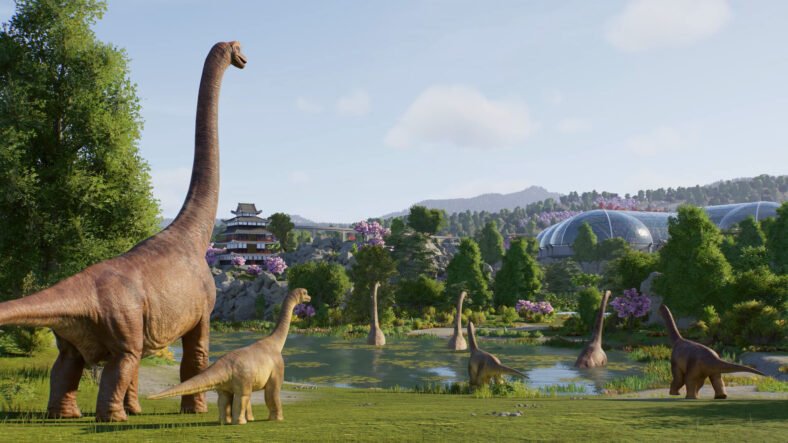
In Jurassic World Evolution 3, dinosaurs are the heart and soul of your park. It is your job to bring these prehistoric creatures back to life, care for them, and make sure they live comfortably in the park. For this very reason, you must know everything there is to know about the dinosaurs. Our Jurassic World Evolution 3 Dinosaurs Guide details everything that you need to know about dinosaurs in Jurassic World Evolution 3.
Dinosaurs Guide – Jurassic World Evolution 3
Getting Dinosaurs for the Park
There are two main ways to bring dinosaurs into your park:
- Let them breed naturally.
- Take control with scientific breeding programs and invest in genetic research to create new life.
Creating Dinosaurs: Synthesis and Incubation
Your scientists can extract DNA or genetic information from fossils to get the genetic data needed to make dinosaurs.
At Hatcheries, you can:
- View available dinosaur genomes.
- Modify their genes.
- Synthesize a new dinosaur.
Each Hatchery has several slots, which allow you to produce multiple eggs of different species simultaneously.
After synthesis, you can see which eggs are viable and ready for incubation. Here, you can also:
- View any special traits that appeared during synthesis.
- Choose the gender of the dinosaur.
Once incubation is finished, your new dinosaurs can be released from the Hatchery or airlifted to other parts of your park.
Change in Genetics Information
When you create a dinosaur genome, it can develop different traits that affect its health, lifespan, appetite, and behavior.
Every dinosaur can have a set of characteristics from the table below:
| Appetite | Sociability |
| Thirst | Skittish |
| Fitness | Aggression |
| Lifespan | Offence |
| Resilience | Defence |
| Nocturnal | Intelligent |
| Humility | Compatibility |
| Tolerance | Fertility |
| Habituation | Comfort |
Each genome has built-in chances for good or bad traits to appear. You can research genetic modifications at the Science Centre to increase the chance of positive traits. As your genome progress increases, more modification options will unlock.
Keeping Dinosaurs Happy: Their Needs
Every dinosaur has two main types of needs:
- Environmental Needs: The type of land, water, and space they want in their enclosure.
- Social Needs: Different kinds of dinosaurs and animals in their surroundings.
Both of these affect their Comfort Rating.
Comfort Rating
The Comfort panel shows the Dinosaur’s Happy meter and shows its satisfaction.
If their comfort level drops too low, they might:
- Try to escape.
- Injure themselves.
- Pose a danger to your guests.
To improve comfort:
- Adjust the population mix in their enclosure for social issues.
- Use environmental tools to change terrain for environmental issues.
The Comfort panel also gives hints to help you solve these problems.
Space and Territory
Dinosaurs that live together and are of the same species can make their own territory. Their comfort now depends on the environment and social setup inside this area.
As more dinosaurs share a space, they will need more space, and Environmental and Social needs increase. If two species’ territories overlap, cohabitation issues can occur, leading to fights or stress.
Feeding Your Dinosaurs
Feeding your dinosaurs properly is crucial for their survival.
- Herbivores do not need feeders. As long as their environmental needs are fulfilled, they don’t need anything.
- Carnivores and Piscivores like Megalodon need feeders placed inside their territory. Keep these feeders inside their territory.
- Some prefer live prey, and they like to hunt to feed themselves.
Palaeobotany
Palaeobotany brings back ancient plants that herbivores love to eat. Use environmental tools to plant the right types in your dinosaurs’ territories. Each dinosaur species has different plant preferences, and you can always check the Comfort panel to see if the plant suits your dinosaurs.
Juvenile Dinosaurs
Baby dinosaurs have their own needs that differ from adults. They may require:
- A certain number of adult females nearby.
- Juvenile Population.
Juveniles share territory with adults, which can sometimes cause cohabitation problems. Keeping their comfort high will affect how they grow. Healthy juveniles become stronger, more appealing adults.
Different species raise their young differently. Some are protective parents, while others may act aggressively toward their children. Juveniles also inherit traits, skin colors, and patterns from their parents.
Future Generations
Managing generations of dinosaurs means taking care of them at every life stage: from juveniles to adults to old age.
When you are planning for new generations, you need to make sure there is enough territory space for them to grow.
Treating Ill Dinosaurs
Your dinosaurs can suffer from many injuries and diseases.
- Medicine Required
- Cause: The dinosaur has developed an unknown disease.
- Cure: Need the MVU Team to treat it. You will need to research the correct cure at the Science Centre first.
- Sandstorm Illness
- Cause: Sandstorms make dinosaurs sick.
- Cure: Some of these storm-related diseases can be treated using medical darts fired by an MVU Team.
- Unmet Needs
- Cause: If a dinosaur’s environmental needs aren’t met, it can become unhealthy.
- Cure: Adjust their environment to meet these needs.
- Infected Feeder
- Cause: A feeder in your park has become infected, spreading a new disease among your dinosaurs.
- Cure: Send a Ranger Team to disinfect the feeder and stop the disease from spreading further.
| Ailment | Description |
| Algae Poisoning | Common symptoms are fatigue and low health. Ensure dinosaurs have enough Water in their territory to cure this disease. |
| Avian Pox | Leads to health loss and eventually death. This disease moves between dinosaurs through direct contact. |
| Bird Flu | Leads to health loss and eventually death. Ensure dinosaurs have enough Open Space in their territory to cure this disease. |
| Bracken Poisoning | Common symptoms are fatigue and low health. Ensure dinosaurs have enough Low Leaves in their territory to cure this disease. |
| Coccidioidomycosis | Lowers a dinosaur’s max health and stamina. Caused by exposure to sandstorms. Non-fatal but requires medication. |
| Common Cold | Lowers dinosaur’s max health and stamina. Can escalate, in some cases becoming fatal. Satisfy environmental needs to cure. |
| Common Cold (Escalation) | This dinosaur’s Common Cold has escalated. Satisfy environmental needs issues urgently. MVU teams can temporarily boost health. |
| Cryptosporidiosis | Makes dinosaurs dehydrated. This disease can spread throughout the park and is caused by parasites. |
| E. Coli | A powerful foodborne disease that weakens dinosaurs and is fatal unless cured with darts. |
| Foot and Mouth | Leads to health loss and eventually death. Ensure dinosaurs have enough Open Space in their territory to cure this disease. |
| Infected Wound | Leads to health loss and eventually death. Ensure injuries are treated quickly to avoid this disease. |
| Leaves High Disease | Leads to fatigue and low health. Ensure dinosaurs have enough High Leaves in their territory to cure this disease. |
| Rabies | Results in increased aggression. This disease is spread through saliva. If not medicated, can escalate and become fatal. |
| Rabies (Escalation) | This dinosaur’s rabies was not medicated, and has escalated. This stage of the disease is fatal unless cured with darts. |
| Round Worm | A foodborne parasitic disease that lowers appetite. |
| Salmonella | A powerful foodborne disease that weakens dinosaurs and is fatal unless cured with darts. |
| Silicosis | Weakens dinosaurs. Caused by exposure to sandstorms. Dinosaurs will recover from this disease over time. |
| Tuberculosis | An infectious disease that can be spread through the air and through direct contact. Can be fatal unless cured with darts. |
Injuries
| Injury | Description |
| Broken Claw | If untreated, it can lead to a major injury Ingrown Claw. |
| Broken Wing | Reduces mobility for flying dinosaurs. |
| Concussion | Leads to low energy and more frequent sleep. |
| Damaged Tooth | Lowers a dinosaur’s ability to fight. |
| Frost Bite | Leads to serious fatigue. |
| Hypothermia | It can put an animal into a coma. Dangerously low body temperatures can be fatal if not treated immediately. |
| Ingrown Claw | This painful major injury makes movement difficult for animals. |
| Internal Bleeding | A serious medical emergency that can lead to death, and should be treated as soon as possible. |
| Laceration | Leads to fatigue, health loss, and eventually death. Requires immediate treatment. |
| Minor Fracture | Increases the chance of gaining a Major Fracture. Heals on its own, but weakens dinosaurs in the meantime. |
| Major Fracture | Without treatment, this injury makes it hard for dinosaurs to move without pain. |
| Organ Trauma | It can lead to organ failure and eventually death if left untreated. |
| Second Degree Burn | Leads to fatigue and low health. Ensure dinosaurs are comfortable to prevent escape attempts. |
| Sprain | Lowers overall stamina. |
| Surface Wound | Leads to a gradual loss of health. |
| Swallowed Object | Lowers appetite and leads to health loss. Assign Capture teams to Ranger Posts to prevent dinosaur attacks. |
| Swallowed Phone | Misplaced possessions need to be extracted from a dinosaur’s stomach and returned to their owner or next of kin. |
| Third Degree Burn | Leads to fatigue and low health. Ensure dinosaurs are comfortable to prevent escape attempts. |
Death
Dinosaurs can die due to these reasons:
- Starvation
- Dehydration
- Combat
- Hunting
- Ailment
- Old Age
Aggression and Behavior
Dinosaurs are still wild creatures, even in your park. They may show aggression for many reasons:
Hunting
Carnivores and piscivores hunt prey from feeders or live animals to satisfy their hunger and environmental needs. Some species must hunt to stay comfortable.
Dominance
Dominance measures a dinosaur’s strength in fights, based on its combat stats, traits, and infamy.
The most dominant dinosaur becomes the Alpha.
Infamy
Dinosaurs gain infamy when they do something notable, like hunting, escaping, or attacking guests.
High infamy makes them more dominant. Each infamous act raises its minimum infamy level, so the more chaos they cause, the more aggressive they stay.
Dinosaur Fights
Fights can happen for many reasons: territory, dominance, or agitation from low comfort.
Parents will also defend their young from threats. These fights can cause injuries or even death.
All Dinosaurs in the Game
The following table shows information about all the dinosaurs:
| Dinosaur | Diet | Habitat | Cohabitable Status |
| Acrocanthosaurus | Carnivore | Land | Scavengers only |
| Albertosaurus | Carnivore | Land | Yes, but limited |
| Allosaurus | Carnivore | Land | Yes, but limited |
| Ankylodocus | Herbivore | Land | Yes |
| Ankylosaurus | Herbivore | Land | Yes |
| Apatosaurus | Herbivore | Land | Yes |
| Archaeornithomimus | Herbivore | Land | Yes |
| Atrociraptor | Carnivore | Land | No |
| Baryonyx | Piscivore | Land/Water | Scavengers only |
| Brachiosaurus | Herbivore | Land | Yes |
| Carnotaurus | Carnivore | Land | Scavengers only |
| Ceratosaurus | Carnivore | Land | Yes, but limited |
| Chasmosaurus | Herbivore | Land | Yes |
| Chungkingosaurus | Herbivore | Land | Yes |
| Coelophysis | Carnivore | Land | Yes |
| Compsognathus | Carnivore | Land | Yes |
| Concavenator (Deluxe Only) | Carnivore | Land | Scavengers only |
| Corythosaurus | Herbivore | Land | Yes |
| Deinonychus | Carnivore | Land | No |
| Dilophosaurus | Carnivore | Land | Scavengers only |
| Dimetrodon | Carnivore | Land | Scavengers only |
| Diplodocus | Herbivore | Land | Yes |
| Dreadnoughtus | Herbivore | Land | Yes |
| Dryosaurus | Herbivore | Land | Yes |
| Edmontosaurus | Herbivore | Land | Yes |
| Gallimimus | Herbivore | Land | Yes |
| Giganotosaurus | Carnivore | Land | Scavengers only |
| Gigantspinosaurus | Herbivore | Land | Yes |
| Guanlong (Deluxe Only) | Carnivore | Land | Scavengers only |
| Herrerasaurus | Carnivore | Land | Scavengers only |
| Homalocephale | Herbivore | Land | Yes, but limited |
| Iguanodon | Herbivore | Land | Yes |
| Indominus Rex | Carnivore | Land | Yes, but limited |
| Indoraptor | Carnivore | Land | No |
| Lokiceratops | Herbivore | Land | Yes |
| Lystrosaurus | Herbivore | Land | Yes, but limited |
| Maiasaura | Herbivore | Land | Yes |
| Mamenchisaurus | Herbivore | Land | Yes |
| Metriacanthosaurus | Carnivore | Land | Yes, but limited |
| Microceratus | Herbivore | Land | Yes, but limited |
| Moros Intrepidus | Carnivore | Land | Yes |
| Muttaburrasaurus | Herbivore | Land | Yes |
| Nasutoceratops | Herbivore | Land | Yes |
| Nodosaurus | Herbivore | Land | Yes |
| Olorotitan | Herbivore | Land | Yes |
| Ornithomimus | Herbivore | Land | Yes |
| Oviraptor | Omnivore | Land | Yes |
| Pachycephalosaurus | Herbivore | Land | Yes, but limited |
| Parasaurolophus | Herbivore | Land | Yes |
| Patagotitan | Herbivore | Land | Yes |
| Proceratosaurus | Carnivore | Land | Scavengers only |
| Protoceratops (Deluxe Only) | Herbivore | Land | Yes |
| Psittacosaurus | Herbivore | Land | Yes |
| Pyroraptor | Carnivore | Land | Scavengers only |
| Qianzhousaurus | Carnivore | Land | Scavengers only |
| Sauropelta | Herbivore | Land | Yes |
| Scorpios Rex | Carnivore | Land | No |
| Sinoceratops | Herbivore | Land | Yes |
| Spinoceratops | Herbivore/Piscivore | Land | Yes |
| Spinoraptor | Piscivore | Land/Water | Yes, but limited |
| Spinosaurus | Piscivore | Land/Water | Scavengers only |
| Stegoceratops | Herbivore | Land | Yes |
| Stegosaurus | Herbivore | Land | Yes |
| Struthiomimus | Herbivore | Land | Yes |
| Stygimoloch | Herbivore | Land | Yes |
| Styracosaurus | Herbivore | Land | Yes |
| Suchomimus | Piscivore | Land/Water | Yes, but limited |
| Therizinosaurus | Herbivore | Land | Yes, but limited |
| Triceratops | Herbivore | Land | Yes |
| Troodon | Carnivore | Land | Scavengers only |
| Tsintaosaurus | Herbivore | Land | Yes |
| Tyrannosaurus Rex | Carnivore | Land | Scavengers only |
| Utahraptor | Carnivore | Land | Scavengers only |
| Velociraptor | Carnivore | Land | Yes, but limited |
| Yutyrannus | Carnivore | Land | Scavengers only |
| Caiuajara | Piscivore | Flying | Yes, but limited |
| Dimorphodon | Piscivore | Flying | Yes, but limited |
| Geosternbergia | Piscivore | Flying | Yes, but limited |
| Pteranodon | Piscivore | Flying | Yes, but limited |
| Quetzalcoatlus | Piscivore | Flying | Yes |
| Tapejara | Piscivore | Flying | Yes, but limited |
| Thanatosdrakon (Deluxe Only) | Piscivore | Flying | Yes, but limited |
| Tropeognathus | Piscivore | Flying | No |
| Attenborosaurus | Piscivore | Marine | Marine life only |
| Dunkleosteus | Piscivore | Marine | No |
| Ichthyosaurus | Piscivore | Marine | No |
| Kronosaurus | Piscivore | Marine | No |
| Megalodon | Other Sharks | Marine | No |
| Mosasaurus | Other Sharks | Marine | No |
| Plesiosaurus | Piscivore | Marine | No |
That is all for this guide. Additional Jurassic Park Evolution 3 guides are linked below:
- Jurassic World Evolution 3 Breeding Guide – How to Breed, Baby Dinosaurs
- Jurassic World Evolution 3 Cohabitation Guide – Keeping Multiple Species Together
This concludes our Jurassic World Evolution 3 Dinosaurs Guide. If you want to add anything to this guide, feel free to use the comments section below.