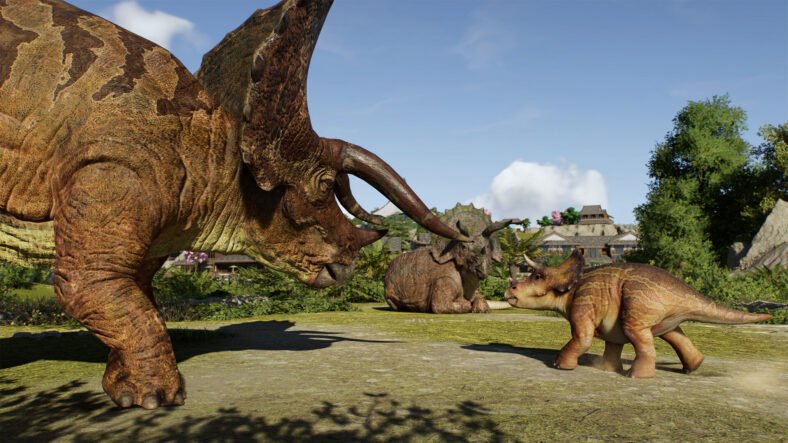
You can raise baby dinosaurs from tiny eggs to mighty adults in Jurassic World 3. Dinosaurs are very difficult to take care of, and baby dinosaurs also need extra attention. So, you need to take good care of them. Babies make a huge impact on your park profits. Our Jurassic World Evolution 3 Breeding Guide details everything that you need to know about breeding dinosaurs in the game.
Breeding Guide – Jurassic World Evolution 3
In Jurassic World Evolution 3, breeding can happen in two ways:
- Naturally, when dinosaurs mate.
- Through breeding programs, which are carefully planned by your scientists.
As long as your park has enough dinosaurs and some empty nests, new babies will eventually appear. Unlike the earlier versions of games, where all dinosaurs were female, Jurassic World Evolution 3 finally includes male dinosaurs.
If you have a male in the same enclosure as females, they will automatically claim any available nests. Each dinosaur species has different nesting habits, so your Ranger Teams need to check what each one prefers. Some species like their nests hidden away from guests, while others feel safer nesting together in groups.
Getting Male Dinosaurs
Male dinosaurs are rarer than females, but there are a few ways to find them:
- Capture wild dinosaurs that roam close to your park.
- Buy male dinosaurs from the marketplace once it is unlocked.
- Synthesize them using fossil’s DNA.
To synthesize new dinosaurs, build a Hatchery, and send your Scientists on Expeditions to collect fossils. Analyzing more fossils gives you a clearer picture of the dinosaur’s genome, allowing you to customize traits and appearances.
Before hatching the eggs, you can also choose their gender.
Preparing Nests for Baby Dinosaurs
Whether the babies come from natural breeding or artificial breeding, you must prepare their enclosure before they arrive.
Juvenile dinosaurs have their own special needs, which can be different from adults. If these needs are not met, it can make the entire enclosure uncomfortable.
Before hatching eggs, make sure:
- There must be enough space for the babies to grow.
- The environment includes plants, water, and shelter they’ll need.
- Medical teams: to check for diseases.
Baby dinosaurs are also very curious and may cause trouble if not supervised. They may damage fences. Place Maintenance Posts and Ranger Posts near fences and important buildings to prevent escapes or destruction.
Improving Dinosaur Fertility
Some dinosaurs will not breed easily if they’re stressed or uncomfortable. You can check a dinosaur’s fertility rating by selecting it and clicking the egg icon. This panel shows:
- The dinosaur’s base breeding chance.
- Any fertility modifiers.
- A chart showing how fertility changes as they age.
There is also a Breeding Heatmap, which gives you a quick overview of all your dinosaurs’ breeding chances at once. If fertility seems low, make sure the dinosaurs’ needs are being met. Their enclosures might lack space, or hidden diseases you haven’t diagnosed yet. If you want to pause or stop breeding, you can enable contraceptives for individual dinosaurs.
Structured Breeding Programs
Once you get a baby dinosaur, you can move on to structured breeding programs.
To start a breeding program:
- Click on an empty nest.
- Choose an eligible mother and father.
This method helps you select for good traits while avoiding bad ones and can also customize them. You can also combine this system with your Hatchery, which already lets you modify synthesized dinosaurs.
Structured breeding helps you create dinosaurs that are:
- Easier to care for.
- Healthier and longer-living.
- Better suited to your park’s space.
Genetic Traits to Focus
There are many Gene Modification Upgrades available in Jurassic World Evolution 3, but these are the best:
- Cross-Species Adaptation
It improves a dinosaur’s Tolerance, making it more likely to get the Tolerant trait instead of becoming Intolerant. Tolerant dinosaurs can live peacefully with other species, helping you save enclosure space and increase profits from shared spaces.
- Group Adaptation
This can affect a dinosaur’s Sociability. This reduces their sensitivity to large populations. Even if they don’t get the Social trait, higher Sociability prevents the Antisocial trait.
- Positive Temperament
This changes a dinosaur’s Comfort level. A higher comfort rating increases the chance of getting the Accommodating trait, which makes them more tolerant of imperfect environments. This gives you more room for other dinosaurs.
- Confined Space Adaptation
It adjusts a dinosaur’s Humility characteristic. This raises the chance of gaining the Humble trait, reducing the dinosaur’s space requirements and letting you keep more dinosaurs together in one enclosure. This upgrade works even better when combined with Cross-Species Adaptation and Group Adaptation, helping you manage larger and mixed enclosures.
That is all for this guide. Additional Jurassic World 3 guides are linked below:
- Jurassic World Evolution 3 Dinosaurs Guide – Unlock New Dinosaurs, Taking Care of Dinosaurs
- Jurassic World Evolution 3 Cohabitation Guide – Keeping Multiple Species Together
This concludes our Jurassic World Evolution 3 Breeding Guide. If you want to add anything to this guide, feel free to use the comments section below.