
Developed and published by Misty Whale, Orbyss is a logical puzzle game where you solve puzzle rooms and progress in a beautiful world. Orbyss comes from the mind of a solo developer. Ever since I started GamesHedge, I have played a fair share of puzzle games, and very few puzzle games offer something unique and different. Some of them suffer from repetition, and some of them rely too much on complicated mechanics to enhance game time. Orbyss offers a minimalistic world for you to explore and with a simple puzzle mechanic to learn. While it offers humble beginnings, it quickly ramps up the difficulty, but in a subtle manner that gives you enough breathing room to get better at it. This is our review of the PC Steam release of Orbyss, in which we control some orbs and solve puzzles by dragging and freezing orbs in space.
In Orbyss, you play as a little spark, or what the game calls a firefly of energy. You do not have a physical presence, but you can jump from one orb to another and roll around to solve puzzles and progress in the game. The puzzle sections are locked and follow a puzzle room sequence where you must complete each room before moving into the next, with the only difference being that the rooms appear to be connected, giving the impression that everything is connected in a big, open world. The game kicks off with simple puzzles where you just roll into platforms to form bridges and open up paths.
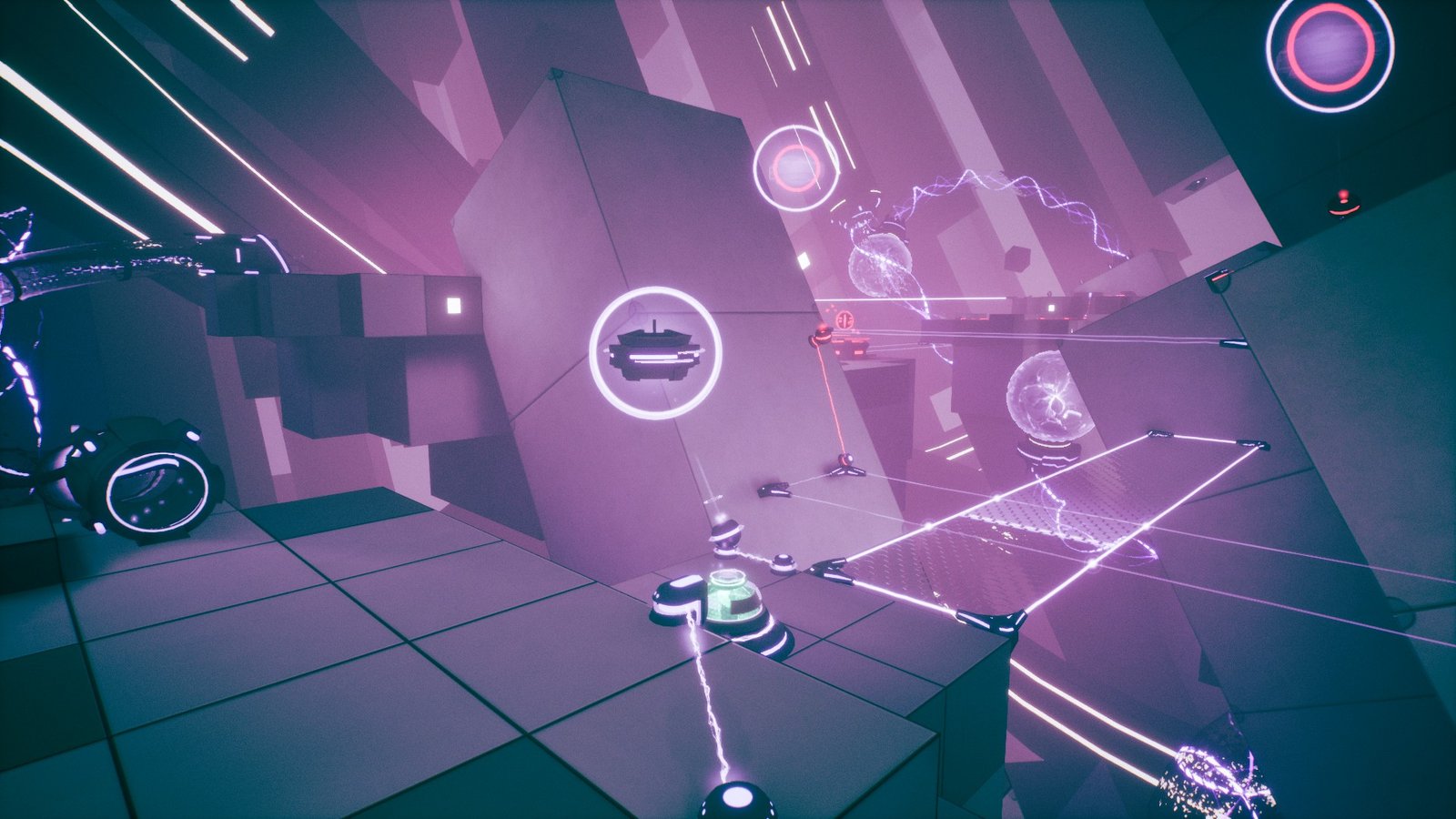
It gradually introduces new mechanics into play, like towing other spheres into switches to activate them or switching into a new sphere. Upon entering a room, you must spend some time exploring and understanding how different things work. As you progress, the rooms become bigger and bigger, which means that you have to follow a series of puzzles to progress, instead of a single puzzle. Sometimes a room will have multiple completion methods as well, which is where the in-game achievements come into play, as they will challenge you to complete a room without switching into another orb or by minimizing the switching to just one. After you have completed a puzzle, you can see the linked achievements to a particular level inside the game and what you need to do to unlock them.
The game has no difficulty levels and offers very little guidance. There is a hint mechanic in the pause menu that directs you to what needs to be done. The difficulty of the game comes if you want to aim for the achievements that limit certain gameplay mechanics. While puzzles have a difficulty level as well, the main difficulty comes when you aim to solve them with limited use of your powers. Most puzzles tend to incline towards logic rather than complexity. They require careful timing, the right sequence, and the correct use of your powers, like jumping from one orb to another, freezing another orb in the right place, or utilizing the environmental elements correctly to progress. The mechanics are simple, but you have to time them right.
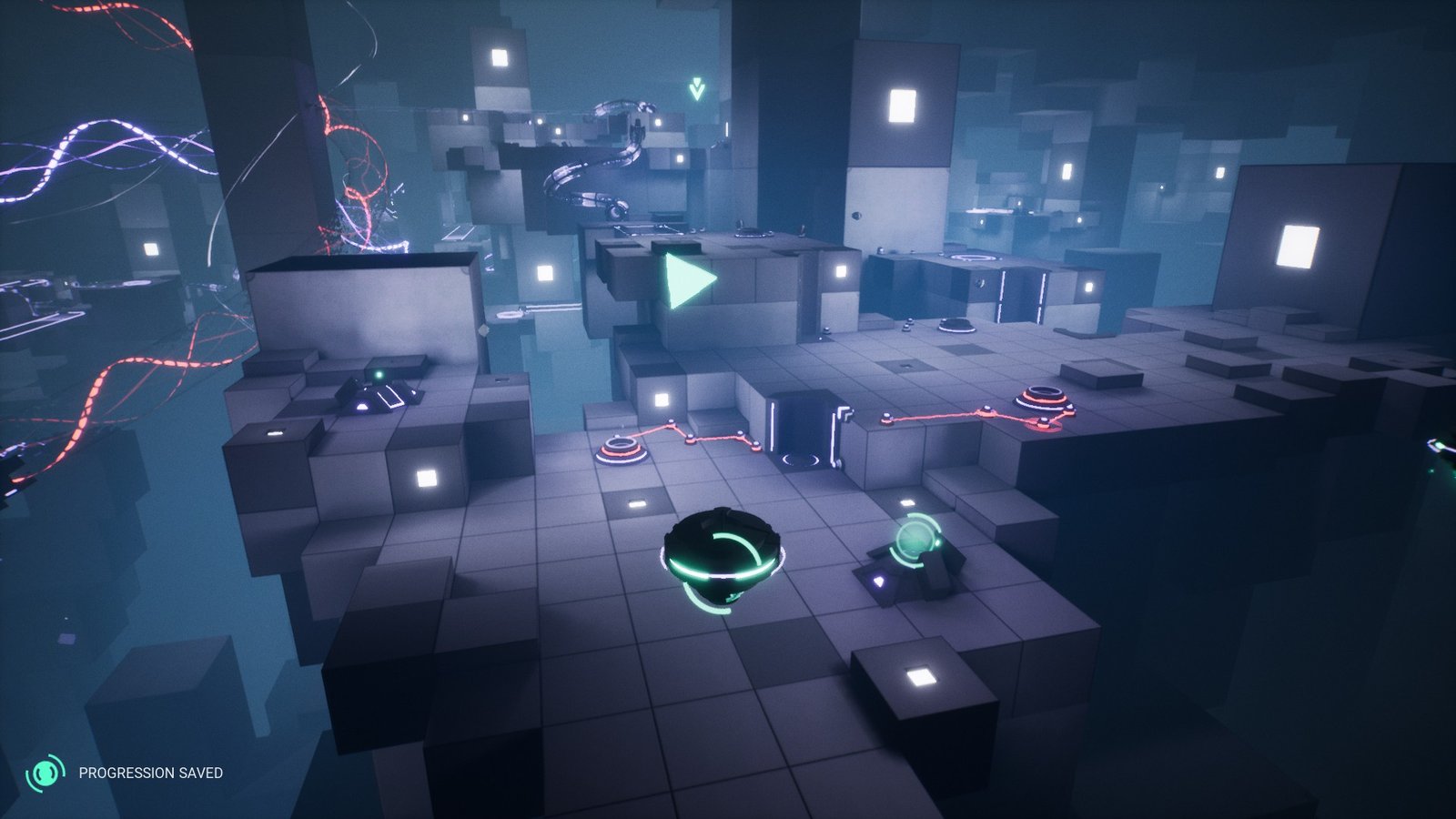
I love the art style of Orbyss. The world does not offer a lot of colors, and you will mostly find the levels filled with red, white, and a blend of greenish-blue hues. As you complete rooms, they will turn into the friendly green-blue hue, while unsolved areas will mostly have red. This distinguishes between completed rooms and rooms that you have yet to solve as you look around. The game does not feel empty at any point, thanks to its open-world design. It is not really an open-world design, and you are limited to the current puzzle room, but as you move around and look around, it feels like you are inside a huge, interconnected world with different rooms and pathways linking to each other. The level design is mostly just switches, mechanical devices, platforms, and solid ground areas, but they are integrated very well, giving a sort of organic cyberpunk feel.
The orb stations, the cylindrical paths, bridges that appear to be made of light, everything just looks gorgeous. Despite the small scale of the rooms, each level feels huge and connected like a single, living world. Each chapter of the game is set in a different environment and area, but the rooms are connected with bridges and paths that you unlock after solving puzzles. As much as the game relies on its visuals, the sound design is equally solid. Most of the game, the game feels completely silent with little audio cues and music, but certain puzzles rely on sound in the later sections of the game. Here, sound design really comes into play as you listen to audio cues and solve puzzles. Despite this dependability of sound, the developer has thought of players who are unable to use it.
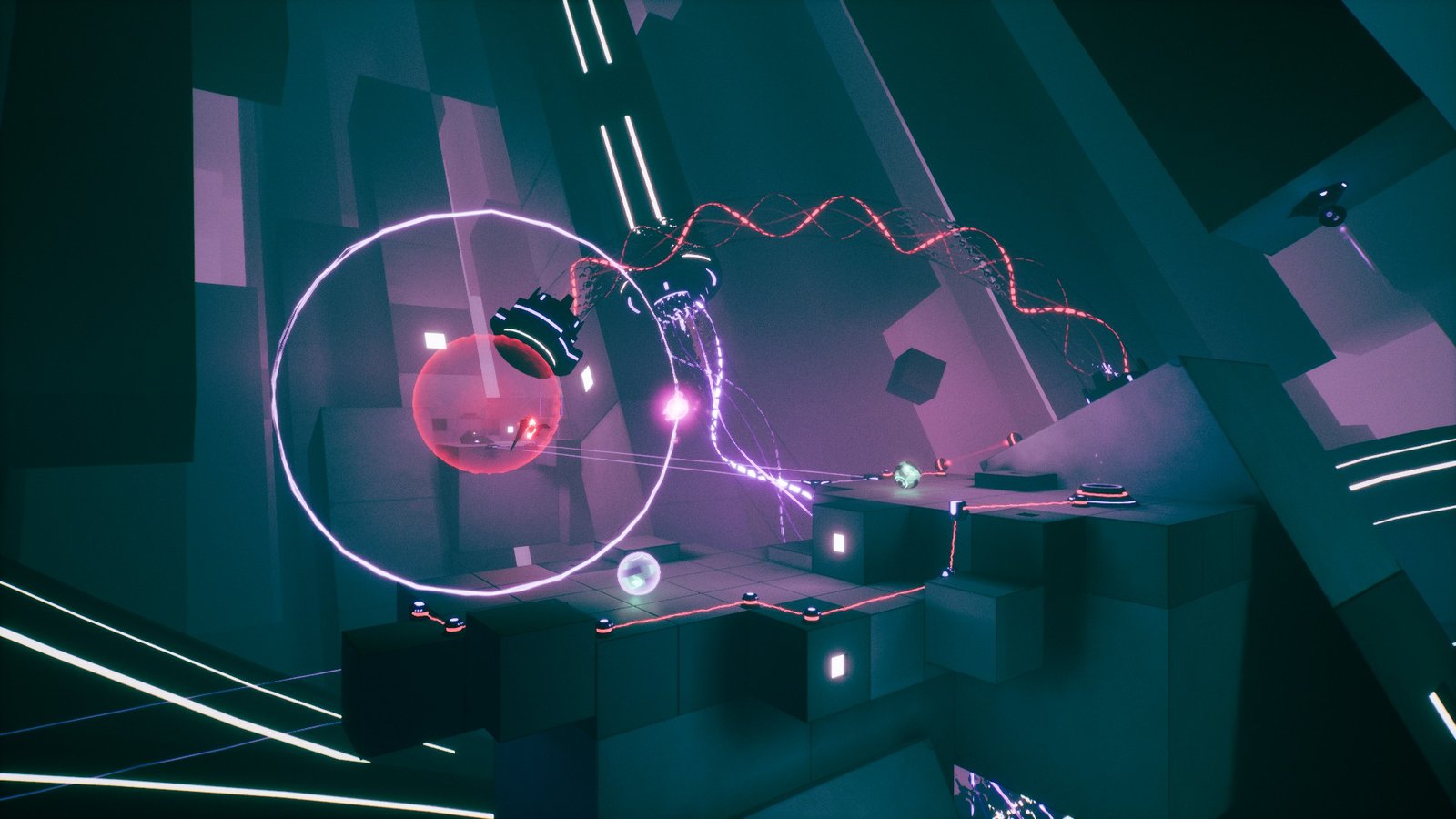
By turning on an accessibility setting, players who have a hard time listening to sounds can complete these puzzles normally, without depending on sounds. The narrative is not very obvious, but small cutscenes at key points show how you are pushing back the evil shadow that is interfering with your puzzles at every step. These cutscenes also show you a brief overview of the new area you arrive in, as well as your surroundings. The game can be played in both first-person and third-person view. If you zoom in all the way into a sphere, you will enter the first-person mode. Zooming out makes your perspective from the third person once again. You can change the perspective on the go at any point in the game.
Orbyss is a great achievement by its solo developer because it never feels like an indie game. The game length is decent, the puzzles are not straightforward and will challenge your logic at times, the gameplay is polished, while the sound design is excellent as well. It is a complete package that excels in all aspects. I like to call its world a minimalist, atmospheric one because, while it is not very big, it feels big and alive, thanks to interconnected rooms and its overall aesthetics. The learning curve is simple, and you can solve even the most complex puzzles after spending some time with them.
Related News:
- Orbyss is A Surreal Puzzle Game About Light, Logic, and Transformation, and It Has an October Release Date
- Wholesome 90s-Inspired Puzzle Game Tiny Garden Launches Kickstarter Campaign This July
- UK Publisher Kwalee to Publish Co-Op Escape Room Puzzle Game In Sink
- Review: Lumote: The Mastermote Chronicles – Prettier and Better Than Before
- Review: Lumote – An Extremely Beautiful World Filled with Colors and Puzzles
Final Verdict:
Orbyss is one of those puzzle games that reel you in with its simplistic visuals and easy gameplay mechanics, but you quickly start to realize the logical aspects of its puzzles. Orbyss starts simple but gradually increases the puzzle difficulty while unlocking more mechanics for you to play around, and it looks beautiful while doing it. The visuals are simple yet impressive and feature just the right amount of colors and aesthetics to keep you interested. It does not overwork in visuals to counter its simple gameplay design, and that is what really sets Orbyss apart. If you love playing puzzle games that not only look great but offer puzzles that tickle your brain in the right places, you are going to love Orbyss. Highly recommended for players who love simplistic puzzle games where gameplay and logic go side-by-side.
Final Score: 9.5/10
Disclaimer: A PC Steam review code for Orbyss was provided by Critical Hit PR on behalf of Misty Whale for this review. Read our Review Policy.